Remembering Salvador Allende, and those who followed

Today, Chileans are marking the 50th anniversary of the military coup that resulted in a 16-year military dictatorship. 

That event was formative for me in my political consciousness and awareness of both revolutionary struggle and U.S. imperialism. (Specific commitments took longer.) I was just 15, and in a Grade 10 social studies class when our teacher came into the classroom. In the first class after lunch, he told us about the coup. For weeks I had seen news items about strikes by trucking companies that were intended to weaken the socialist government of President Salvador Allende.

My teacher was livid, and my appreciation of his anger has stayed with me. In later years, I wrote university essays about Allende, and eventually my work with The United Church of Canada gave me several chances to visit Chile.

Twenty years ago, a few weeks after the 30th anniversary of the coup, I walked the streets of Santiago with my good friend Bill Fairbairn, a veteran of Canadian church and NGO efforts to defend human rights and to promote sustainable human development in Latin America.
We walked through the Moneda palace, the presidential residence that was bombed by the Chilean air force on Sept. 11, 1973, during the coup and where Allende died. Outside, we joined with tourists and had our pictures taken in front of the statue of Allende. 

Yo pisaré las calles nuevamente // De lo que fue Santiago ensangrentada // Y en una hermosa plaza liberada // Me detendré a llorar por los ausentes 

[I shall walk the streets anew // Of what was bloodied Santiago //And in a beautiful liberated plaza // I shall stop to weep for those who are absent] 

Pablo Milanés

We walked the streets of Santiago anew, recalling the songs Pablo Milanés and Bruce Cockburn wrote about the city during the military dictatorship. And we remembered too one of the dictatorship’s poet martyrs, Victor Jara, and some of the great writers since then, among them Isabel Allende (a cousin of the former president).

Bill had arrived that morning for an international conference marking 30 years of ecumenical commitment to the defense of human rights in South America; I was to leave that evening after a series of meetings with Chilean churches. He pointed out the sites of beatings and disappearances, and recalled the actions of brave people in the churches and beyond who struggled to defend life. 

Chile in the years of military rule became a laboratory for a new economic order that was later applied to almost all of the countries of this hemisphere. Decades of structural adjustment were applied at the behest of multilateral financial institutions like the World Bank and the International Monetary Fund, not so that countries would find their way out of poverty, but so that they would continue to pay the foreign debt. 

In 1988, dictator Augusto Pinochet allowed a plebiscite on his continued rule. He fully expected to win, but the people won the vote and then defended their option. And the decades since have been marked by efforts to undo the damage inflicted during 16 years of military rule. Even one of the better presidents, Michelle Bachelet, was unable to repair the highly privatized system for delivering social services, including health and education.

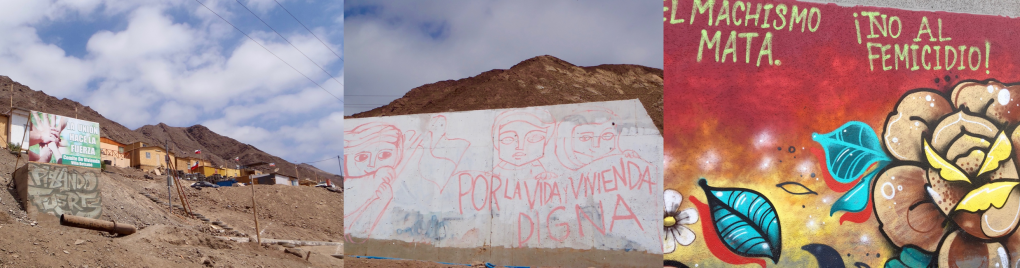
The walls speak: “Unity makes strength;” “For housing with dignity;” “Machismo kills – No Feminicide!” (Antofagasta, November 2016).

Two years ago, Chileans elected Gabriel Boric, a veteran of student protests against ongoing impacts of those “neoliberal” policies, to serve as president. His leadership, while inconsistent and often disappointing, at least offers space for social movements to organize for something better.

Great writers, including Ariel Dorfman and Carmen Aguirre, have published excellent, new reflections on the significance of the 1973 coup on their lives.

And York University professor Liisa North is editor of a new volume of reflections by civic, union and church activists about efforts to protect human rights and refugees, and to overcome the dictatorship: Canada-Chile Solidarity, 1973–1990: Testimonies of Civil Society Action – from Novalis and elsewhere.

Cops, robbers and intervention talk in Haiti

by Jim Hodgson

A few nights ago, I watched the British actress Joanna Lumley in conversation with a group of homeless 14- and 15-year-old boys in Port-au-Prince. This was a scene in her 2019 documentary, “Hidden Caribbean,” about her travels in Cuba and Haiti.

I found myself thinking about similar conversations that I have had with teens in Mexico, Haiti, El Salvador and elsewhere: What about the gangs?

“They defend us,” said the teenage son of a woman I knew in La Estación, a neighbourhood where the train station used to be and near where I lived in Cuernavaca, Mexico, in the late ’90s. 

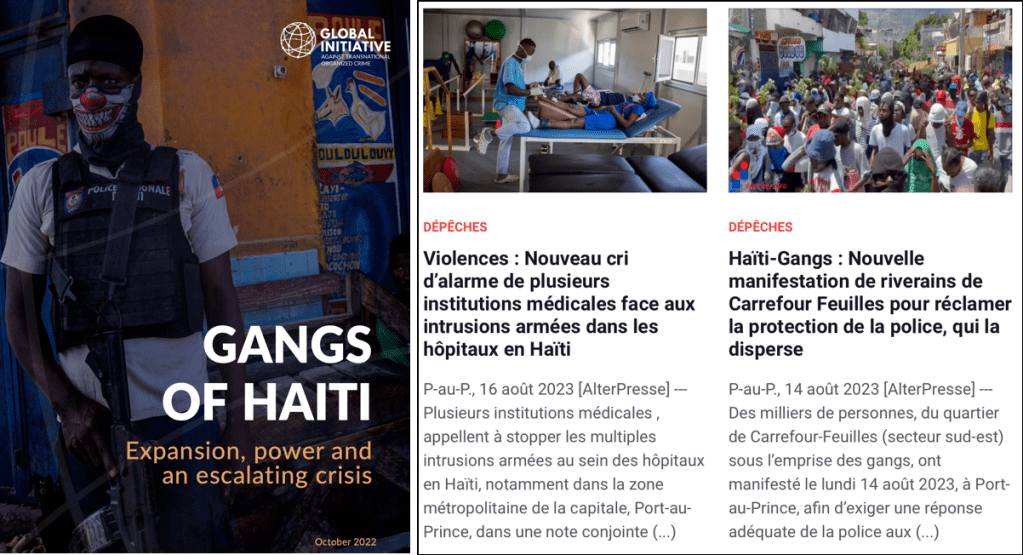
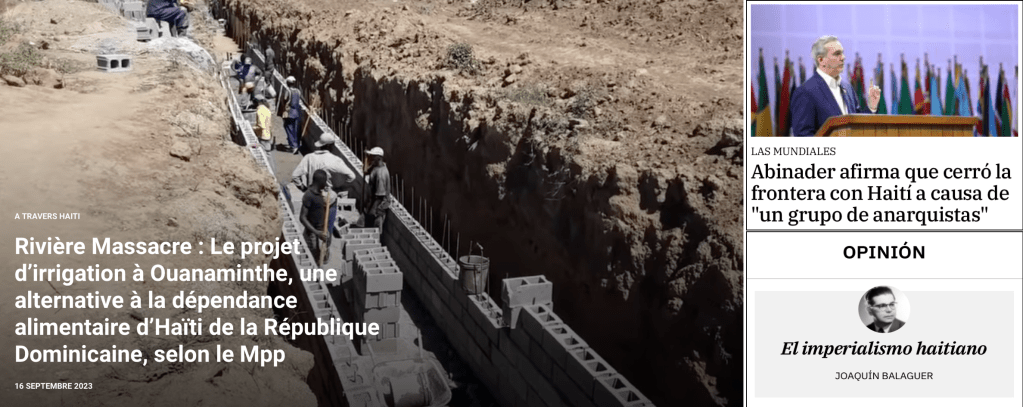
Global Initiative Against Transnational Organized Crime report, Gangs of Haiti. And headlines about gang violence from Alterpresse, an excellent alternative media site in Port-au-Prince. 

I’m not an expert on the sociology of gangs, but it seems to me that for unschooled, unemployed adolescent youth, they might provide a sense of team and friendship that in other places would be provided through schools, organized sports and other activities. And no doubt, there are people who manipulate younger people into activities to “defend” their barrio, and those then become fronts for extortion, drug-trafficking and kidnapping. (You can read more about the sociology of gangs of Haiti here and here.)

Criminal gangs are blamed for extreme levels of violence in and around Port-au-Prince, the Haitian capital. Their actions become justification for calls from the United Nations, Human Rights Watch and others for an international intervention – this time with police forces.

A “robust use of force” by a multinational police deployment is required to restore order in Haiti and to disarm the gangs, UN secretary general Antonio Guterres said in a report to the Security Council Aug. 15. Such a force may be led by Kenya, and also involve police forces from several Caribbean nations.

“The longer that we wait and don’t have this response, we’re going to see more Haitians being killed, raped and kidnapped, and more people suffering without enough to eat,” said Ida Sawyer of Human Rights Watch a few days earlier.

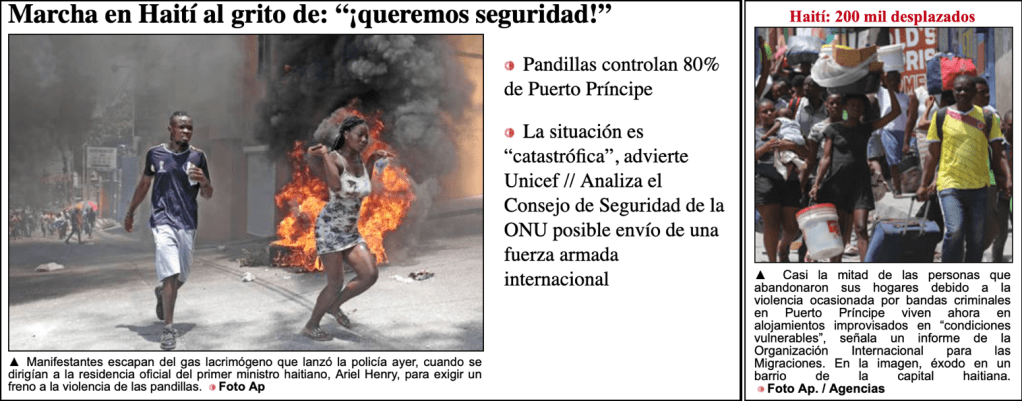
Headlines and photos from Mexico’s La Jornada daily newspaper: “Gangs control 80% of Port-au-Prince;” “200,000 displaced.”

By all accounts, the situation in Port-au-Prince is dire. On Aug. 17, Haitian aid groups backed by the International Rescue Committee (IRC) said they were temporarily shutting down operations, including some mobile health clinics, in the face of violence. Over the previous weekend, according to the UN, nearly 5,000 people fled their homes from areas around Carrefour Feuilles, Port-au-Prince. They are added to about 200,000 people displaced from their homes so far this year.

And more than 350 people are said to have been killed in lynchings by vigilantes since April.

You might think it’s progress that international actors are talking about police interventions rather than full-out military interventions after those have already failed in Haiti more than once. But decades of financial support and training of Haitian police (much of both coming from Canadafailed to overcome corruption and incompetence. 

Much of this could have been avoided. Three years ago, a viable set of proposals emerged from a coalition of civil society groups – the Montana Accord, named for the hotel where their accord was signed. They offered a “passarelle” or series of steps for an interim government as a way to move to new elections. If the imperial powers – Canada, the US and France – had backed those proposals instead of Ariel Henry (the unelected “prime minister”) things might be different today. 

Beyond the external powers, part of the problem is that the six richest families in Haiti don’t give a damn about the people or the violence, and prefer the current mess to a stronger and more effective state. 

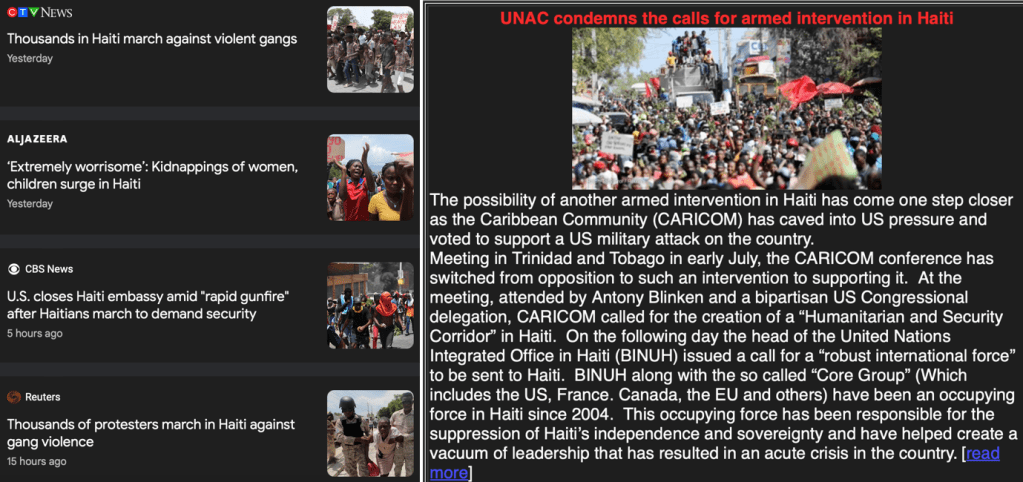
Recent headlines about the crisis in Haiti; a statement by the United National Antiwar Coalition (UNAC) condemning calls for armed intervention.

For now, the civil society groups continue to insist that theirs is the best way forward. There are various tables of negotiations to try to find a way forward. Some involve members of the Montana group and the acting prime minister. 

I think too that, for the sake of peace, the gang leaders, who perceive themselves as defenders of their communities, may need to be reckoned with as political actors, not mere criminals. In July, Tom Hagan, a U.S. Catholic priest, said he had worked out an agreement with four gang leaders in the Cité Soleil neighbourhood. They committed themselves “before God” to “work to put an end to the violence and to bring peace to all peoples.” In the past, bishops have enabled similar agreements in El Salvador and in Guerrero state, Mexico.

I made my first visit to Haiti in 1984, when the dictator Jean-Claude Duvalier was still in power, and I’ve been back countless times since then. High points for me were in August 1987, when a massive popular movement seemed capable of wresting power from the military, and in December 1990 with the election of Jean-Bertrand Aristide as president. What gives me hope is still the capacity of Haitian popular movements – workers, farmers, women, students – to organise and re-organise themselves for change, small and large.

What’s going on now in Haiti is a tragic mess that could have been prevented with some courage and imagination from the international community. In the first year or so after the 2010 earthquake, it seemed to me that the UN, foreign and Haitian NGOs, and the government of René Préval were working together toward a Haitian state that would be strong enough to deliver health, education, transportation, security, even land reform and other public services. But that was not the outcome sought by the United States and Haitian elites.

Systemic failure of global finance demands system change

by Jim Hodgson

If, as UN secretary general Antonio Guterres has said, the excessive debts of impoverished countries represent a “systemic failure,” then the solution would be reform of the system.

And so, for at least five decades, UN agencies, development NGOs and global justice activists like me have talked about a “New International Economic Order” (NIEO) or reform of the “international financial architecture.”

Left: media coverage of the summit was mixed; right: Prime Minister Mia Mottley of Barbados at the UN climate conference in Glasgow, 2021.

The latest tilt at the windmill of reform came in June from French President Emmanuel Macron working together with Barbados Prime Minister Mia Mottley. They invited world leaders to Paris June 22-23 to come up with a new “global pact” to fund the struggle to overcome poverty and human-caused climate change.

“What is required of us now is absolute transformation – and not reform – of our institutions,” said Mottley in her opening address. Mottley had earlier worked with other Global South nations to propose what is called the Bridgetown Initiative – a plan for changes to governance, policy and practice of North-controlled international financial institutions.

What followed, however, showed a “wide chasm” between what the Global South needs and what the Global North is willing to concede, said Iolanda Fresnillo, policy and advocacy manager for debt justice at Eurodad, an NGO focussing on debt and development.

Images from the first years of our new millennium: a Lula campaign billboard in Brazil; a mural in Buenos Aires protesting the 2001-02 economic crisis.

Brazilian President Luiz Inácio (Lula) da Silva, insisted that leaders address global inequality. 

“It is not possible that, in a meeting between presidents of important countries, the word inequality does not appear: wage inequality, racial inequality, gender inequality, inequality in education, inequality in health. In other words, we are in an increasingly unequal world, and wealth is increasingly concentrated in the hands of fewer people, and poverty is increasingly concentrated in the hands of more people.”

With changes to taxation and provision of pensions, Brazil had lifted 36 million people out of poverty by 2010, he said. But after Jair Bolsonaro left office, 33 million were once again in poverty. Lula pledged to take steps again to improve the lot of the impoverished, to overcome deforestation in the Amazon and other forest regions of Brazil, and to collaborate with other governments for the sake of forests, climate and equity.

This August, Brazil will host a meeting of South American countries that share the Amazon basin. It’s a step toward 2025, when the Brazilian state of Pará will be the seat of that year’s climate negotiations, COP 30. Pará is where the Amazon River reaches the Atlantic Ocean.

But Lula also decried the ineffectiveness of global institutions that cannot enforce climate action and that represent the world as it existed in the late 1940s. “We cannot continue with institutions that work in the wrong way,” he said.

Western leaders “snub” Macron summit

Other than Macron, German Chancellor Olaf Scholz was the only G7 leader to attend. Canada was represented by then-International Development Minister Harjit Sajjan. (Sajjan was moved away from the development portfolio in the July 26 cabinet shuffle and replaced by Ahmed Hussen.)

But one searches in vain to find media commentary on Sajjan’s participation, and must turn instead to a government news release to find out what he said or did:

“While at the summit, Minister Sajjan participated in several high-level events, including an event on the key challenges, opportunities and tools required to achieve a new feminist financial architecture, as well as an event on increasing global investment in education to catalyze sustainable development. He also took part in a discussion on improving access to financing for Small Island Developing States (SIDS) through the Bridgetown Initiative and the Multidimensional Vulnerability Index. This discussion was particularly important to the Minister given his role of small states champion under the UN-Commonwealth Joint Advocacy Strategy for Small States. The Minister emphasized his commitment to amplifying the priorities of SIDS and helping to find solutions that work for them, particularly on climate vulnerabilities.”

Sajjan also announced that that Canada will invest $50 million in something called the BlueOrchard Latin America and the Caribbean Gender, Diversity, and Inclusion Fund “to increase access to financing for women, Indigenous peoples, Afro-Descendants and other underserved groups in Latin America and the Caribbean.”

BlueOrchard, the government news release explains, is “a member of the Schroders Group” and “a pioneer in the growing field of impact investing.” (Impact investing is defined elsewhere as an extension of socially responsible investing, and “goes a step further” by actively seeking investments that can create a significant impact.)

After a bit of digging, one learns that BlueOrchard Finance is a Swiss-based investment company that has been working in Latin America since 2007. It specializes in microfinance. “The strategy has financed 400,000 micro-entrepreneurs across 13 countries” in Latin America and the Caribbean. in 2019, BlueOrchard had about $3.5 billion in assets under management.

This is not the same as cooperatives, credit unions or even the microcredit “economy of solidarity”-style initiatives with which I have been involved in Haiti, Cuba, Guatemala and El Salvador. And it’s not about systemic change. 

“Feminist financial architecture” and other good intentions aside, Canada and the other wealthy nations are part of a continuing failure to finance the fight against impoverishment and climate change. 

Some among us have proposed changes to the global financial architecture for a very long time….

A post-script. Global South leaders do not see issues in the same way that their Global North counterparts see them. In Brussels a few weeks after the Paris summit, European Union leaders held their first meeting with Latin American leaders in eight years. While the EU pressed for more support for Ukraine, Latin Americans led by Lula pressed for dialogue and questioned new European demands ahead of a potential new trade deal. In the end, the joint statement could only say that the ongoing war is causing immense human suffering and increasing the global economy’s real vulnerabilities.