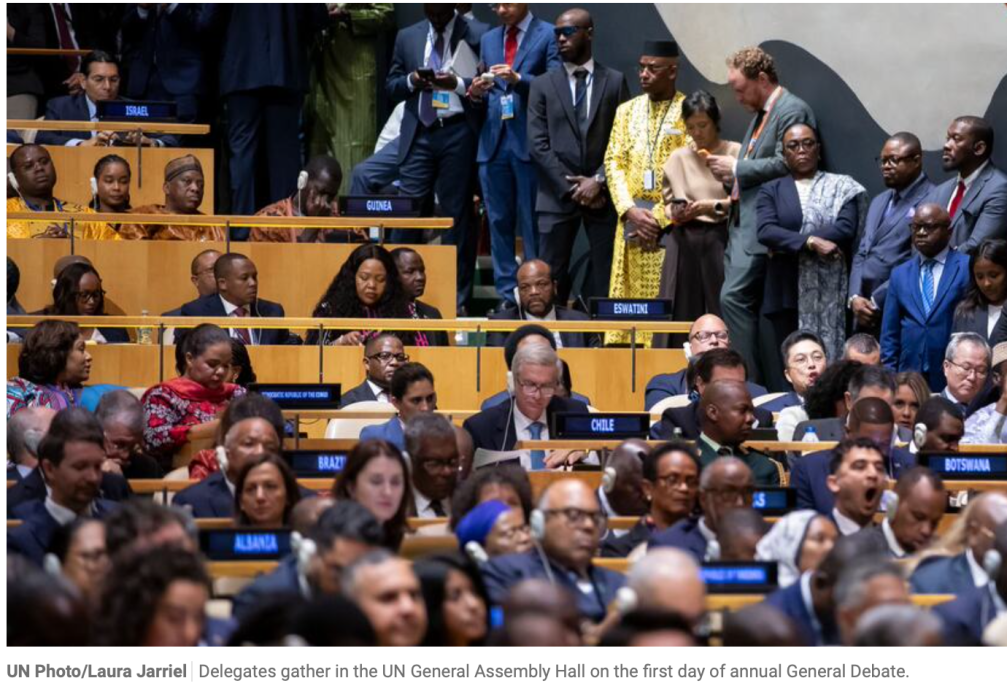
Good news may be hard to find these days. But here’s some. Representatives from about 60 nations met in northern Colombia in April to promote a transition away from fossil fuels.
The First Conference on Transitioning away from Fossil Fuels was a response to frustration felt after recent United Nations COP climate conferences, especially the one held last November in Belém, Brazil. Potential consensus around the transition away from fossil fuels broke down in the face of lobbying by oil companies and opposition from oil-producing nations.
The conference, co-sponsored by Colombia and Netherlands, ended April 29 with a clear message: the global conversation has shifted from whether to phase out oil, gas and coal to how to do it, with financing emerging as one of the biggest obstacles. As in many such international conferences, there were pre-events that gathered people from Indigenous, religious and other sectors.
“The mood here in Santa Marta is euphoric,” said Tzeporah Berman, the founder and chair of the fossil fuel non-proliferation treaty initiative. “After years stuck in endless debates about whether to phase out fossil fuels, finally we are focusing on the how. We are no longer fighting for recognition of the problem, but creating solutions. It’s like watching a dam break – all that pent-up experience, knowledge and passion suddenly flowing into concrete ways to phase out dirty fuels. The hope is contagious.”
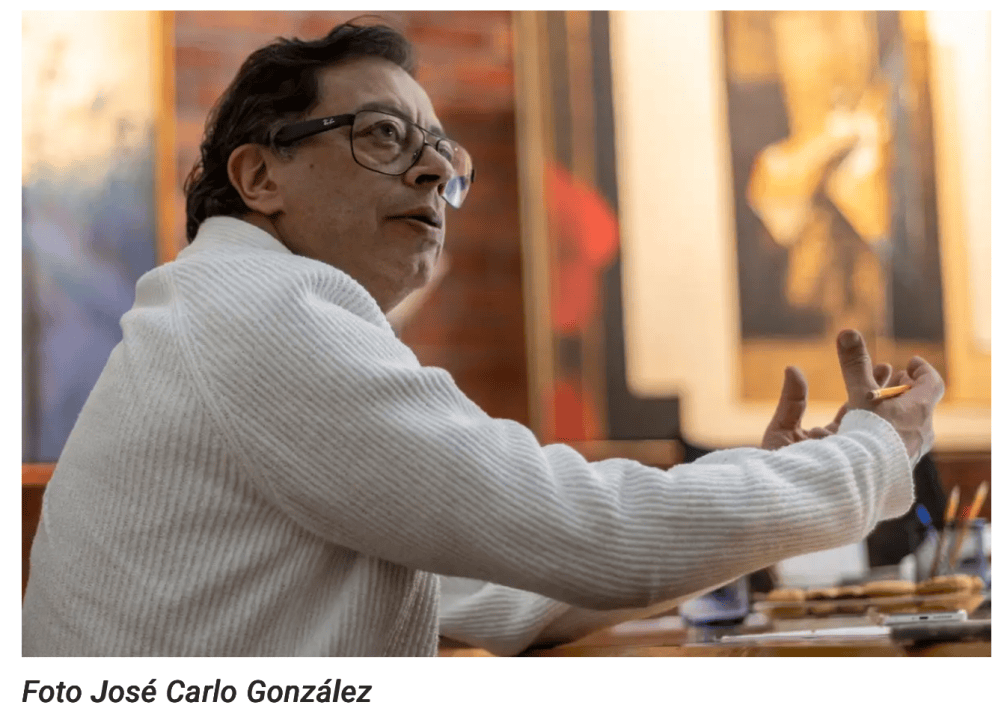
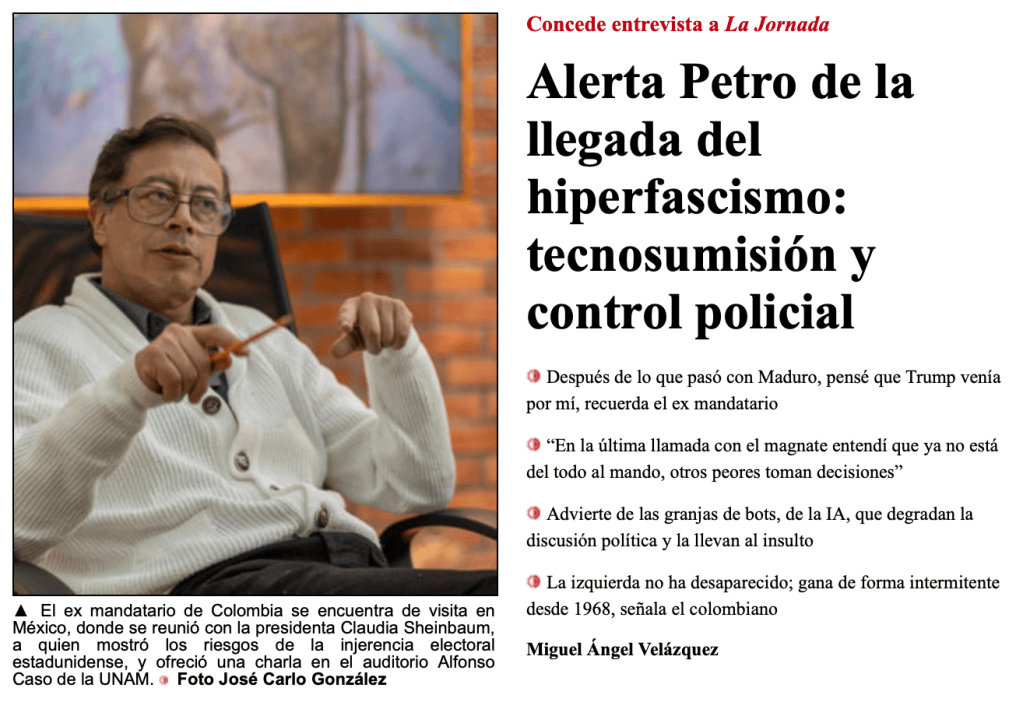
But participants were not unrealistic. Colombian President Gustavo Petro warned the world could “reach a point of no return” without the Amazon’s role in regulating the climate. Colombia is itself an oil-producing nation, but it has set a path of “gradual transition at home that balances climate goals with economic realities.”
Finding a good way forward requires addressing the global debt crisis. Countries in the global south that want to invest in renewable energy find themselves blocked by having to spend on high interest payments and imported fuel.
After the conference, Canadian scientist and broadcaster David Suzuki wrote: “Climate action requires unhinging power from foreign corporate privilege and putting it toward justice, democracy and the communities most affected.”
The Canadian government sent a representative: Jeanne-Marie Huddleston, Canada’s chief climate change negotiator – not a minister, but an employee of Environment Canada. Absence of a government minister was criticized (above) by Lloyd Axworthy, a former Canadian foreign minister who has emerged as a frequent critic of Prime Minister Mark Carney’s climate priorities – or lack of them.
Participating states agreed to meet again in Tuvalu in early 2027, a gathering to be co-hosted by Ireland. Climate scientists and the UN have warned that the South Pacific island nation could be submerged by 2100 due to rising sea levels.
Readers of this blog may find it odd that I am concerned about the fate of a Canadian mining company operating overseas, especially just days after a new report showed that U.S. sanctions have tripled Cuba’s infant mortality rate over the past seven years. (By the way, retired Latin American studies professor John Kirk of Dalhousie University have a new article about the impact of sanctions posted May 7 at rabble.ca.)
But Sherritt International Corp. had operated a nickel and cobalt mine in Holguín province as a joint venture with the Cuban state for more than 30 years, an arrangement that ensured Cubans shared the benefits of the mining operation. On May 7, as legal implications of new U.S. sanctions became clearer, Sherritt suspended its operations in Cuba.
In response to Sherritt’s announcement, the Canadian Network on Cuba (CNC) said the Canadian government must “take immediate and decisive action in defence of Canadian sovereignty, international law, and the right of Canadian companies to conduct lawful business free from foreign coercion and intimidation.”
CNC said President Donald Trump’s May 1 executive order “constitutes yet another illegal attempt to extend U.S. domestic law beyond its borders and impose Washington’s unilateral sanctions regime on the entire world. This represents not merely an attack on Cuba, but a direct assault on Canada’s sovereignty, on international trade law, and on the principle that no state has the right to dictate the economic relations of other nations.”
Further U.S. measures announced May 7 targeted Grupo de Administracion Empresarial S.A. (GAESA), partner of many foreign tourist operations, and Moa Nickel SA, the joint venture between Sherritt and Cuba’s state-owned nickel company.
The current escalation is rooted in the infamous Helms-Burton Act, passed by the U.S. Congress in 1996. The extraterritorial features of that law provoked anger in Canada and Europe, but those features were effectively waived by Presidents Bill Clinton, George W. Bush, and Barack Obama. In April 2019, Trump revived then. Canada’s then foreign minister, Chrystia Freeland, objected, saying Canada would “fully defend the interests of Canadians conducting legitimate trade and investment with Cuba.” She reminded Canadians that amendments in 1996 to Canada’s 1985 Foreign Extraterritorial Measures Act (FEMA) stipulate that any judgment issued under Helms-Burton “shall neither be recognized nor enforceable in any manner in Canada.”
CNC now poses the question: will the current government enforce FEMA? If the Canadian government fails to act now, FEMA becomes little more than a hollow gesture, and Canada effectively concedes that U.S. law supersedes Canadian law on Canadian soil. CNC argues that Ottawa must therefore:
Publicly denounce the Trump administration’s Executive Order as an illegal extraterritorial measure that violates international law and Canadian sovereignty;
Immediately invoke and enforce the Foreign Extraterritorial Measures Act to protect Canadian corporations operating lawfully in Cuba;
Provide legal, diplomatic, and financial protections to Canadian firms targeted by U.S. sanctions;
Coordinate with Mexico, the European Union, CARICOM nations, and other states opposing the blockade to resist Washington’s unlawful coercive measures; and
Reaffirm Canada’s longstanding opposition to the U.S. blockade and demand its complete and unconditional end.
Taken together, more than six decades of U.S. sanctions are described in Cuba as a blockade. The term is most apt now after more than three months of a U.S. blockade of fuel shipments from Venezuela and Mexico. The UN General Assembly has overwhelmingly condemned the U.S. blockade in annual votes for more than three decades. CNC adds:
“The blockade and its extraterritorial application violate the UN Charter, international law, freedom of navigation and trade, and the sovereign equality of states. Yet Washington continues to intensify this economic siege, now seeking to punish not only Cuba, but also Canadian companies, Canadian workers, and Canadian economic interests.”
The new U.S. sanctions follow a “long-standing policy and campaign of economic warfare, sabotage and destabilization aimed at strangling Cuba regardless of the collateral damage inflicted internationally,” says CNC. “Canada must choose whether it will defend its sovereignty and uphold international law, or whether it will permit itself to be subordinated to the extraterritorial dictates of a foreign power: whether to join empire or challenge it.”
In the context of the arrival of the Nuestra América convoy in Cuba, Joel Suárez spoke with La Jornada opinions editor Luis Hernández Navarro about the motivations of those who have rallied to help the island in the face of President Donald Trump’s “cynical and genocidal siege.”
Suárez is a key figure in the weaving of global solidarity relations between Cuba and other countries. His father, Rev. Raúl Suárez, was founder of the Martin Luther King Memorial Centre (CMMLK) in Havana, and Joel served as its coordinator for about 20 years. Raúl and Joel were central to the successful rapprochement between churches and the government in the 1990s, and Joel was part of the drive to expand the World Social Forum from its roots in Porto Alegre, Brazil. CMMLK is a global partner of The United Church of Canada. I first met Joel in Kingston, Jamaica, in October 2000 when we both attended a Caribbean Conference of Churches consultation. He was among my guides to diverse ecumenical and political situations I encountered in Cuba, Brazil, Venezuela, Colombia and beyond.
I am pleased to share some excerpts of the conversation between Joel and Luis here below.
“Those who support us have an affinity for the revolution“
Luis: These days, support has been arriving in Cuba from various countries. How is this solidarity being received? The right wing claims they are “useful idiots.” What is your opinion?
Joel: No one came here out of foolishness. There is always political tourism, but here, people came motivated by deep feelings of love and solidarity, which is the political name for love.
We need to understand where this solidarity comes from. It comes from people who sympathize with the revolutionary project and oppose the Cuban dissidents and their closeness to the empire and the United States government. They are part of a camp where there are diverse opinions about Cuba, where people converge who think this is heaven and who question those who claim this is hell.
But we are neither heaven nor hell. This is the country we have been able to create and that we have built under very adverse conditions. In this solidarity, there are many well-intentioned people who, despite the obvious differences, compare what is happening in Gaza to what is happening in Cuba: policies of genocide that use food, hunger, and energy as weapons of war, and intensify the siege against the country.
These people say: let the Cubans do what they want. If they want to go to hell or heaven, let them do it. They have come motivated by this feeling of understanding of our sovereignty and the difficult situation we are experiencing. There is another group of people who have come because they feel immensely indebted. Cuba travels the world not sharing what it has in excess, but the little we have.
Luis: Who are these aid workers?
Joel: Here I met people who came because they are parents of young people who became doctors in Cuba. People who came because Cuban medical brigades assisted the population in their countries during natural disasters. People from Central America who were supported by Cubans in the days following Hurricane Mitch. I met Italians from regions like Calabria where, despite the US offensive, 400 Cuban doctors continue to treat the sick and provide healthcare. Africans also came who are familiar with Cuba’s long history of contributing to national liberation movements in Africa, to the independence of Namibia and Angola.
Members of platforms and networks organized at the regional and global levels came. The People’s Forum of the United States brought a delegation of 40 young people. They have a campaign in the United States to purchase solar panels. Solidarity needs to be given substance and a material dimension.
Luis: What kind of solidarity is being shown?
Joel: We are seeking to connect this solidarity aid with strategies that not only provide temporary relief to the current situation but also contribute to greater sustainability. The solar panels, along with the strategies being implemented by our Ministry of Energy and Mines, aim to provide energy to healthcare centers, public services, banks, and, above all, water sources.
Another important contribution is in the area of healthcare. They are donating both general and specialized medicines, as well as medical supplies for therapies. They are trying to revitalize the surgical system in the country. There are hundreds of children waiting for operations. There are groups that have practiced more sustained solidarity over the years, for example, with oncology.
It’s important to connect this support with material aid to our organizations in Cuba. Contributions from various partners of CMMLK in the United States, Europe, and Colombia are sent to rural areas of Guantánamo, where we have people organized in social transformation projects. These projects are in the strategic planning stage, based on participatory assessments conducted with the community.
Luis: So, this support doesn’t go through the state?
Joel: Solidarity in Cuba has diverse channels. Churches, neighbours who bring a suitcase to their neighbours, and the neighbour distributes it among their friends, family, and family doctor. The Martin Luther King Centre, as a legally established association, has the legal mechanisms and guarantees for its own import of containers. Not only for this energy crisis, but also since the pandemic, or in the face of natural disasters, especially hurricanes. We have an area that constantly mobilizes international solidarity to confront emergency situations and this cynical, genocidal siege by Trump and the United States government.
Luis: How does Cuban society view this solidarity? As mere crumbs, or does it have another meaning?
Joel: There’s a bit of everything, like in a pharmacy. Many people bring donations and don’t publicize it. In general, there’s respect for the dignity of Cubans, forged in the face of imperialism, so they won’t hesitate or be harmed by any charity that’s meant to be publicized. People are grateful. They get anxious, saying, “Where is it? It hasn’t arrived.”
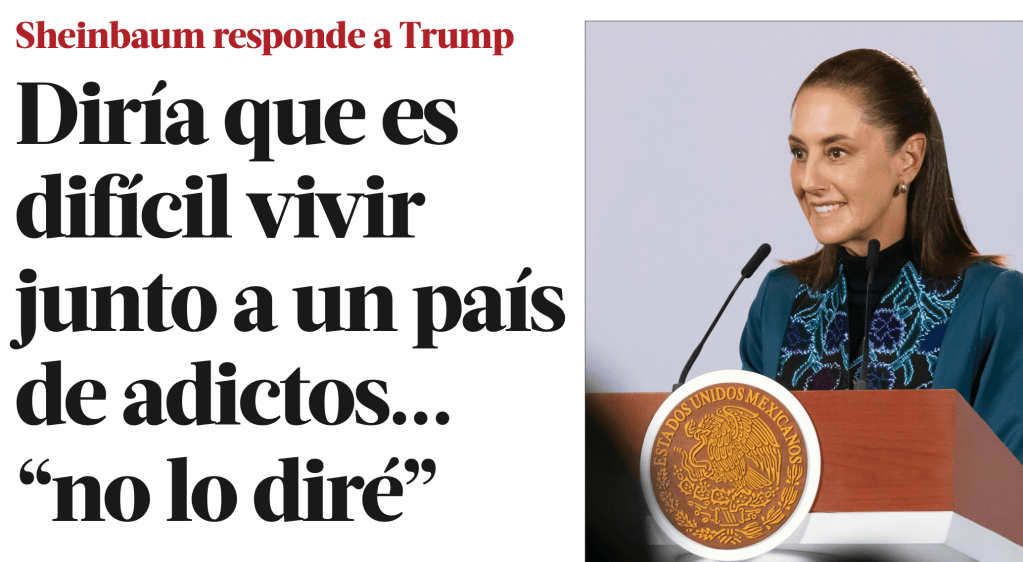
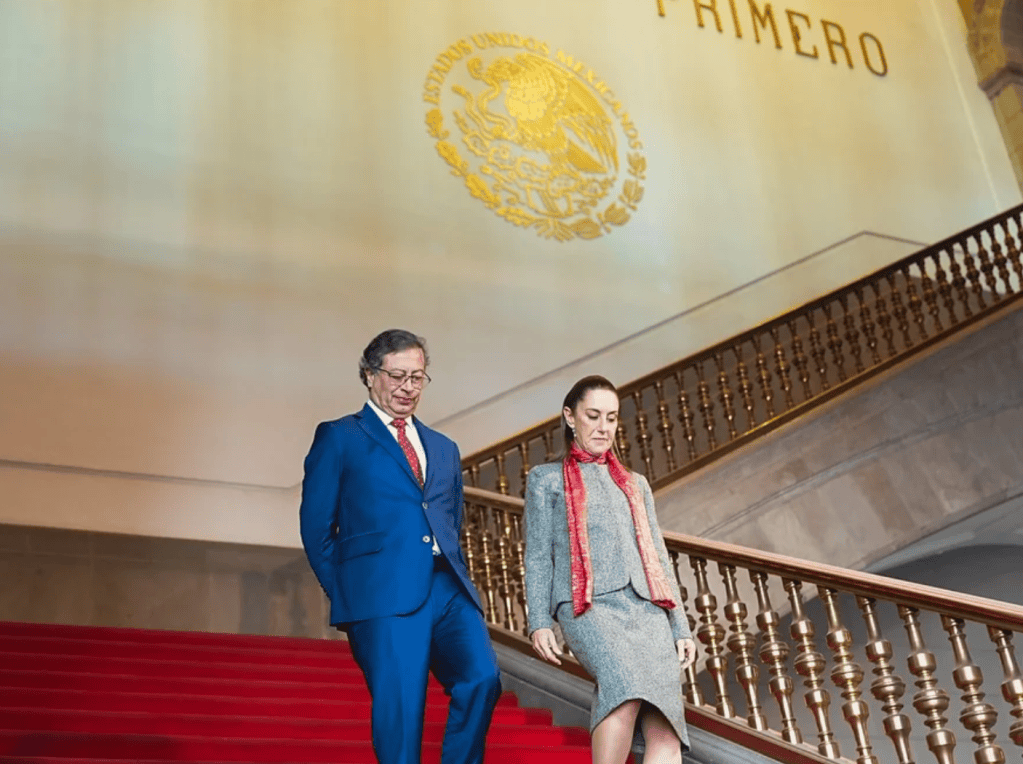
Mexican President Claudia Sheinbaum said Monday that her government is working with Cuba to renew fuel shipments. After almost three months of a U.S. oil blockade, a Russian tanker with 730,000 barrels of oil arrived in Matanzas, Cuba.Photo: La Jornada.
The aid that the Mexican government is sending, which is substantial, is distributed through the distribution systems of the Ministry of the Food Industry and the Ministry of Domestic Trade, and arrives at the bodegas (ration stores) in rationed quantities, free of charge. People are grateful.
It’s a dramatic situation, but we are grateful. Solidarity is a value that persists. What characterizes the new situation is the solidarity networks operating in communities, neighbourhoods, institutions, among people in civil society, and within the government agenda.
Likewise, we must not forget that the problem is marked by a global context of a fierce advance of the right, with an avalanche of a process of hegemony, domination and cultural homogenization of imperialism.