On murder and a birthday cake: Reflections on Colombia’s search for peace with justice

In human rights work, one’s first duty is to those who are harmed. But once in a while, one of the murderers says something that seizes attention as it reveals again the full banality of evil.

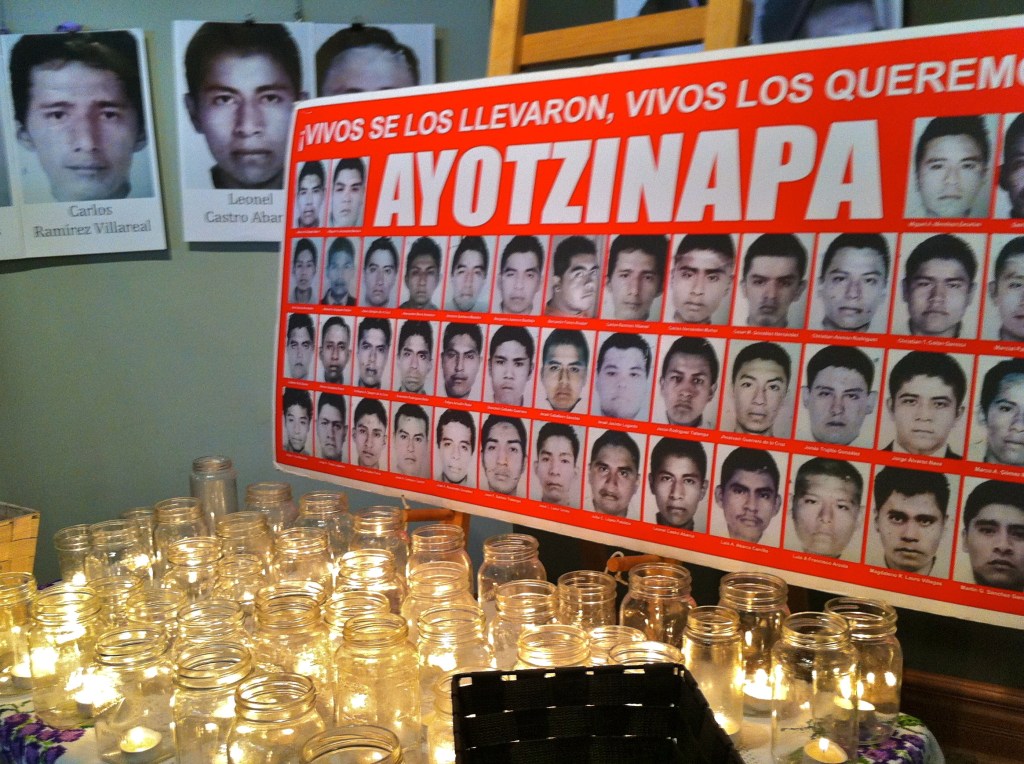
On July 19 in northern Colombia, the former professional solider Álex José Mercado asked forgiveness from a young woman for the murder of her father, saying: “The day that he was turned over to me (for killing), he had gone out to get a cake for your birthday.” In another moment, he said that he was not worthy to ask forgiveness from family members, but could only ask for pardon from God. “I lent myself to murder innocent people,” he said. He was 19 at the time at the time of his crimes.

This occurred during a hearing in Valledupar of Colombia’s Special Jurisdiction for Peace (referred to in Spanish as JEP). It’s the transitional tribunal that was set up to prosecute the perpetrators of crimes committed during six decades of armed conflict between the FARC-EP guerrilla fighters and the Colombian state. This hearing focused on the  falsos positivos, the false positives, that occurred just in the northern departments of Cesar and Guajira. In the country as a whole, Colombia’s armed forces kidnapped more than 6,000 young men, murdered them, dressed them as guerrillas, and then tried to pass them off “successes” in its war on “terrorism.”

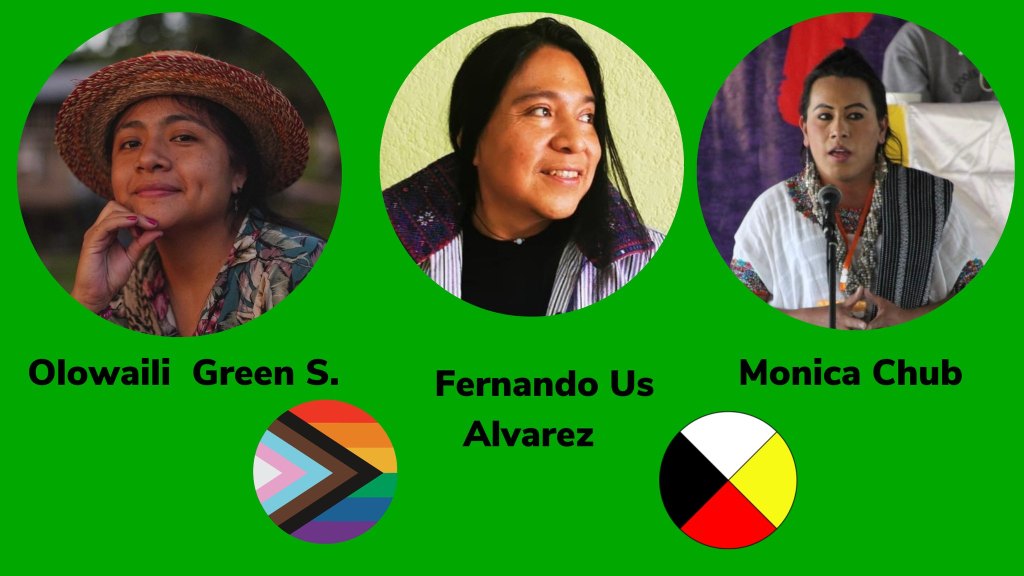
Others spoke for the victims: 

Left: Pedro Loperena, representing the Wiwa Indigenous people, said: “The economic aid policies of those who gave funds to the military forces must also be re-evaluated, because those resources were used to carry out these misdeeds.” Right: Daniela Rodríguez, spokesperson for the legal representatives of the victims and in the name of the Political Prisoners Solidarity Committee and the José Alvear Restrepo Lawyers’ Collective (CCAJAR), asked that the “centrality of the victims, their desires and expectations, be drives these proceedings.”

When he spoke about aid to the Colombian military, Loperena was polite and understated the problem:

This chart from U.S. civil society organizations shows more than two decades of U.S. aid to Colombia.

Over decades, the U.S. and Colombian governments have successively painted the war as: first, a war against communism; then, a war against drugs; and now, a war against terrorism. But the war in Colombia had its roots in the same struggle that has gone on in Latin America since the time of the European Conquest: the struggle by small farmers, Indigenous people and urban workers for land, social justice and basic human rights.

In the face of a peace process that has had limited support (and sometimes overt opposition) from the Colombian state, headed these past four years by Ivan Duque, that these tribunals continue to function is a triumph

One of the hardest parts of achieving a peace agreement between the Colombian state and the FARC guerrillas was to find language about how to manage crimes committed by state and non-state actors during the conflict. The two sides began negotiating in Havana in November 2012. The agreement on transitional justice and reparations was achieved in 2015 and the full peace accord signed in December 2016. The former adversaries agreed to a form of transitional justice, creating special tribunals to judge crimes committed by both members of the FARC and by state agents. 

It is not an amnesty, despite former president Álvaro Uribe’s characterization of the accord. In fact, that was what was avoided. Under international law that has come into force since the South African transition from apartheid to democracy in 1994, a full amnesty would not be legal. 

In November 2019, the Mesa Ecuménica por la Paz (Ecumenical Table for Peace) presented its report, “Blood of Martyrs, Seeds of Liberation,” to the chair of Colombia’s Truth Commission, Fr. Francisco de Roux SJ. In presenting the report, Omar Fernández acknowledged that it was not possible to encompass all of the many Christian martyrs of this long war: the team focused on those whose pastoral work represented the Church of the Poor.

Another triumph in recent weeks is the publication June 28 of the report of Colombia’s Truth Commission. Speaking July 14 to the United Nations Security Council, commission president Fr. Francisco de Roux said  that Colombia has demonstrated that those wounded by war can come together to build peace, happiness and “produce a tomorrow where there is hope”.  Over the last four years, the Commission has heard from more than 30,000 individuals and bodies and reviewed over 1,000 reports from victimized communities. He urged  the international community to give Colombia “nothing for war.”

Top of the list of recent triumphs is, of course, is the election of a new president, Gustavo Petro, and vice-president, Francia Márquez. Like the truth commission, Petro has criticized the U.S.-led war on drugs. The truth commission has urged Petro to lead a global conversation on changing drug policies, with a focus on regulation over criminalization.

Petro and Márquez will take office on Aug. 7, and already there is talk of capital flight – in effect, a boycott of Colombia by rich investors, including Colombians who already have one foot in Miami. The road ahead – ending the alliances of military forces with paramilitary death squads and drug-traffickers, ending the practice of assassinating leaders of social movements (at least 145 in 2021), protecting rain forests and reducing the grotesque gaps between wealth and poverty – will be difficult as evidenced by this long (and nevertheless incomplete) list of U.S.-sponsored coups and invasions launched against left leaders in Latin America. 

“The narco conquest of Indigenous land is like all the other conquests”

In September 1987, during my first visit to Mexico, I took a train through the Sierra Tarahumara from Chihuahua city to Creel and then along the rim of the spectacular Copper Canyon (left) to Los Mochis on the Pacific coast in Sinaloa state. (Now the same trip is a fancier tourist excursion, the Chepe Express.)

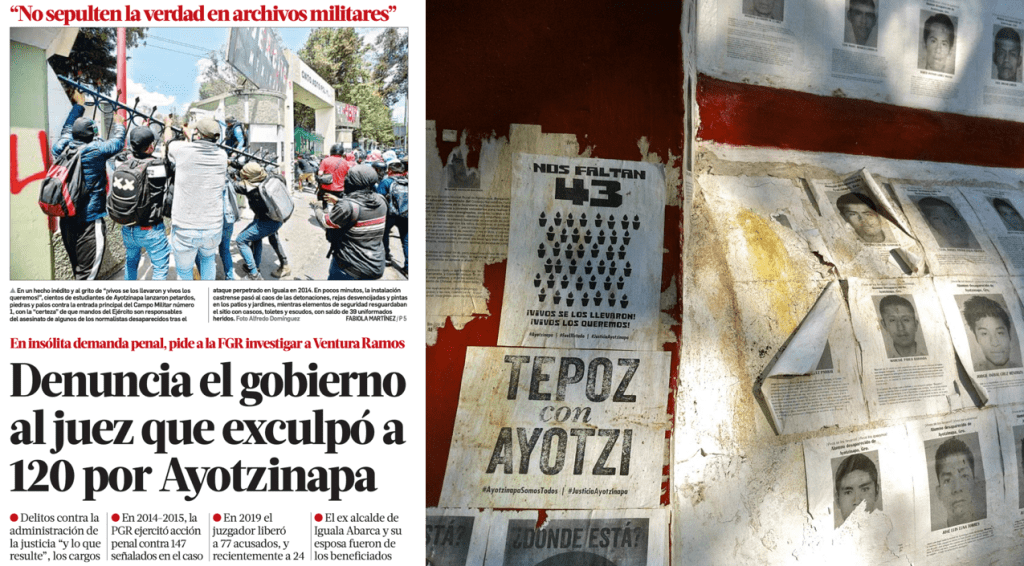
The murders last month in the Sierra Tarahumara of Mexico’s Chihuahua state of two Jesuit priests sparked grief and tension among Indigenous people, the Catholic church and various levels of Mexican government. The priests were Javier Campos Morales, 79, and Joaquín Mora Salazar, 81, known respectively as Gallo and Morita. A third person killed with them, Pedro Heliodoro Palma, was described as a tourist guide. Their bodies were taken by the killers, who were said by police to be linked to the Sinaloa cartel.

Mexican Jesuits recognized “with humility” that in a country with more than 100,000 disappeared people, they were fortunate to recover the bodies of their brothers within 72 hours of their disappearance. “A search that was coordinated among three levels of government reflects intense attention and action are likely not accessible to the immense majority of families whose cases do not gain public attention.”

In the last 30 years, 70 Catholic priests have been murdered in Mexico, including seven during the current presidency of Andrés Manuel López Obrador (known as AMLO). The motives, wrote sociologist Bernardo Barranco in La Jornada, are multiple: theft, kidnapping, extorsion, passion and politics. I would add incidental contact with drug-traffickers who, in this case, seem to have been chasing someone who sought refuge in the church in Cerocahui, municipality of Urique, where the Jesuits have carried out ministry among the Rarámuri Indigenous people in the Sierra Tarahumara. 

In 2006, then-President Felipe Calderón launched a military-led offensive against the drug cartels in an attempt to curb their violent turf wars. Instead, the violence became worse. 

In the town of Creel, in southwest Chihuahua, on Aug. 16, 2008, gunmen opened fire on a group of young people who were participating in a barefoot family race. One of them was carrying his baby in his arms. Some of the youth were related to the town’s mayor but had no link to organized crime. Thirteen people, including the baby, died. 

A few weeks later, Jesuit Fr. Ricardo Robles wrote

For a while now, but especially in recent months, a group of friends and I have been trying to better understand the significance of the evermore extended presence of the narco in the Sierra Tarahumara. It’s the narco-planting, that in some areas has seen four generations of narco-cultivators and has made this way of life become ordinary, indeed almost the only lifestyle now. But it is also the narco-transportation, the narco-struggle for control of territories, the generalized narco-corruption, including paid-for narco-elections, the abundant narco-money-launderers and the small narco-traffickers and narco-consumers

What is new in what we are seeing with the narco? A Rarámuri friend said it is the same thing they have seen for five centuries. “It’s another activity in which Indigenous people are pressured and obliged to work. It was the same with the mines,” he said. “There was the same violence and crime, the same deaths, the same enrichment and impoverishment and in everything we were left with the worst part. The same with the invasion of our territories, the same with the theft of our forests, the same with tourism that even takes our water, the same with the return of the mines. The same when one day they brought the planting of marijuana and poppies. For us it’s the same thing. This is how invasions are, but perhaps for you this seems new.”  

Perhaps all that is truly new is that now the blood is spattered on all of us, that we are all being conquered, tyrannized and forced to submit.

The Spanish conquistadores, hungry for gold and other precious minerals, arrived in the Rarámuri territory in 1589. The Jesuit religious order followed in 1608. They were expelled from the Spanish colony and 19th-century Mexico, but returned after 133 years in 1900 with the intention of educating the Indigenous people. La Jornada journalist Luis Hernández Navarro writes that after facing about 40 years of resistance, the Mexican Jesuits finally began to learn from the Rarámuri. By the 1960s, they had set aside their western notions and moved closer to the Rarámuri cosmovision. The Rarámuri converted the Jesuits “from being carriers of a doctrine into disciples, from being do-gooders into friends of the men and women of the Sierra Tarahumara, and companions in their secular resistance and defence of their freedom and autonomy.” Hernández adds that the two Jesuits killed in June had “accompanied the Rarámuri people who were subjects of their own history and not objects for colonization.”

In 2017, one of Hernández’s own La Jornada colleagues, Miroslava Breach, was murdered after documenting the expansion of organized crimes and its links with political institutions in Chihuahua. The image on the right is from the Committee to Protect Journalists. By the end of June, at least 10 journalists had been killed in Mexico this year.

At the funeral June 25 of the slain priests, Fr. Javier Ávila Aguirre, the Jesuit who serves at Creel, called on President López Obrador during his homily to look again at his approach to public security. “Our tone is peaceful but loud and clear. We call for actions from government that end impunity. Thousands of people in pain and without voice clamour for justice in our nation. Hugs are no longer enough to cover the bullets.”

In his daily news conference on June 30, the president responded: “Those expressions of ‘hugs are not enough.’ What would the priests have us do? That we resolve problems with violence? That we disappear everyone? That we bet on war?”

The point, however, made by human rights groups and some religious leaders, is that after nearly four years AMLO’s approach to the drug war has not produced a noticable reduction in violent attacks on civilians – or priests or journalists. While the president says he is working on the “causes of violence” – poverty, marginalization, exclusion – what people want is protection now. 

The issues raised by the Jesuits and human rights groups should not be seen as normal political attacks on an incumbent politician, but rather contributions in a search for real solutions. 

Bernardo Barranco, the sociologist-columnist cited above, told a La Jornada colleague in an interview that churches are present in places where the state is absent, and that they could have a mediating role. He pointed to the state of Guerrero where, for example, Bishop Salvador Rangel of Chilpancingo-Chilapa negotiated in 2018 with organized crime so as to end the assassination of local candidates and to permit the population to vote. 

Such conversations may not lead to solutions in every instance, but it’s clear that new ideas and less defensive dialogue are needed if Mexico is to find a way forward.

And North American narco-consumers need to say NO to illegal drugs, at least for the sake of solidarity with victims of narco-violence.

People at greatest risk need ‘politics of friendship’

Away back in May of 2007, David and I were driving toward the Mexican border on Highway 77 near Victoria, Texas, when we noticed flowers and signs by the side of the road. We stopped and soon realized we were at a place where people were remembering a tragedy.

On May 14, 2003, 19 migrants died here after a driver abandoned a trailer truck that carried as many as 100 people.

We remembered them last week as news came that 53 migrants had died after the trailer in which they were being carried had been abandoned off Interstate 35 near San Antonio, Texas. 

That incident came only three days after 23 African men lost their lives in a desperate attempt to reach Europe by trying to enter the Spanish enclave of Melilla from neighbouring Morocco.

Politicians have tried to excuse their culpability in all of these deaths by blaming them on “human smugglers,” but the true problem is migration policies that are inhumane – “criminal,” said an editorial in Mexico’s La Jornada newspaper.

Back in 2003, the chair of the U.S. Catholic bishops’ Committee on Migration, Bishop Thomas G. Wenski (now the archbishop of Miami) said the deaths in Victoria were the result of a “flawed and inhumane” border policy. 

“It is time for our elected officials to acknowledge that the border blockade strategy our nation has pursued since 1993 is a flawed and inhumane policy,” he said in a written statement issued a day after the tragedy. (His comments were published by National Catholic Reporter on May 30, 2003, but the article is no longer available on line.)

Politics of friendship

As I thought about the migrants who died last week, it seemed to me that many people in the wealthier countries of the global North lack empathy with people faced by extreme levels of violence and poverty in the global South. 

And then a line from José Cueti (psychologist, author and columnist at Mexico City’s La Jornada daily newspaper) caught my eye: 

“Lo real es que no existen las políticas de amistad hacia los más necesitados.”  Or, fairly literally: “What’s real is that politics of friendship towards those in greatest need do not exist.”

So then I found myself in a fairly deep dive into the thinking of Jacques Derrida on politiques de l’amitié. That led to Pope Francis’s encyclical Fratelli tutti, where he proposes “a better kind of politics.” The politics we need, he argues in chapter 5, “is a politics centred on human dignity and not subjected to finance because ‘the marketplace, by itself, cannot resolve every problem.’” And finally I read a comment by the Argentinean-Mexican philosopher and historian Enrique Dussel where he proposes the concept of solidarity as a way to overcome contradictions and limitations that occur in some uses of friendship and fraternity (including not only the limited gender sense of the latter).

Empathy. Friendship. Fraternity. Solidarity. We don’t have enough of any of those, and we fail to allow those values to inform our politics, much less our refugee determination policies. Instead, greed limits our human response to the tragedies that lead people into the back of a trailer, or on to a rubber lifeboat in the Mediterranean, or over a wall between Melilla and Morocco.

Immigration policies that do not allow migrants to present a refugee claim are part of the problem, and I have frequently decried economic development practices that augment poverty, violence and desperation in countless countries around the world.

Consider the choices (or lack of them) that might have driven your ancestors to migrate.

A few words about a book that might help you understand better the limited choices facing huge numbers of people.

John Vaillant, The Jaguar’s Children. (Knopf Canada, 2015).

Most North American writers get Mexico wrong. Vaillant gets it mostly right. He even grasps México profundo—the people, places and stories that are distant from official Mexico. He gets inside the faith of the people—that practice of Christianity that is woven together with the spiritual traditions of Nahua, Zapotec, Maya and many other Indigenous peoples.

Here is a novel that speaks specifically of Indigenous Mexican’s profound relationship with corn and the threat they feel from industrial agriculture and its genetic modifications, terminator seeds and exclusion of all that is valuable in the shameless search for profit.

If you can’t afford to buy the book, or you’re too impatient to wait for a library copy, or you think that you don’t read novels: go and stand in a bookstore or a library and read chapter 24. Here, concisely, is all the horror of what is going on in Mexico and Central America these days: the free trade schemes that destroy traditional agriculture, decimate rural communities and drive hundreds of thousands of migrants into the cities and across the northern border.