Turning the world upside down: systemic change needed now

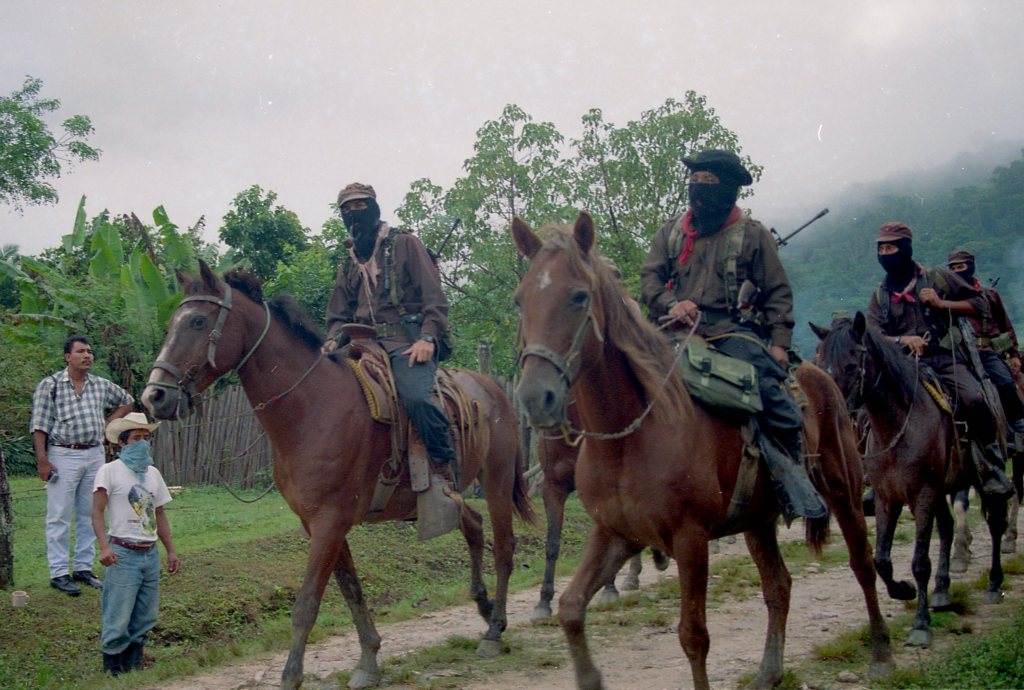
Photo: Granma.cu

by Jim Hodgson

In the face of deep inequality within and among the nations of the world, leaders of the so-called “less developed countries” find they must still appeal for basic fairness from their richer neighbours.

More than 75 years after the United Nations was formed, and almost that long since the first development programs were implemented (e.g., the Colombo Plan, 1950), and almost 60 years since the first gathering of the Group of 77 developing nations, leaders gathered last week in Havana and this week in New York to plead their case again.

Not that you would have read about the Havana meeting in mainstream media, but representatives from 114 countries attended the G77+China meeting in Havana. Among them were 30 heads of state or government, as well as senior officials from international organisations and agencies, including UN Secretary-General Antonio Guterres.

The meeting was held under the banner title, “Current development challenges: The role of science, technology and innovation,” but the talk was all about the systems of wealth and power that are rigged against developing countries.

In their final declaration Sept. 16, the G77 demanded fair “access to health-related measures, products and technologies” – a problem highlighted by “vaccine apartheid” during the Covid pandemic when richer countries had first access to vaccines. 

G77 called for an end to “existing disparities between developed and developing countries in terms of conditions, possibilities and capacities to produce new scientific and technological knowledge.”

They revived calls for a “new international economic order” and “new financial architecture,” including “through increasing the representation of developing countries in global decision and policy-making bodies which will contribute to enhance the capacities of developing countries to access and develop science, technology and innovation.”

Among the countries participating (including the host, Cuba) were several that have been harmed by sanctions that are usually imposed by wealthier countries to try to provoke changed behaviour by less powerful countries. Sanctions (referred to in the declaration with the UN Human Rights Council term “unilateral coercive measures”), together with external debt, inflation, displacement of peoples, inequality and “the adverse effects of climate change” are all among the “major challenges generated by the current unfair international economic order” and there is “no clear roadmap so far to address these global problems.”

Criticism of the existing international order carried over from the G77 meeting to the UN General Assembly, which met days later in New York.

“They don’t have the $100 billion to aid countries so that they can defend themselves against floods, storms and hurricanes,” said Colombian President Gustavo Petro, referring to the Loss and Damage Fund promoted at the COP climate negotiations to “new and additional” funding from donor nations.

Wars and climate change, he said, are related to that other unprecedented crisis: migration. “The exodus of people toward the north is measured with excessive precision in the size of the failure of governments. This past year has been a time of defeat for governments, of defeat for humanity.”

The political systems that we use to effect policy changes are failing to respond to the urgent needs of our time. Most politicians are beholden to the corporations and rich people who fund their political parties and perpetuate their hegemony. In four-to-six year electoral cycles, the deep changes needed to confront those problems are rarely undertaken. 

In Canada, think of the power that mining corporations have wielded to block meaningful investigation of human rights and environmental abuses by their subsidiaries overseas. Or the influence land speculators have over the Ontario government. Or the actions of oil, gas, coal and pipeline companies to stall meaningful action to cut greenhouse gas emissions. 

And then scale that up globally. Think of the ways pharmaceutical companies blocked access to HIV and AIDS medications until a global fund was found to pay them – and then pulled the same stunt over Covid vaccines. At the UN on Sept. 20, Guterres said time was running short for climate action thanks to the “naked greed” of fossil fuel interests.

What is delivered through Official Development Assistance and Sustainable Development Goals may be crumbs and band-aids. While necessary, those funds are not sufficient to counter instruments of power like corporations and their allies in the international financial institutions like the World Bank and the International Monetary Fund.

Political change is required to make the systems change.

As Xiomara Castro, president of Honduras, told the G77 in Havana: “The time has come to put an end to the backyards [using a U.S. term referring to its relationship to Latin America] because we are not pieces on a chessboard of those who are apologists for dependence. Our nations should not continue to suffer the mass privatization of their territories.”

Mafalda: But Liberty, you’ve put the map upside down!
Liberty: Upside down compared to what? Earth is in space where there is no up or down.
Liberty: That story that says the north has to be above is a psychological trick invented by those on the top to make those who are on the bottom continue to believe that we are the bottom. But, beginning today, conventional ideas are over!
Last panel, a voice: Where were you, Mafalda?
Mafalda: I don’t know, but a conventional idea has taken a blow.

(For that last line, Quino, the great Argentinian cartoonist who created Mafalda, wrote in the original Spanish version, “No lo sé, pero algo acaba de sanseacabarse” – the sense being that something has ended.)

Haiti and Dominican Republic: renewed border conflict has deep historical roots

Some Haitians see the effort to construct an irrigation canal in north-east Haiti as an effort to reduce food dependence on the Dominican Republic (left, from the Alterpresse news site); the Dominican president sees the farmers’ action as that of a “group of anarchists” (top right); the conservative Dominican daily Listin Diario recycles a decades-old piece by former president Joaquín Balaguer on “Haitian imperialism” (lower right).

by Jim Hodgson

Over these past 40 years, I have understood that one of the hardest things for me to do is to talk about Haiti and the Dominican Republic in the same breath. Differences between these Caribbean neighbours are profound. I love them both and have developed strong friendships in both places. The relationship between the two countries is often made worse, both by xenophobic and racist politicians in the Dominican Republic, and the refusal of the international community and Haitian elites to allow an effective state to function in Haiti.

Dominican President Luis Abinader has now staked his re-election campaign on a quarrel with Haiti’s weak interim government over community efforts to build an irrigation canal from a river near the northern end of the two countries’ shared border.

Rio Dajabón (or Rivière Massacre in French) is only 55 km long. Its source is in the Central Cordillera of the Dominican Republic, but it has tributaries from the Haitian side as well. A series of treaties achieved between the two countries in the 1920s and 1930s are supposed to govern how waters are shared and disputes resolved, but the process is not being respected now.

When I first started visiting both countries back in the 1980s, most Haitians in the Dominican Republic were sugar cane-cutters brought over by a contract that saw the Dominican State Sugar Council (CEA) pay the Haitian dictator Jean-Claude Duvalier $2 million each year for the cane-cutters’ labour. This was, rightly, denounced as slavery. With the fall of Duvalier in 1986 and then the decline of the cane sugar industry (brought on by the United States’ preference for high-fructose corn syrup (HFCS) produced from corn in its own factories), the practice ended. But Haitians still needed work, and Dominican industries (agriculture, construction and tourism) still need cheap labour. 

In fits and starts, successive Dominican governments have tried to force Haitians from the country, often with cruel, arbitrary measures. This past week, many Haitians rushed to get home before Abinader closed the border on Sept. 15. 

“It’s really a very drastic measure that doesn’t make sense economically for either the Dominican Republic or Haiti,” Diego Da Rin of the International Crisis Group told Associated Press. “This will clearly have very bad consequences economically in the Dominican Republic, and it will very likely worsen the humanitarian situation mostly in the areas close to the border.”

Historian María Elena Muñoz on Haitian-Dominican relations; the border at Jimaní-Malpasse in 2014.

Anti-Haitian campaigns in the Dominican Republic meet with some success because they echo traditional themes in Dominican history and culture. The problems which exist between the Haitian and Dominican peoples have roots in the colonial period. The colonial powers, Spain and France, divided the island between them in the 1697 Treaty of Ryswick which was signed to resolve a European conflict. 

A century later, a revolution by slaves in the French colony resulted in independence for Haiti in 1804. France fought a series of wars between 1795 and 1815 to recover what it had lost, and occasionally used the Spanish colony as a base for attacks on Haiti. 

During the same period, Haiti invaded the Spanish colony several times. Some Dominican historians (including Joaquín Balaguer, a former president) say Haiti’s leaders in this period and later were imperialists who tried to win control of the entire island. Some more progressive Dominicans counter this position with the argument that invasions of the eastern part of the island were designed to prevent its use as a French base for attacks on Haiti. 

Others say that Haiti’s new leaders proclaimed solidarity with their brothers and sisters who were still slaves in the Spanish colony. The invasions that took place between 1801 and 1856 came about because of a sense of solidarity based on shared class interests. 

It is the 1822 intervention that has had lasting consequences. Haiti seized the Spanish colony, and freed the slaves. It launched a land reform program, redistributing lands held by the rich and by the church. Dominican historian María Elena Muñoz argued in a 1995 book that the people did not feel themselves to be Spanish and preferred to benefit from what the Haitians had accomplished in their revolution. 

The occupation lasted until 1844, when the Dominican Republic won its independence in a rebellion against Haiti. While the rebellion’s leaders, particularly Juan Pablo Duarte, made clear that their movement was not aimed against Haitians because of their race or culture, his liberal views did not prevail in the new republic. Duarte was soon forced into exile, and the new Dominican leaders were more conservative and more fearful: they spent much of the next three or four decades trying to get their new country placed under a protectorate of some or other major power (especially Spain and France) for fear that the Haitians would come back.

It is in this period that anti-Haitian prejudice was born and talk of the “Haitian threat” began, because the interests of the elite classes were affected. But anti-Haitian prejudice based on the class interests of the wealthy could not catch on among the poorer classes, so it was disguised as racial prejudice. This had the effect that the elites wanted—division—and the anti-colonialist struggle was impeded.

The emergence of the Dominican state, brought about by the commercial class and perpetuated by other wealthy sectors, did much to damage the sense of identity which existed between oppressed people in the old Spanish colony and Haiti, a sense of identity which had been forged by the shared condition of slavery and the common enemy, European imperialism. Events of the past century—particularly the dictatorships of Rafael Trujillo (1930-61) and the Duvalier père et fils (1957-84)—have served to further isolate the two republics from one another, effectively creating two nations of people with differing views about each other and their places in the world. 


You can look at that history and find triumph: the liberation of the slaves in 1804 and 1822, and the acts of solidarity and compassion that occurred after the January 2010 earthquake when the first assistance that arrived in Haiti was brought by Dominicans. But you also find tragedy, notably the 1937 massacre of at least 18,000 Haitians ordered by Trujillo.

Haitian farm-workers that I met in 1987 in the mountains above San Cristóbal, Dominican Republic.

Remembering Salvador Allende, and those who followed

Today, Chileans are marking the 50th anniversary of the military coup that resulted in a 16-year military dictatorship. 

That event was formative for me in my political consciousness and awareness of both revolutionary struggle and U.S. imperialism. (Specific commitments took longer.) I was just 15, and in a Grade 10 social studies class when our teacher came into the classroom. In the first class after lunch, he told us about the coup. For weeks I had seen news items about strikes by trucking companies that were intended to weaken the socialist government of President Salvador Allende.

My teacher was livid, and my appreciation of his anger has stayed with me. In later years, I wrote university essays about Allende, and eventually my work with The United Church of Canada gave me several chances to visit Chile.

Twenty years ago, a few weeks after the 30th anniversary of the coup, I walked the streets of Santiago with my good friend Bill Fairbairn, a veteran of Canadian church and NGO efforts to defend human rights and to promote sustainable human development in Latin America.
We walked through the Moneda palace, the presidential residence that was bombed by the Chilean air force on Sept. 11, 1973, during the coup and where Allende died. Outside, we joined with tourists and had our pictures taken in front of the statue of Allende. 

Yo pisaré las calles nuevamente // De lo que fue Santiago ensangrentada // Y en una hermosa plaza liberada // Me detendré a llorar por los ausentes 

[I shall walk the streets anew // Of what was bloodied Santiago //And in a beautiful liberated plaza // I shall stop to weep for those who are absent] 

Pablo Milanés

We walked the streets of Santiago anew, recalling the songs Pablo Milanés and Bruce Cockburn wrote about the city during the military dictatorship. And we remembered too one of the dictatorship’s poet martyrs, Victor Jara, and some of the great writers since then, among them Isabel Allende (a cousin of the former president).

Bill had arrived that morning for an international conference marking 30 years of ecumenical commitment to the defense of human rights in South America; I was to leave that evening after a series of meetings with Chilean churches. He pointed out the sites of beatings and disappearances, and recalled the actions of brave people in the churches and beyond who struggled to defend life. 

Chile in the years of military rule became a laboratory for a new economic order that was later applied to almost all of the countries of this hemisphere. Decades of structural adjustment were applied at the behest of multilateral financial institutions like the World Bank and the International Monetary Fund, not so that countries would find their way out of poverty, but so that they would continue to pay the foreign debt. 

In 1988, dictator Augusto Pinochet allowed a plebiscite on his continued rule. He fully expected to win, but the people won the vote and then defended their option. And the decades since have been marked by efforts to undo the damage inflicted during 16 years of military rule. Even one of the better presidents, Michelle Bachelet, was unable to repair the highly privatized system for delivering social services, including health and education.

The walls speak: “Unity makes strength;” “For housing with dignity;” “Machismo kills – No Feminicide!” (Antofagasta, November 2016).

Two years ago, Chileans elected Gabriel Boric, a veteran of student protests against ongoing impacts of those “neoliberal” policies, to serve as president. His leadership, while inconsistent and often disappointing, at least offers space for social movements to organize for something better.

Great writers, including Ariel Dorfman and Carmen Aguirre, have published excellent, new reflections on the significance of the 1973 coup on their lives.

And York University professor Liisa North is editor of a new volume of reflections by civic, union and church activists about efforts to protect human rights and refugees, and to overcome the dictatorship: Canada-Chile Solidarity, 1973–1990: Testimonies of Civil Society Action – from Novalis and elsewhere.