From Bogotá, the Global South charges Israel with genocide

A two-day meeting this week in the Colombian capital ended with renewed commitment to pursue accountability for Israeli abuses in Gaza, including by preventing the transfer of weapons to Israel.

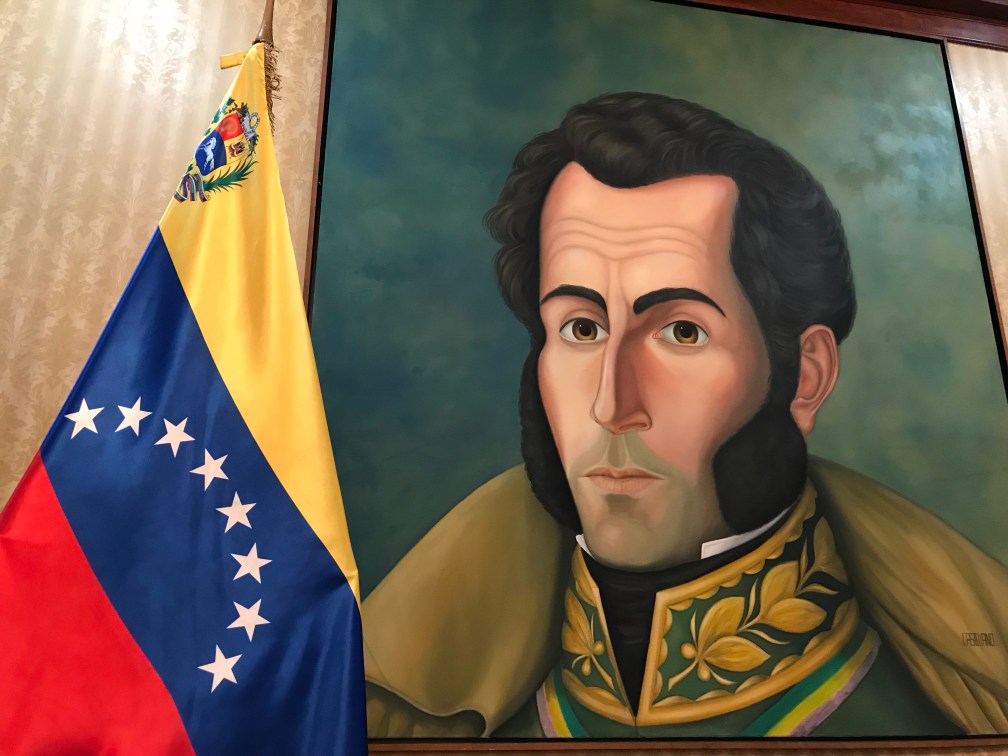
As the event drew to a close Wednesday (July 16), Colombian President Gustavo Petro (above) told participants, “Gaza is simply an experiment by the ultra-rich to show the impoverished people of the world how they will respond to humanity’s rebellion.”

Petro also distanced himself further from the North Atlantic Treaty Organization (NATO), which in 2022 had designated Colombia as a “non-member strategic ally.” 

“What are we doing in NATO, if its principal leaders are with the genocide?” he asked. “We must leave.”

A coalition known as The Hague Group organised the summit. It was born in January last year through the help of Progressive International (PI), an organization founded in 2020 to unite, organize, and mobilize progressive forces around the world. PI called the Bogotá meeting the “most ambitious multilateral action since the start of Gaza genocide 21 months ago.”

Jointly convened by the governments of Colombia and South Africa as co-chairs, the Hague Group also includes Bolivia, Cuba, Indonesia, Iraq, Libya, Malaysia, Namibia, Nicaragua, Oman and Saint Vincent and the Grenadines. At least 18 other countries, plus the United Nations and the World Council of Churches, sent representatives. Qatar and Egypt, which are overseeing negotiations between Hamas and the Israeli government, attended.

Israel’s offensive in Gaza has killed more than 58,000 Palestinians, according to Gaza’s Health Ministry, which has said women and children make up more than half of the dead. At least 90 were killed on Thursday (July 16), including those who were crushed at an Israeli-controlled food distribution site. Holy Family Church also came under attack, sparking criticism and new calls for peace from Pope Leo XIV and from the World Council of Churches.

During Tuesday morning’s opening event, various officials spoke, calling for an end to Israel’s attacks on Gaza. Colombia’s foreign minister, Rosa Yolanda Villavicencio, said during her morning address that Israel’s attacks constitute an unequivocal “genocide.”

Another key participant was Francesca Albanese (above), the U.N. special rapporteur for the Palestinian Territories. She denounced the inaction of the international community. She accused the West of justifying Israeli actions as the “right to defense” and said the vetos in the U.N. Security Council “protect war crimes” carried out in the sight of all.

“Palestine has changed global consciousness, drawing a clear line between those who oppose genocide and those who accept it or are part of it,” she said. Albanese was recently sanctioned by the US for her outspoken criticism of Israel’s actions.

“We believe in protagonism, not supplication,” said Varsha Gandikota-Nellutla, the executive secretary of The Hague Group. “Today marks an end to the era of the impunity and the beginning of collective state action by governments of conscience.”

The group members committed to implementing six measures immediately through their domestic legal and administrative systems to break the ties of complicity with Israel’s campaign of devastation in Palestine. They set September 20 as a date for other states to join them, coinciding with the 80th U.N. General Assembly. Consultations with capitals across the world are now ongoing.

“We hereby announce the following measures,” the Joint Statement on the Conclusion of the Emergency Ministerial Conference on Palestine reads, “to be adopted based on states’ domestic legal and legislative frameworks:”

  • Prevent the provision or transfer of arms, munitions, military fuel, related military equipment, and dual-use items to Israel…
  • Prevent the transit, docking, and servicing of vessels at any port…. in all cases where there is a clear risk of the vessel being used to carry arms, munitions, military fuel, related military equipment, and dual-use items to Israel
  • Prevent the carriage of arms, munitions, military fuel, related military equipment, and dual-use items to Israel on vessels bearing our flag… and ensure full accountability, including de-flagging, for non-compliance with this prohibition.
  • Commence an urgent review of all public contracts, to prevent public institutions and funds from supporting Israel’s illegal occupation of the Palestinian Territory and entrenching its unlawful presence.
  • Comply with obligations to ensure accountability for the most serious crimes under international law, through robust, impartial and independent investigations and prosecutions at national or international levels, to ensure justice for all victims and the prevention of future crimes.
  • Support universal jurisdiction mandates, as and where applicable in national legal frameworks and judiciaries, to ensure justice for victims of international crimes committed in the Occupied Palestinian Territory.

“These 12 states have taken a momentous step forward,” said Albanese about the joint statement. “The clock is now ticking for states—from Europe to the Arab world and beyond—to join them.”

The full joint statement is here.

Complete text of Albanese’s remarks is here.

Catholic bishops from Latin America, Africa and Asia demand climate justice

by Jim Hodgson

In a new document, Catholic church leaders from across the Global South blasted the “openly denialist and apathetic stance” of “so-called elites of power” in the industrialized world who pressure their governments to back away from much-needed mitigation and adaptation measures.

Preparing for the next United Nations climate change gathering, COP30, which will take place in November in Brazil, conferences of bishops from Asia, Africa and Latin America (FADM, SECAM and CELAM respectively) published a joint document entitled A call for climate justice and the common home: ecological conversion, transformation and resistance to false solutions. (You can download the document here.)

It’s the first time the three regional bodies have created a joint statement. The document offers an expansive vision for the U.N. climate conference. “At COP30, we demand that States take transformative action based on human dignity, the common good, solidarity and social justice, prioritising the most vulnerable, including our sister Mother Earth,” the bishops said.

They described the U.N. climate gathering as a moment for the church “to reaffirm its prophetic stance.”

Part of the 32-page document states:

Our demand

The climate crisis is an urgent reality, with global warming reaching 1.55°C in 2024. It is not just a technical problem: it is an existential issue of justice, dignity and care for our common home.

The science is clear: we must limit global warming to 1.5°C to avoid catastrophic effects. We must never abandon this goal. It is the Global South and future generations who are already suffering the consequences.

We reject false solutions such as ‘green’ capitalism, technocracy, the commodification of nature, and extractivism, which perpetuate exploitation and injustice.

Instead, we demand:

Equity: Rich nations must pay their ecological debt with fair climate finance without further indebting the Global South, to recover losses and damages in Africa, Asia, Latin America and the Caribbean, and Oceania.

Justice: Promote economic degrowth and phase out fossil fuels, ending all new infrastructure and properly taxing those who have profited from them, ushering in a new era of governance that includes and prioritises the communities most affected by the climate and nature crises.

“I am raising a voice that is not mine alone, but that of the Amazonian peoples, of the martyrs of the land—we could say of the climate—and of the riverside, Indigenous, Afro-descendant, peasant and urban communities,” said Cardinal Jaime Spengler, archbishop of Porto Alegre in southern Brazil and president of CELAM. He was speaking at a news conference July 1 at the Vatican.

Vatican News reported that Canadian Cardinal Michael Czerny, prefect of the Vatican’s human development office, spoke spontaneously in the news conference to point to the document’s connection to the legacy of Pope Francis. “Ten years ago, I wonder if there is anyone who could have imagined this press conference as a fulfilment and implementation of Laudato si’. This is an extraordinary expression of what Pope Francis has called for and what Pope Leo is continuing to underline and call. I am grateful,” he said.

WCC begins Ecumenical Decade of Climate Justice Action

In Johannesburg ten days earlier, the World Council of Churches launched its Ecumenical Decade of Climate Justice Action.

During a plenary session June 21 of the WCC central committee, church leaders from six continents shared reflections and urged action for climate justice.

The plenary emphasized the biblical concept of jubilee as a framework for systemic transformation—a key foundation of the Ecumenical Decade. Speakers called for churches to move beyond charitable responses toward addressing root causes of climate injustice, particularly the disproportionate impact on vulnerable communities.

“Our lifestyle consumes 1.8 times what Earth can renew. Economic transformation must begin in the heart; theology must shape discipleship and discipleship must shape the world,” said Rev. Dr. Charissa Suli, president of the Uniting Church in Australia, during a theological reflection on “Jubilee for People and Earth.”

[When I shared Dr. Suli’s comment on Facebook several days ago, my colleague and friend Mark Hathaway pointed out: “In the Global North, it is more like 4.5 times what the Earth can renew—and even higher in the U.S. and Canada (I think about 6 times). The richest 10-20 per cent of humanity is responsible for most consumption and most GHGs [greenhouse gases] and a mere 100 large corporations are responsible for 70 per cent of GHGs.”

WCC has held previous ecumenical decades in the past, including The Ecumenical Decade of the Churches in Solidarity with Women (1988-1998) and The Ecumenical Decade to Overcome Violence (2001-2010).

“Aggressive” U.S. policy tightens the screws on Cuba’s people 

The White House has a new document on Cuba. To those of us who have been watching for a while, it seems more acute: it tightens the screws on a people already suffering severe effects—shortages of power, food, and medicine—provoked by the U.S. blockade.

Esteban Lazo, president of Cuba’s National People’s Power Assembly, called the statement aggressive and unjust.

The statement talks about freedom for the people, democracy, respect for human rights and human dignity, and protection for dissidents and “peaceful demonstrators.” But it also tightens restrictions on U.S. citizens who travel to Cuba. Academic travellers must “engage in a full-time program of activities that enhance contact with the Cuban people, improve civil society, and promote the independence of the people from the authorities.”

It limits how Cubans might seek asylum in the United States and how family members send money back home. It gives U.S. Secretary of State Marco Rubio (a second-generation Cuban-American) the power to identify any entity under the control of, or acting for or on behalf of Cuban companies, as well as to regulate their financial transactions.

It also specifies that that the Trump administration will oppose petitions before the United Nations and other international forums that demand the lifting of the embargo.

There’s a new list of “prohibited officials,” including ministers, deputy minister, members or employees of Cuba’s Parliament and Supreme Court and even the editors of Cuban state media organizations.

Who are they trying to deceive?” ask the editors of Granma, the newspaper of the Communist Party of Cuba, in a front-page article today. “All this has been suffered by the Cuban people for more than 60 years.”

In social media posts June 30, President Miguel Díaz-Canel said that the new U.S. policy statement “responds to narrow interests that are not representative of the majority in that country, and further reinforces the economic blockade.” The goal, he added, is to cause the greatest harm and suffering to the Cuban people. “The impact will be felt, but we will not be defeated.”

Two weeks earlier, Cuba’s Catholic bishops recognized the critical situation faced by the Cuban people. In a Message for the Jubilee Year, they described: “the avid search for essential goods, the prolonged lack of electricity, the growing emigration, the disillusion, the apathy due to the repetition of promises that never come to fruition… the sadness.” Among the victims of the crisis are: “the elderly, who are alone and abandoned… those who feel they can’t freely express their convictions,” as well as those who are living on the streets, eating from the garbage bins, suffering from addictions. “They’re resentful or broken, and becoming ever more violent… lacking love, and empty of hope.” They comprise an “uncertain future,” and not only in Cuba, but also for the world.

The bishops called on “everyone, but primarily those who hold higher responsibilities” to “create a climate without pressures nor internal or external restrictions” for the “changes that Cuba needs.” The use of “external” refers to the blockade and other measures of the U.S. government; the “internal” to the political actions of the Cuban government.

Trump and Rubio use sanctions and other measures to try to force regime change. They pay no heed to the needs of the Cuban people, but churches, unions and non-governmental organizations around the world continue to press for an end to the blockade and for increased humanitarian aid.