
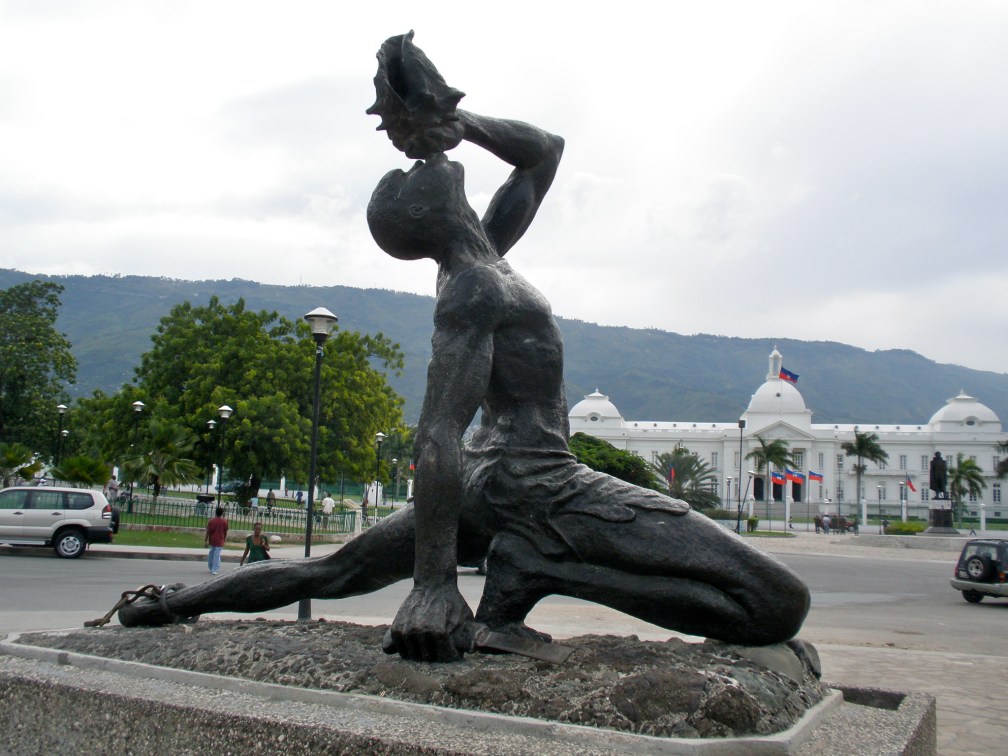

by Jim Hodgson
A United Nations forum on the historic wrongs committed against people of African descent is building momentum in favour of an international tribunal on atrocities dating back to the transatlantic trade of enslaved people.
When the UN Permanent Forum on People of African Descent (PFPAD) held its third session in less than two years in Geneva in mid-April, African and Caribbean governments together with civil society organizations pressed forward with plans to create a tribunal that would be similar to that which oversaw the Nuremberg trials of Nazi war criminals after World War II.
Proponents say such a tribunal would help establish legal norms for international and historical reparations claims.
Supporters include many members of the Caribbean Community (CARICOM), made up of 15 member states, and the African Union (AU), which includes 55 states—and Antonio Guterres, the UN General Secretary. “We call for reparatory justice frameworks, to help overcome generations of exclusion and discrimination,” he said March 25.
Supporters argue that Western countries and institutions that continue to benefit from the wealth slavery generated should be held accountable, particularly given ongoing legacies of racial discrimination. Opponents say that contemporary states and institutions should not be held responsible for historical slavery.

Righting the wrongs in Haiti
Given that Haiti’s claim for reparations is among the strongest, the voices of Haitian civil society groups and their diaspora counterparts were heard at the PFPAD forum.
Those groups used the forum to put a spotlight on the crucial role that Haiti played in the struggle to end slavery. “To recognize the historic context is essential to understand the unique position of Haiti in the global struggle for justice and egality,” they said in a statement before the forum. Participating groups—including the Montana Accord network and of the Haitian-American Foundation for Democracy (HAFFD)—said they strongly approve calls for reparations to Haiti.

Haiti was born as an independent nation in 1804 after the enslaved people revolted against their French colonial masters. The values of “liberté, égalité et fraternité,” expressed in the triumph of the French Revolution in 1789, resonated among slaves in Saint-Domingue, France’s richest colony. In 1804, the world’s first successful slave rebellion resulted in the birth of the Republic of Haiti.
Beginning in 1825, France squeezed an “independence debt” from Haiti that adds up to at least $21 billion in today’s dollars. That estimate comes from The New York Times, but backers of the reparations claim say the amount is much higher.
“It’s $21 billion plus 200 years of interest that France has enjoyed so we’re talking more like $150 billion, $200 billion or more,” Jemima Pierre, professor of Global Race at the University of British Columbia, told Reuters.
Despite the obvious injustice of that debt, France continues to resist pressure to join in reparations. In August 2010, about 100 prominent academics, authors, and human rights activists signed on to an open letter to then-President Nicolas Sarkozy, arguing that the case for repayment was “morally, economically, and legally unassailable.” France dismissed the petition, pointing to its record of delivering other aid to Haiti and not addressing the legitimacy of the debt.
“What’s important is that it’s time that France recognises this and we move forward,” Haitian civil society activist Monique Clesca told Reuters. France, whose development agency has given hundreds of millions of dollars in aid to Haiti, has previously referred to a “moral debt” owed to Haiti.
 Unwrapping Development