Resistance builds to the “epidemic of billionaires”

by Jim Hodgson

Back in the 1980s, a spike in global interest rates sparked a “third-world debt crisis” (yes, at the time, that is what we called it). The crisis became a shock-doctrine opportunity to strengthen a harsher form of capitalism, one that came to be called “neo-liberal economic globalization” or simply neoliberalism or globalization. Governments weakened themselves, cut taxes on wealth and on corporate profits, eased health and environmental protections, and capital became ever more transnational.

We are now more than four decades into neoliberalism. The economic crisis of 2008-09, when banks were rescued instead of people, further widened the gap between the ultra-rich one-per-cent and everyone else.

A decade of Trump and his cronies in power has produced what British writer Craig Murray calls “an epidemic of billionaires.” It is they who are now trying to force a form of transnational corporatist fascism on the rest of us.

In France, high school students lead protests

In North America, it takes some effort to get past mainstream narratives about recent student protests in France, Italy and elsewhere in Europe. Riots! Violence! Palestinian flags!! U.S. President Donald Trump and Vice President JD Vance blamed immigrants for France’s troubles.

But let’s dig deeper to find out what is really going on.

“Young people are asking for one simple thing: resources to get an education and access to quality studies,” writes French economist Thomas Piketty. He argues that the government of President Emmanuel Macron has presided over a “catastrophic and unprecedented 20% drop in the budget per student since 2017.”
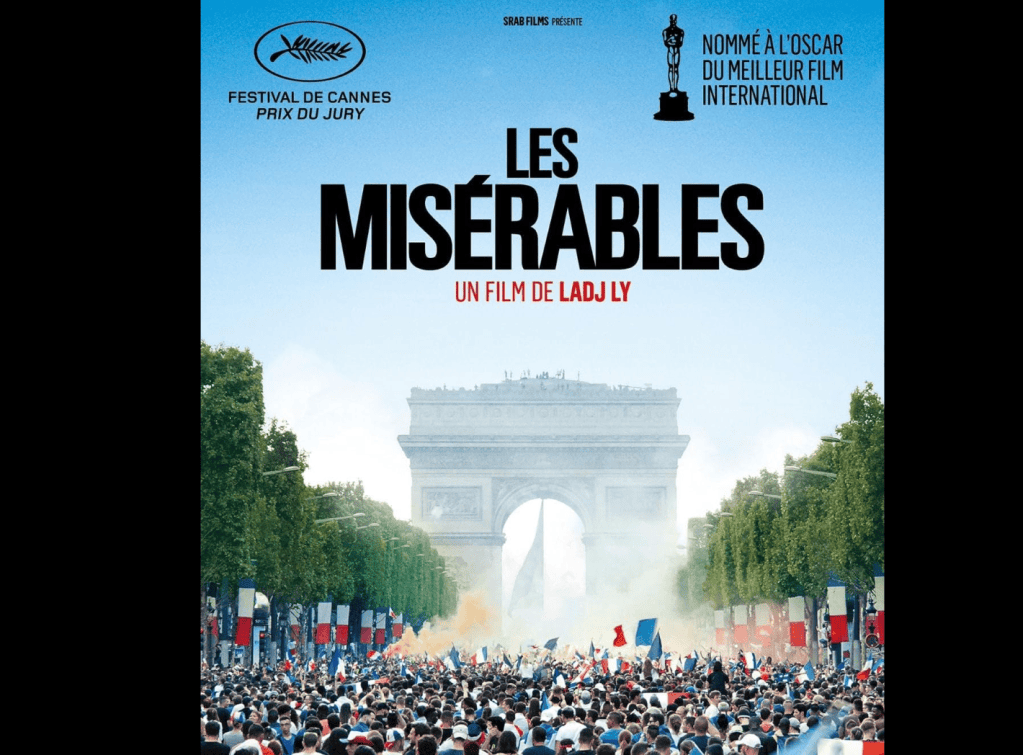
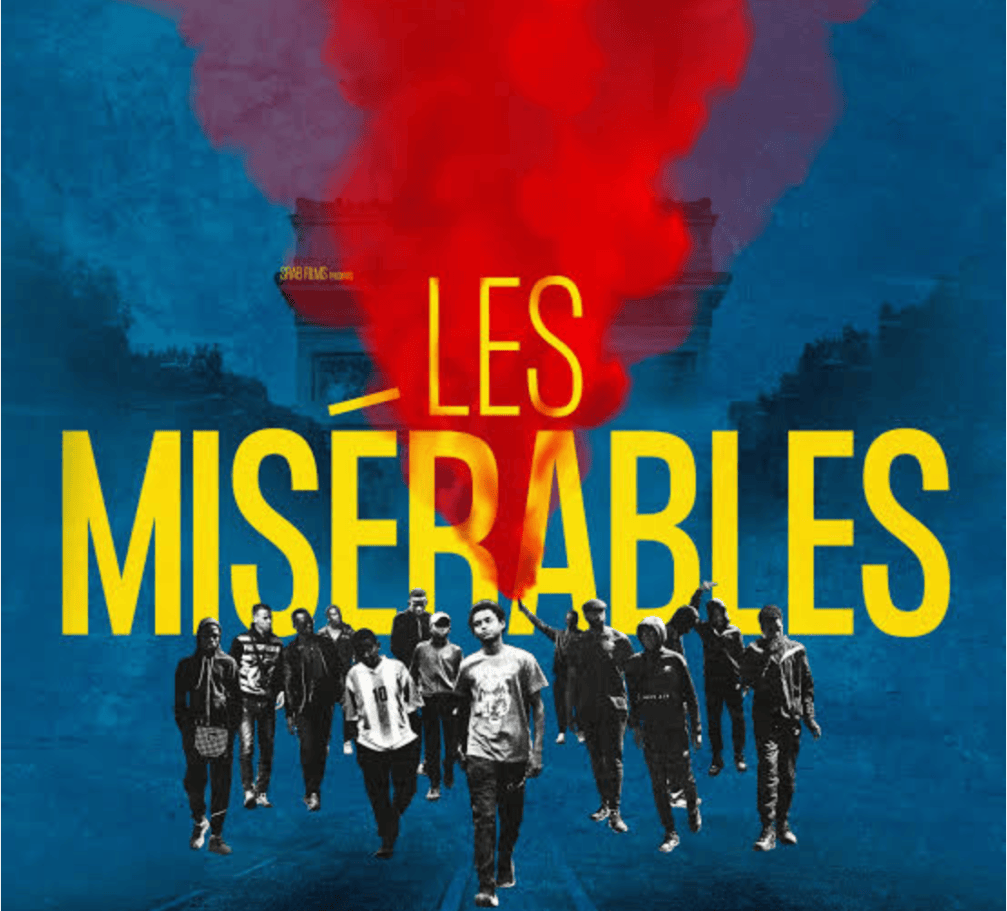
Think here of what you might have seen in the 2019 film, Les Misérables. Not the musical, but the drama about suburban Paris riots in 2005 that was France’s nominee for best international film at the Oscars. Recommended viewing!

While the government’s budget for education increased from €13.3 billion to €15.5 billion between 2017 and 2026 (up by 17%), inflation over the same period was 22%. And the number of students rose from 2.6 million to over 3 million, an increase of 15%. The result, according to Piketty, is that the budget per student dropped by about 20%:

“Reinvesting in these sectors [education and health] today is not simply a matter of equality between regions or social classes. It is also a key issue in moving further toward the gradual de-commodification and dematerialization of the economy, and, beyond that, to building a different model of development. Let us hope the current movement helps put these issues at the heart of the upcoming elections.”

What do cuts to education budgets mean to students? Matthew Fox of Catholics for the Common Good writes:

“The French student protests began on a small scale in mid-September, in high schools in the poorer suburbs of Paris. Their complaints ran from timetables and class sizes to a shortage of teachers and classrooms that had overheated during the summer’s heat waves, and by early October some protesters were attacking police and school staff. On Oct. 17, a national day of protest against the cost of living drew 550,000 people by the Interior Ministry’s count and 800,000 by the CGT unions.”

Fox goes on to describe responses from church leaders and organizations in France and also Italy, where similar protests grew. On Oct. 5, 12 days before the riots, France’s Young Christian Workers, the Jeunesse Ouvrière Chrétienne, a Catholic Action movement founded in France in 1927, issued a statement supporting the high school protests. The JOC objected to media coverage showing “une jeunesse qui casse et qui brûle,” a youth that smashes and burns, and it quoted a student in Nantes who criticized protesters who come only to break things. Relying on police intervention alone, the movement argued, signals decision-makers unwilling to negotiate.

(The JOC organizes about 6,000 young people between 13 and 30 from working-class families and neighbourhoods. It belongs to the Catholic Action movement of the Belgian priest Joseph Cardijn and his method of See, Judge, Act – and influential in the development of liberation theology since the 1960s.)

On Oct. 19, the presidency of the French bishops’ conference condemned the violence, expressed solidarity with injured officers and looted shopkeepers, and prayed that the students’ “just demands be heard and taken into account.”

Similar protests also took place in Italy, Belgium, Portugal, Spain, and Albania. And in Serbia, what began as a student movement became a representative political movement and won the recent election.

Ana María Aragonés, a French-born specialist in migration law who teaches at Mexico’s national university UNAM, wrote in La Jornada Oct. 19 that protest by growing social movements in Europe is a sign of growing recognition that the existing economic and political order no longer serves most people, be they students, seniors, immigrants, renters and workers. “Discontent touches ever wider sectors of European societies,” she writes.

“Could these social movements represent the beginning of a rupture with the nationalist and xenophobic discourse that for so long has served to divide workers and to preserve the privileges of capital? Could they open the possibility of a convergence between social movements in the Global North and South, not because their conditions are identical, but because they face the same root causes?”

In the United States and Canada, and indeed throughout the Americas, the moment feels a bit different. The urgent feeling now is to defeat Trump and his allies across the hemisphere, as Brazilians did in elections last week and as U.S. voters did Tuesday.

But at some point, we have to see that Democrats in the U.S. and Liberals and Conservatives in Canada have facilitated the same transfer of wealth to the top one-per-cent. Can we learn to see past the daily political headlines to discern the signs of the times that might propel us toward more profound change?


Karl Marx in the Rose Garden

By Jim Hodgson

I take my title today from a subhead in a column by Enrique Galvan Ochoa in the Mexico City daily La Jornada. I’ll translate and summarise from his text here:

Not even Karl Marx would dare to imagine such a spectacular coup against neoliberalism and globalization as that carried out by President Donald Trump with his explosion of tariffs to the whole world on April 2 in the Rose Garden of the White House. The cathedrals of capitalism tumbled, from Wall Street to all the other global stock markets. In just a week, investors fled in search of refuge for their money: in gold, government bonds—swallows in search of a nest. The blow from that unpredictable businessman installed in Washington will have lasting effects. And it will hit the poor as well as the rich.

With respect, I am not so sure that it was a blow against neoliberalism so much as its logical next step: away from unrestricted movement of capital and toward concentration of wealth in ever-fewer hands. 

But that’s my point: I’m not sure. Daily—this has been going on since Trump began his run for political office a decade ago—new opinion pieces land in my inbox, many of them making strong historical analogies. Is he trying to restore a golden age/Belle Époque—think of the 1870s through to the start of the First World War and the beginning of income tax—for oligarchic billionaires and their closest allies, the mere millionaires? 

I loved seeing the rapper Lizzo on Saturday Night Live this past weekend wearing a cropped t-shirt emblazoned TARIFFIED. On the right: Trump in a storm.

What to make of these tariff wars and consequent stock market losses? I find myself pushed to go deeper.

You don’t have to be a Marxist—I think here of sociologist Max Weber and Canadian social democrat Tommy Douglas—to see how societies (including the liberal ones) are divided between the dominant structures defended by the elites and the counter movements supported by those with fewer privileges. 

And you don’t have to be a Marxist to appreciate his writing. A passage in The Communist Manifesto describes how love and poetry, religion and community, are “drowned in the icy waters of selfish calculation.”  All of these are drowned so that personal worth becomes exchange value—you sell your labour—and numberless freedoms are abolished in favour of “that single, unconscionable freedom—Free Trade.” * 

We might be forgiven if we thought free trade was invented at the time of the great debates ahead of the North American Free Trade Agreement (NAFTA) in 1994, or the Canada-U.S. agreement in 1989, or the advent of the common market in Europe in the 1960s. Some might know that elections in Canada were fought and lost at the end of the 19th and early 20th centuries over various proposals for free trade with the United States: “No truck or trade with the Yankees!” cried the Conservatives in 1911, defeating the Liberals of Sir Wilfred Laurier. 

Just before Marx and his co-author Friedrich Engels published their Manifesto in 1848, debate raged in Britain over the “Corn Laws.” These were tariffs and other trade restrictions on imported food enforced between 1815 and 1846. Large land-owners wanted the tariffs kept high to keep out competition. Industrialists wanted them lowered because cheaper food meant they could pay workers less. (The industrialists won.) In a speech in Brussels in January 1848, Marx said protectionism was conservative and free trade was destructive. But he also saw that free trade in that context “hastens the social revolution” and thus merited his support. 

I like to say that I have been fighting free trade since 1848. But truth is the first time I wrote about the free trade debate was in 1986 (above).

My issue wasn’t so much having about rules for international trade—and we always press for protection for labour, the environment and human rights—as it was the protections that were built into the trade agreements for corporations (always referred to as “investors”). Under those waves of free trade deals, governments were blocked from protecting public health or the environment. Corporations would bring their complaints to an “investor-state” dispute resolution tribunal. Most times, the tribunals would rule in favour of the corporation and the state would be on the hook for the corporation’s imagined future earnings. Or they would succumb to the threat of the suit, as Panama is doing now in the face of a $20-billion suit.

Now that Trump has thrown away the rule book, it may seem that people like me are suddenly defending free trade. I think we’re defending the idea of at least having rules. Even as we fight specific battles (I think of the lawsuit brought by Canadian mining companies against El Salvador), we learned to live with economic integration: even after the havoc caused in Canada to industrial jobs and farmers after the 1989 FTA with the United States; even after U.S. abandonment of its industrial workers; and even after two million Mexican farmers were forced from their land and into the cities and across the border after NAFTA in 1994. 

But let’s not lose sight of longer-term objectives. In the face of this crisis in capitalism, what are the opportunities? The “social revolution” envisioned by Marx may be distant, but in these last 40 years, social movements have never ceased to uphold human rights broadly understood: economic, social, cultural and environmental. 

Manuel Pérez Rocha works now with the Institute for Policy Studies and writes an occasional column for La Jornada. (In the late 90s, we both worked with the Mexican Action Network on Free Trade, RMALC). Recently, he pointed to a long list of actions taken together by Mexican, Canadian and U.S. organizations. He continued: 

“Under Trump, we suffer from a savage neoliberalism that evades treaties, written rules, and multilateral organizations. He sees no friends and only enemies. The only laws are those of the strongest and ‘I’m in charge.’ Mexico must respond by demanding a thorough review of the USMCA [called CUSMA in Canada and T-MEC in Mexico], chapter by chapter, since its purpose and content are largely the same as those of NAFTA: to make Mexico an export platform to take advantage of cheap labour. Together with Canada, we must promote this review by generating spaces and resources for democratic participation, not only for business leaders but also for grassroots organizations in all three countries.”

Meanwhile, Charlie Angus continues his resistance campaign. (In the current federal election, he is not running again.) On April 14, he reminded his Substack readers of Rules for Radicals by Saul Alinsky.

Angus points to what Alinsky would say about our collective sense of loss over what is happening in the world today:

“Do one of three things. One, go and find a wailing wall and feel sorry for yourselves. Two, go psycho and start bombing – but this will only swing people to the right. Three, learn a lesson. Go home, organize, build power.”

* Karl Marx and Friedrich Engels (1848), The Communist Manifesto in Essential Works of Marxism (18th ed., 1979), New York: Bantam, p.15.