
By Jim Hodgson
Good news may be hard to find these days. But here’s some. Representatives from about 60 nations met in northern Colombia in April to promote a transition away from fossil fuels.
The First Conference on Transitioning away from Fossil Fuels was a response to frustration felt after recent United Nations COP climate conferences, especially the one held last November in Belém, Brazil. Potential consensus around the transition away from fossil fuels broke down in the face of lobbying by oil companies and opposition from oil-producing nations.
The conference, co-sponsored by Colombia and Netherlands, ended April 29 with a clear message: the global conversation has shifted from whether to phase out oil, gas and coal to how to do it, with financing emerging as one of the biggest obstacles. As in many such international conferences, there were pre-events that gathered people from Indigenous, religious and other sectors.
By all accounts, the gathering in Santa Marta felt different from past climate talks.
“The mood here in Santa Marta is euphoric,” said Tzeporah Berman, the founder and chair of the fossil fuel non-proliferation treaty initiative. “After years stuck in endless debates about whether to phase out fossil fuels, finally we are focusing on the how. We are no longer fighting for recognition of the problem, but creating solutions. It’s like watching a dam break – all that pent-up experience, knowledge and passion suddenly flowing into concrete ways to phase out dirty fuels. The hope is contagious.”
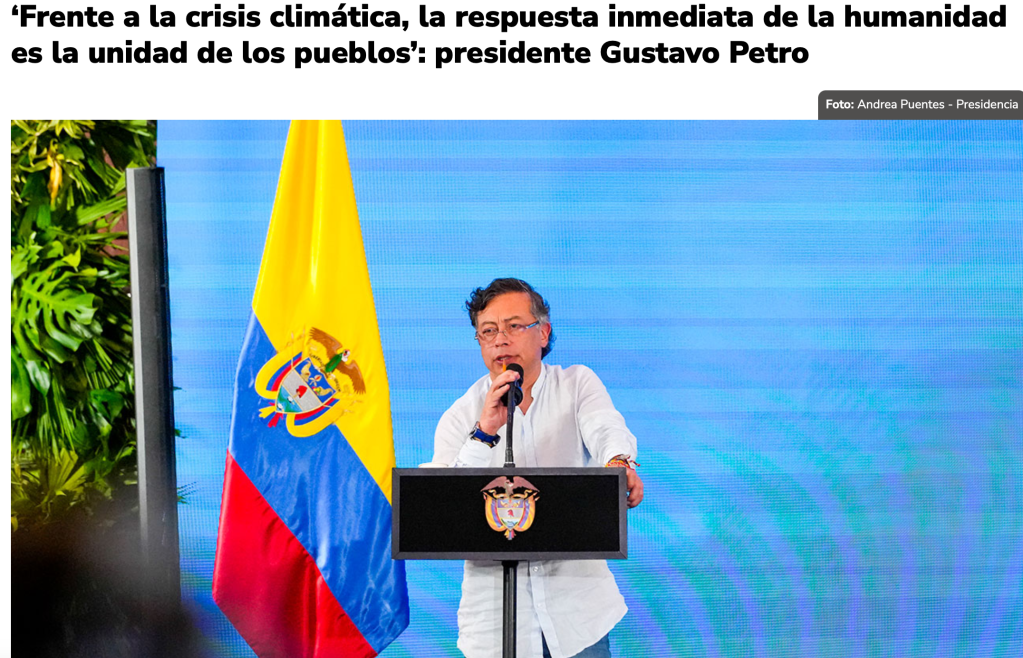
But participants were not unrealistic. Colombian President Gustavo Petro warned the world could “reach a point of no return” without the Amazon’s role in regulating the climate. Colombia is itself an oil-producing nation, but it has set a path of “gradual transition at home that balances climate goals with economic realities.”
Finding a good way forward requires addressing the global debt crisis. Countries in the global south that want to invest in renewable energy find themselves blocked by having to spend on high interest payments and imported fuel.
After the conference, Canadian scientist and broadcaster David Suzuki wrote: “Climate action requires unhinging power from foreign corporate privilege and putting it toward justice, democracy and the communities most affected.”
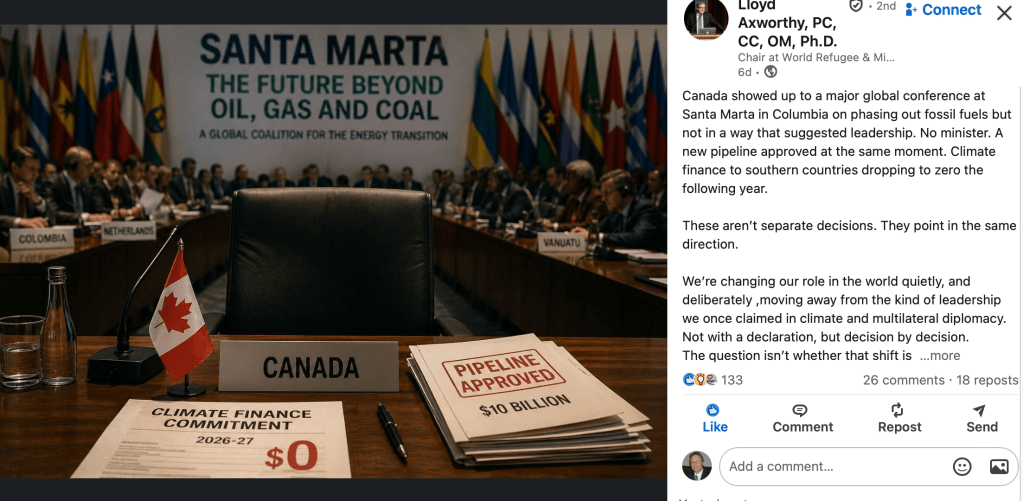
The Canadian government sent a representative: Jeanne-Marie Huddleston, Canada’s chief climate change negotiator – not a minister, but an employee of Environment Canada. Absence of a government minister was criticized (above) by Lloyd Axworthy, a former Canadian foreign minister who has emerged as a frequent critic of Prime Minister Mark Carney’s climate priorities – or lack of them.
In recent weeks, Canada has announced approval for expanding liquefied natural gas, a sovereign wealth fund — which among other things could help oil and gas projects of national interest — and its next budget looks to be cushioned by higher oil prices driven by the Iran war.
Participating states agreed to meet again in Tuvalu in early 2027, a gathering to be co-hosted by Ireland. Climate scientists and the UN have warned that the South Pacific island nation could be submerged by 2100 due to rising sea levels.

