U.S. approach to Venezuela is “imperial madness”

by Jim Hodgson

The claim by U.S. President Donald Trump that his forces attacked “a big facility” in Venezuela left me wondering if he was (again) flat-out lying, having another cognition meltdown, or maybe speaking some sort of truth.

In a radio interview Dec. 26, Trump said: “We just knocked out – I don’t know if you read or you saw – they have a big plant or big facility where they send the, you know, where the ships come from. Two nights ago, we knocked that out. So we hit them very hard.”

In Venezuela, officials reacted hesitantly. It turns out there was a fire earlier that day at a chemical warehouse run by a company called Primazol in Maracaibo, a major hub for the export of petroleum. But in Venezuela, the fire was treated as a minor event, and the company issued a statement rejecting “the versions circulating on social media,” stating that they “have no relation to the incident and it does not correspond to official or verified information.”

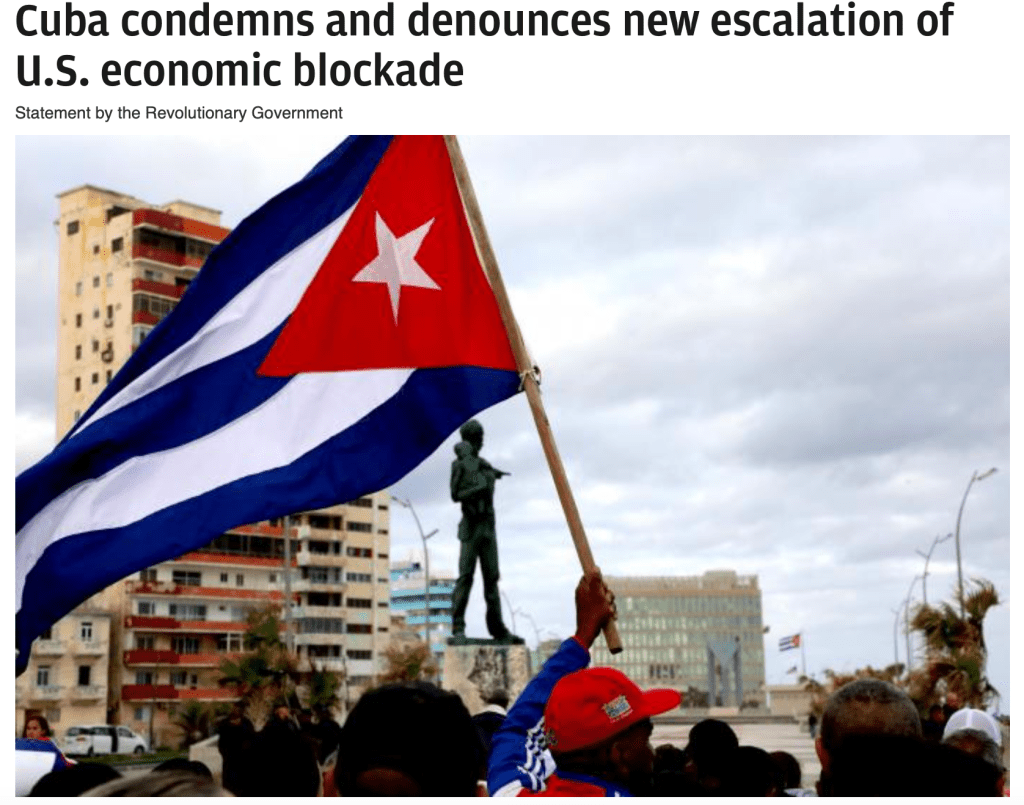
Headline and photo from TeleSur English site.

The Primazol plant is located five km from the sea, making it doubtful that there was any facility there from which boats carrying drugs could depart, much less a “dock,” as Trump claimed in a second set of comments at Mar-a-Lago Dec. 29. (“There was a major explosion in the dock area where they load the boats up with drugs.”)

Today’s New York Times morning newsletter quotes U.S. officials who may be trying to provide cover for their boss or offering a semi-truthful account:

A port strike

The C.I.A. [Central Intelligence Agency] conducted a drone strike on a port facility in Venezuela last week, people briefed on the operation said. The strike was on a dock where U.S. officials believe a Venezuelan gang was storing narcotics, and it did not kill anyone, they said. The strike is the first known American operation inside Venezuela.

This Times story offers new details on the strike, which President Trump has already discussed openly, despite the secrecy that typically surrounds C.I.A. operations. 

The Trump administration has focused on three goals — to limit Nicolás Maduro’s power, to use military force against drug cartels and to secure access to Venezuela’s vast oil reserves for U.S. companies.

“We’ve had 27 weeks of imperial madness”

Venezuelan Interior Minister Diosdado Cabello denounced the silence of the international community, particularly the United Nations (UN) and other multilateral organizations, regarding the months-long offensive waged against his country by the United States government.

“We’ve had 27 weeks of imperial madness… harassment, threats, attacks, persecution, theft, piracy, murder, and the world – I mean the world, that UN and its cronies – is silent; nobody says a word,” he stated during the activation of a new security program in Aragua state. 

He added that “imperialism, those who think they own the world,” not only intend to steal Venezuela’s natural resources, but “want to go further” and subjugate the Venezuelan people because “they don’t like dignified peoples who demand respect and respect themselves.”

Cabello, who highlighted the character of the Venezuelan people in the face of years of attacks of various kinds, offered assurance: “They are not going to ruin our Christmas or New Year, they cannot because of how many things we have endured, how many things they have tried against this people.”

On Monday afternoon, the U.S. Southern Command announced that it had struck another small boat in the eastern Pacific, killing two more men. The new strike means that the U.S. military has killed more than 100 individuals in an operation widely condemned as illegal.

Mexico’s president rejects interventions, call for greater UN leadership

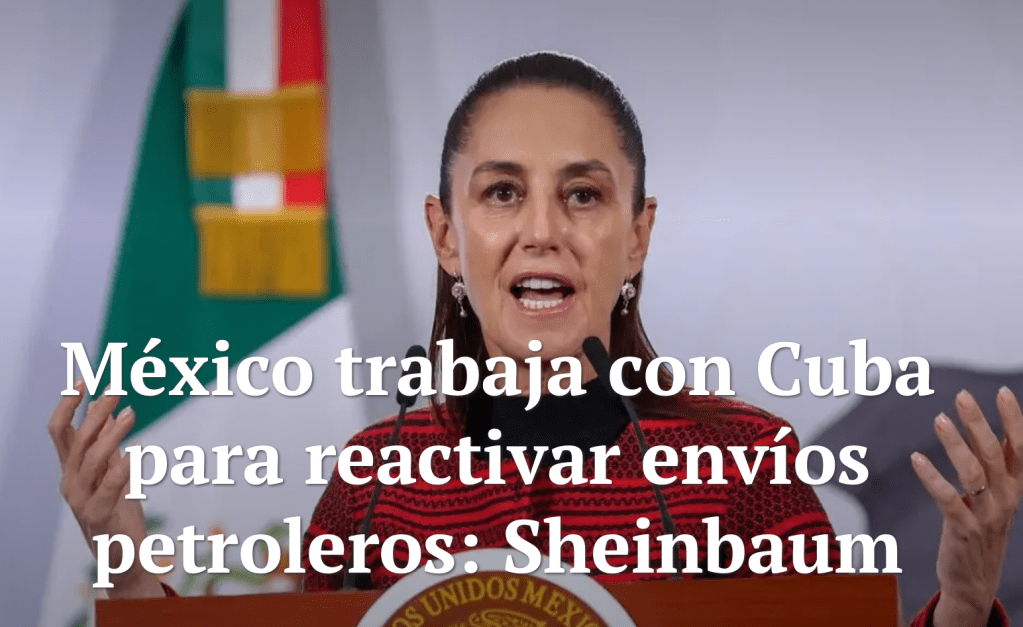
Speaking at a news conference early on Dec. 30, President Claudia Sheinbaum said that the UN should play a more prominent role in these cases.

“What we have to say is that we do not agree with interventions, especially military ones. That is enshrined in our country’s constitution, and that is what we will continue to defend,” she said in response to a question about the case.

When asked if there should be a call in the region to support Venezuela, she replied, “Yes, and as we have said, the United Nations must take a more prominent role in these cases.”

Mexico and other countries backed Venezuela in a Dec. 23 meeting of the UN Security Council, but the United States used its veto power to block a Venezuelan resolution from even coming to a vote

Diverse parts of the UN Office of the High Commissioner for Human Rights (OHCHR) are responding to the situations facing Venezuela in different ways. 

On Dec. 24, several UN experts (“special rapporteurs”) denounced the partial maritime blockade imposed by the United States on Venezuela as violating fundamental rules of international law. The same day, Venezuelan Foreign Minister Yván Gil welcomed the statement: “The truth about Venezuela is breaking through around the world.”

Meanwhile, the OHCHR has announced a new “fact-finding” mission to Venezuela that will include Alex Neve, former secretary general of Amnesty International Canada.

And Canada?

Silence from Ottawa regarding U.S. aggression towards Venezuela has been resounding – even in the face of reports that Canada helps the United States in those boat attacks. It’s clear that the government of Prime Minister Mark Carney is choosing its words carefully in the face of U.S. threats to Canada’s sovereignty.

But Canada should at least uphold the 2014 declaration by Latin America and Caribbean countries that their region is a “zone of peace,” support calls for UN leadership in peace-making, and reject the new U.S. National Security Strategy

Is Trump looking for war in the south Caribbean?

by Jim Hodgson

In this decade of Donald Trump at centre-stage, it has been hard to choose a moment or an issue about which to react. The former reality TV star is an expert in deflection and distraction.

Yet some things (Israel’s genocide in Gaza is one) matter more than others. So too Trump’s threats against Venezuela.

Trump’s statement below defending extrajudicial executions shows again how little he values human life. He was responding to a question from a journalist on Oct. 23 about why he didn’t ask Congress for a declaration of war against drug cartels he claims are at war with the United States: 

“Well, I don’t think we’re gonna necessarily ask for a declaration of war, I think we’re just gonna kill people that are bringing drugs into our country. OK? We’re going to kill them. You know? They’re going to be, like dead. OK?”

Over the past two months, Trump’s assassins have killed at least 43 people and sunk ten small boats in the Caribbean and along the Pacific coast of Colombia. As Greg Grandin has documented, when the U.S. withdraws from the rest of the world, it doubles down in this hemisphere.

This time, the United States isn’t even bothering with its usual lies as it moves from a decade of sanctions (“unilateral coercive measures”) to threats of war as it presses for regime change in Venezuela. Sanctions have had devastating effects in Venezuela, according to a study conducted by the Center for Economic and Policy Research and published in August in The Lancet Global Health.

Trump’s ire is mostly directed against Venezuela, which since 1998 has refused imperial orders about oil, medical care, governance, and individualistic notions of human rights. But he has plenty left over for Colombia and Mexico.

“He’s a thug” and an “illegal drug leader,” Trump said of Colombian President Gustavo Petro. And he said Mexico is governed by drug cartels, even while expressing respect for President Claudia Sheinbaum.

The text below is translated and lightly adapted from an Oct. 25 editorial in the Mexico City daily La Jornada.

Washington seeks war

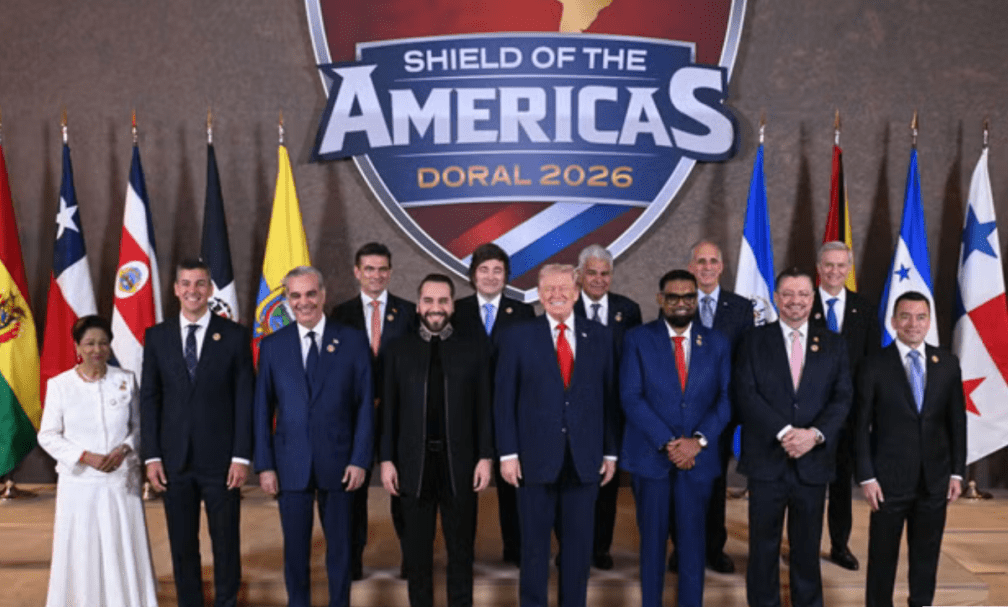
The Trump administration is sending increasingly alarming signals about its determination to attack Venezuela to impose regime change and install a puppet administration. Trump uses a “combination of threats of armed action and economic extortion” to support right-wing politicians in Argentina, Brazil, Ecuador, El Salvador and now Bolivia “to facilitate the rise or consolidation of the far right throughout the hemisphere.”

On Oct. 24, his “War Department” announced the deployment of an aircraft carrier, the USS Gerald R. Ford, and its strike group to the U.S. Southern Command—that is, the southern Caribbean and northern South America. This entails the presence of the aircraft carrier itself, the 75 aircraft it carries, and the full range of necessary operations: three destroyers, a replenishment ship, a dry cargo ship, and a Coast Guard cutter. The Gerald R. Ford alone carries 4,600 military personnel, in addition to the crews of auxiliary vessels. 

The argument that all these vessels are being deployed with the goal of “dismantling Designated Terrorist Organizations (DTOs) and countering narco-terrorism in defence of the homeland” doesn’t stand up to scrutiny. First of all, they could be deployed off the US coast, thereby reducing the cost of maintaining long supply chains and avoiding diplomatic friction. 

The thousands of soldiers already sent to the Caribbean could have provided a much greater service to their homeland by monitoring land and air points of entry, where narcotics actually enter the United States. Instead of spending billions of dollars operating its fleets abroad, Washington could gain vast resources by combating money laundering within its own financial system, where authorities estimate that organized crime launders $300 billion annually. If traffickers were unable to collect and move the profits from their activities, they would be immediately paralyzed. But it is clear that the White House is not interested in the health of its citizens or the legality of the money circulating through its banks.

The bellicose tone of this escalation is so evident that even Brazilian President Luiz Inácio da Silva (Lula—who is not friendly to Venezuelan President Nicolás Maduro) criticized the U.S. bombing of boats in the Caribbean, noting that “if it becomes fashionable, everyone will believe they can invade someone else’s territory and do whatever they want,” thus turning the region into a lawless land. 

Lula’s special advisor and former Foreign Minister Celso Amorim warned that external intervention, whether armed or through intelligence services, is not the way to decide who will govern Venezuela, a problem that concerns only Venezuelans. He also warned of the danger of setting South America ablaze and leading to the radicalization of politics throughout the continent. At the same time, Washington is making clear its longing to empower the Colombian oligarchy in Bogotá, always ready to follow its directives and make the Andean-Caribbean territory available to its troops and spy agencies. 

In this regard, Trump escalated his attacks against President Gustavo Petro and imposed sanctions for “allowing drug cartels to flourish and refusing to stop this activity.” No evidence was presented, which is what happens in his constant diatribes against Mexico, Venezuela, and other nations whose governments protect their independence and sovereignty.

In South America, there is no war that justifies besieging the subcontinent with a series of attacks. But it becomes increasingly clear that the White House is determined to start a conflagration, no matter how absurd its pretexts. 

The international community, and particularly Latin American and Caribbean societies, must join forces in rejecting Trump’s attempt to plunge the region into barbarism in order to divert attention from his own ineptitude and hand over vast amounts of money to the military-industrial complex, the only sector whose prosperity apparently interests the U.S. president.

Here’s a way to keep up with Trump’s threats and responses from Caribbean and Latin American political and social movement leaders. The Center for Economic Policy and Research (CEPR) has been a good source of information on U.S. intervention in the region for decades. 

Right to Truth Day sparks reflection on human rights in Argentina, El Salvador and the United States

A headline and a photo in the Buenos Aires newspaper Página 12 caught my eye today. Together with a photo of Saint Óscar Romero was this phrase: “Justice and snakes only bite bare feet.” *

The writer, Alejandro Slokar, is a judge in Argentina’s federal court for appeals of criminal cases (Cámara Federal de Casación Penal). Here, he is writing about the International Day for the Right to the Truth Concerning Gross Human Rights Violations and the Dignity of Victims—or more simply, the Right to Truth Day, marked now every March 24.

March 24 is not only the date when we recall the martyrdom of San Salvador’s archbishop, the human rights defender Óscar Romero in 1980. It’s also when Argentineans recall the 1976 military coup that ushered in a “dirty war” against the popular movements of the impoverished—those with bare feet—along with trade unionists, journalists, writers, artists and human rights defenders. As many as 30,000 people were killed or disappeared over the next five years.

In El Salvador, about 80,000 people were killed or disappeared between 1979 and the end of the civil war in 1992.  In both countries, as elsewhere across Latin America, movements to find the “historical truth.” 

In recent weeks, families of people who disappeared during Mexico’s long “war on drugs” have drawn attention to a half-hectare farm in Teuchitlán, about 60 km west of Guadalajara in the state of Jalisco. The farm had been used to recruit new traffickers, but also to execute those who refused the cartel’s orders. State and federal authorities had known about the site since last September but did nothing to secure it or to identify human remains and other items found on the land. Predictably, state and federal authorities point fingers of blame at each other.

About 120,000 people have gone missing in Mexico since 2006 when then-President Felipe Calderón launched a military-led offensive against the drug cartels in an attempt to curb their violent turf wars. Instead, the violence became worse. And Calderón’s security chief, Genaro García Luna, was convicted in October in a U.S. court for his deep ties to the Sinaloa cartel. 

Among the disappeared (still) are 43 students from a training school for rural teachers in Ayotzinapa, Guerrero state, taken in 2014.

The “right to truth” cannot only be about historical cases. It must be the demand now in the case of the young men taken by the Trump regime and dumped into El Salvador’s infamous Terrorism Confinement Centre (CECOT). Certainly, some of the 238 Venezuelans may be criminals who were members of the “Tren de Aragua” gang but, as stories leak out, it’s clear that some of those deported were never accused, much less tried or convicted, of any crime. 

TIME magazine published a stunning photo essay about the deportations. The photojournalist, Philip Holsinger, included this description of one of his encounters: “One young man sobbed when a guard pushed him to the floor. He said, ‘I’m not a gang member. I’m gay. I’m a barber.’ I believed him. But maybe it’s only because he didn’t look like what I had expected—he wasn’t a tattooed monster.”

Drop Site News reported that another deportee was a Venezuelan professional soccer player and youth soccer coach with no criminal record. “The family only discovered that their loved one, Jerce Reyes Barrios, had been sent to El Salvador when they saw him in viral videos posted by the Trump administration, in which it celebrated what it said was the mass deportation of violent members of the Venezuelan gang Tren de Aragua.”

The LGBTQIA+ Advocate magazine shared reporting on PBS by Rachel Maddow about a gay makeup artist who was among the deported prisoners—forcibly removed from the United States without a court hearing or deportation order.

Those stories, combined with reports of detentions of visa holders and other visitors, and harassment of legal residents and citizens, suggest that what happened in Argentina and El Salvador has begun in the United States. Can paramilitary death squads be far behind?

Writing of historical events and of the present-day right-wing populist regimes of Nayib Bukele in El Salvador and Javier Milei in Argentina, Slokar’s article argued that such abuses derive from the “neocolonial models”—European feudalism—applied in throughout the Americas. “While those responsible die in their beds without sanction, the consequences are almost infinite, farce and tragedy at the same time, and expressed in the inhumane neoliberal experiment that laughs at the Constitution, bitcoin, extractivism and punitive demagoguery that converge in the present.”

* The quote is variously attributed to both Óscar Romero and to the Uruguayan journalist Eduardo Galeano. It may be that Galeano was quoting Romero, but I cannot find the original source: just partial citations.