
Today, Chileans are marking the 50th anniversary of the military coup that resulted in a 16-year military dictatorship.
That event was formative for me in my political consciousness and awareness of both revolutionary struggle and U.S. imperialism. (Specific commitments took longer.) I was just 15, and in a Grade 10 social studies class when our teacher came into the classroom. In the first class after lunch, he told us about the coup. For weeks I had seen news items about strikes by trucking companies that were intended to weaken the socialist government of President Salvador Allende.
My teacher was livid, and my appreciation of his anger has stayed with me. In later years, I wrote university essays about Allende, and eventually my work with The United Church of Canada gave me several chances to visit Chile.

We walked through the Moneda palace, the presidential residence that was bombed by the Chilean air force on Sept. 11, 1973, during the coup and where Allende died. Outside, we joined with tourists and had our pictures taken in front of the statue of Allende.
Yo pisaré las calles nuevamente // De lo que fue Santiago ensangrentada // Y en una hermosa plaza liberada // Me detendré a llorar por los ausentes
[I shall walk the streets anew // Of what was bloodied Santiago //And in a beautiful liberated plaza // I shall stop to weep for those who are absent]
Pablo Milanés
We walked the streets of Santiago anew, recalling the songs Pablo Milanés and Bruce Cockburn wrote about the city during the military dictatorship. And we remembered too one of the dictatorship’s poet martyrs, Victor Jara, and some of the great writers since then, among them Isabel Allende (a cousin of the former president).
Bill had arrived that morning for an international conference marking 30 years of ecumenical commitment to the defense of human rights in South America; I was to leave that evening after a series of meetings with Chilean churches. He pointed out the sites of beatings and disappearances, and recalled the actions of brave people in the churches and beyond who struggled to defend life.
Chile in the years of military rule became a laboratory for a new economic order that was later applied to almost all of the countries of this hemisphere. Decades of structural adjustment were applied at the behest of multilateral financial institutions like the World Bank and the International Monetary Fund, not so that countries would find their way out of poverty, but so that they would continue to pay the foreign debt.
In 1988, dictator Augusto Pinochet allowed a plebiscite on his continued rule. He fully expected to win, but the people won the vote and then defended their option. And the decades since have been marked by efforts to undo the damage inflicted during 16 years of military rule. Even one of the better presidents, Michelle Bachelet, was unable to repair the highly privatized system for delivering social services, including health and education.
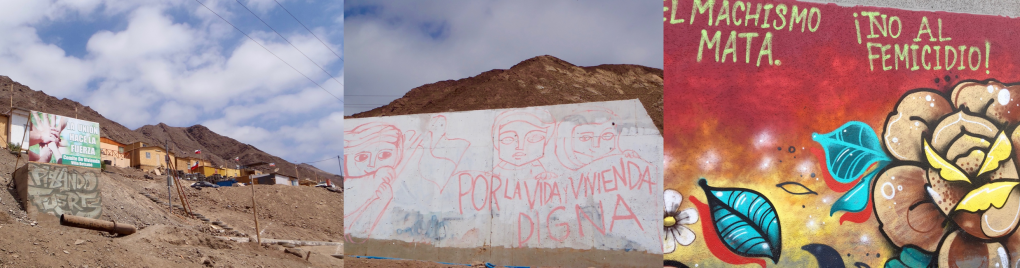
Two years ago, Chileans elected Gabriel Boric, a veteran of student protests against ongoing impacts of those “neoliberal” policies, to serve as president. His leadership, while inconsistent and often disappointing, at least offers space for social movements to organize for something better.
Great writers, including Ariel Dorfman and Carmen Aguirre, have published excellent, new reflections on the significance of the 1973 coup on their lives.
And York University professor Liisa North is editor of a new volume of reflections by civic, union and church activists about efforts to protect human rights and refugees, and to overcome the dictatorship: Canada-Chile Solidarity, 1973–1990: Testimonies of Civil Society Action – from Novalis and elsewhere.
 Unwrapping Development