
In recent weeks, my partner and I took a long drive from British Columbia through the western United States and then almost the length of Mexico to arrive in Chiapas.
While people who migrate northwards either for seasonal work or for more permanent refuge from poverty, violence and impacts of climate change were on our minds and in the news, at least some of the people we met alongside us in gas stations and cafés were seasonal workers heading home for the winter.
Migration, my friends, is normal. In southern Texas and northern Mexico, we encountered thousands of monarch butterflies as they headed for Michoacán. And here in Chiapas, the migratory birds are arriving daily.
At around the time of our trip, leaders of ten nations of Latin America and the Caribbean – frustrated by slow progress with the United States (and other northern countries) in advancing meaningful human development and managing the flow of people – gathered in the historic Maya city of Palenque, Chiapas, and proposed some ways forward.

Led by Mexico, the governments of Belize, Colombia, Costa Rica, Cuba, El Salvador, Haiti, Honduras, Panama and Venezuela signed the Palenque Declaration on Oct. 22 and called for solutions. (A representative of the newly-elected government in Guatemala also joined the talks.)
In the declaration, presented by the Mexican Foreign Minister, Alicia Bárcena, the leaders described several structural causes of migration: internally political, economic, social factors and the effects of climate change. But they also pointed to “external factors such as unilateral coercive measures of an indiscriminate nature – dictated from the United States – that negatively affect entire populations and, to a greater extent, the most vulnerable people and communities.”
They urged the United States to lift the sanctions imposed on Cuba and Venezuela that help drive the exodus. Such sanctions are against international law and, as the migration flow shows, they have impacts beyond the countries to which they are applied.
The document also proposed undertaking efforts to modify the financial architecture of debt; to close social gaps to as to reduce the impulse to migrate; push for measures aimed at increasing agricultural activity to promote food self-sufficiency in the region; and to promote intraregional trade and investment for socioeconomic development.
The signatory nations stressed that measures must be taken to confront transnational organized crime, human trafficking and corruption, as well as promote joint cooperation in security matters.

They called for destination countries to “adopt immigration policies and practices in line with the current reality of our region and abandon those that are inconsistent and selective, to avoid arbitrarily producing both ‘call effects’ and ‘deterrent effects’ – advantages given to certain countries for political reasons while nationals of other countries are blocked.
They encouraged destination countries to widen their regular migration pathways, with emphasis on labour mobility and promotion of re-integration and safe return of temporary workers to their homes.
The declaration makes special mention of Haiti, and called on nations to support efforts by the United Nations and others to re-establish conditions for human security so that the political, economic and social situation may be normalized, and to focus on sustainable development. (The presence of the Haitian president at the gathering angered some of the Haitian migrants camped out in the centre of Palenque, reported La Jornada.)
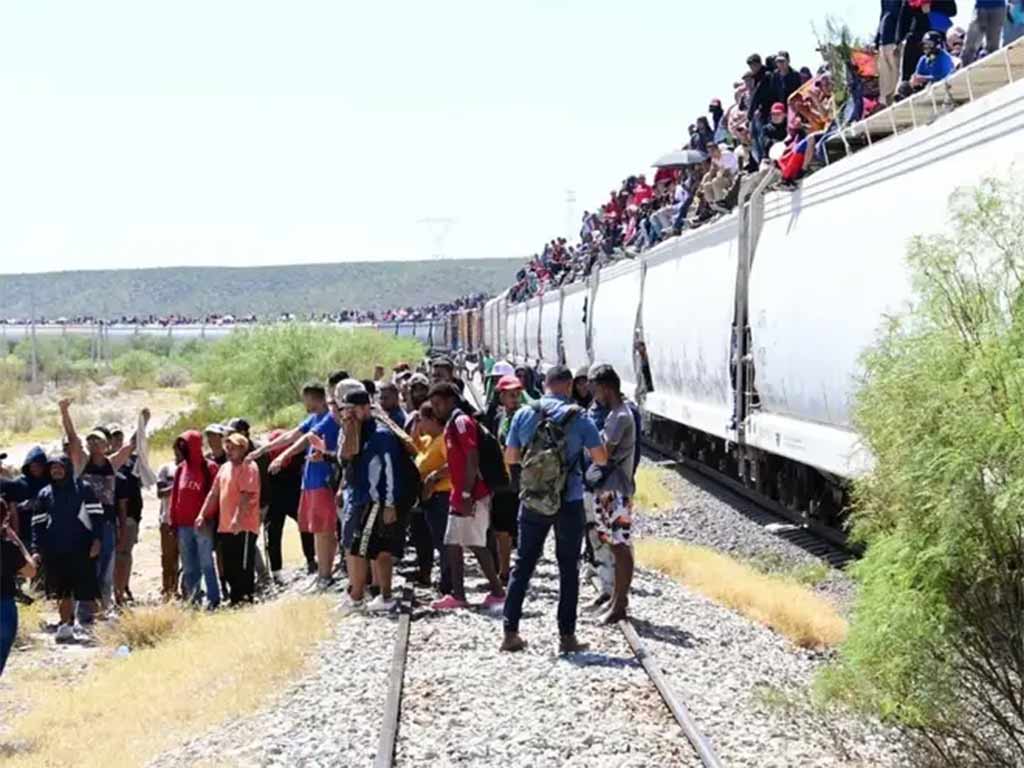
The declaration’s emphasis on economic drivers of migration did not satisfy everyone. Eunice Rendón of the Mexican advocacy group Agenda Migrante told Courthouse News Service that while insecurity was mentioned as a factor driving migration, “it’s not one of the causes, it’s the principal cause,” Rendón said.
“People go because the gang members threaten to kill them, because they try to forcibly recruit them,” she said. (Some might argue that the lack of education and employment opportunities are drivers as well in recruitment for organized crime.)
Meanwhile, migration dramas continue. On Nov. 9, authorities reported that they found found 123 Central and South American migrants trapped in a trailer in Matehuala, San Luís Potosí (less than a week after we passed through there). And than 400,000 migrants have crossed the Darien Gap from Colombia into Panama in 2023, according to the Panamanian government, up from 250,000 in 2022.
 Unwrapping Development