Land rights defender Leocadio Juracán arrested in Guatemala

Jim Hodgson

Friends and allies of Leocadio Juracán, Agrarian Reform Coordinator of the Campesino Committee of the Highlands (CCDA), are protesting his arrest Wednesday as he was about to fly to South Africa for an international conference.

“He is being criminalized for his work as a land and human rights defender,” said the Maritimes-Guatemala Breaking The Silence Network (BTS) in an urgent action request. He faces multiple charges, including aggravated trespass (usurpación agravada), directly related to his advocacy for Indigenous and farming communities across Guatemala.

(More details of the urgent action request and of Leocadio’s arrest follow below.)
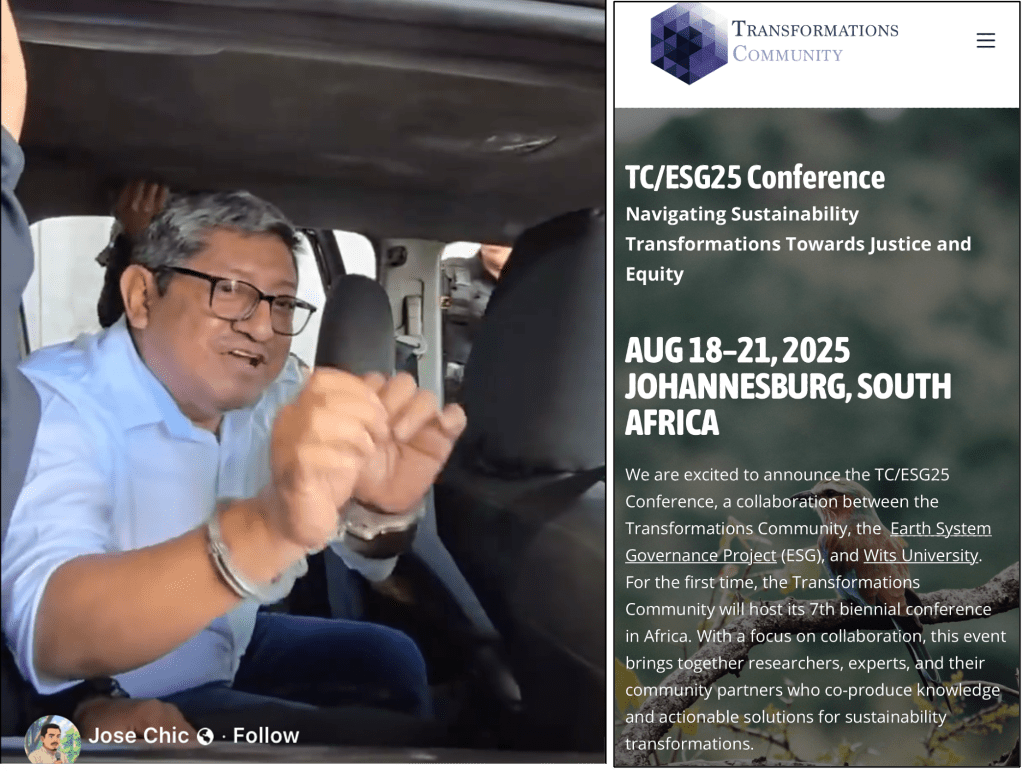
Leocadio continued talking with reporters even as police escorted him from the airport and into a waiting room vehicle. Right: details of the conference he was to attend in South Africa.

I worked with Leocadio and other members of CCDA in May 2022 and March 2023, travelling with them to communities in Quiché and Izabal departments that face threats from people or companies purporting to be the true land-owners. In those communities and in scores of others across Guatemala, CCDA works with Indigenous and small-farmer communities to document their history on the land and to submit legal justification for their claims.

Leocadio and other CCDA members are known in many parts of Canada because they work with coffee farmers whose product is sent to roasters linked to Café Justicia in British Columbia and Just Us! in Atlantic Canada in a “fair trade plus” arrangement.

More details of the BTS Urgent Action request (including a template for letters in Spanish):

On August 13, Leocadio Juracán, Agrarian Reform Coordinator of the Campesino Committee of the Highlands (CCDA), was detained at La Aurora Airport as he was leaving the country to participate in a Translocal Social Movement Learning conference in South Africa. 

Leocadio is being criminalized for his work as a land and human rights defender. He is currently facing multiple charges, including Aggravated Trespass (usurpación), directly related to his advocacy for Indigenous and campesino communities.

We need your immediate action:

With the following Canadian officials copied:

In your message, please call on them to:

  • Ensure his protection until such time as he is released.
  • Follow recent UN Special Rapporteur advice to enact an immediate moratorium on evictions and grant amnesty for all criminalized land defenders.
  • End criminalization of the members and leadership of Indigenous and campesino communities and organizations.

Many of these government officials are Spanish speaking. If possible, write this letter in Spanish. Otherwise, you can also send it in English.

If you’d like to send it in Spanish, you may say:

Me dirijo a usted para exigir que:

  • Liberen inmediatamente a Leocadio Juracán.
  • Garanticen su protección hasta el momento de su liberación.
  • Sigan las recomendaciones recientes del Relator Especial de la ONU de declarar una moratoria inmediata de los desalojos forzados y de otorgar la amnistía a todos los defensores criminalizados.
  • Pongan fin a la criminalización de los miembros y líderes de las comunidades y organizaciones indígenas y campesinas.

After you write this email, please share with several of your friends and contacts. Thank you so much for your urgent support to help get Leocadio Juracán free.

Leocadio Juracán, March 21, 2023, speaking with the people of an Indigenous Q’eqchi’ community known as Macho Creek near Guatemala’s Atlantic coast. (Photo: Jim Hodgson)

Leocadio Juracán, campesino leader and former congress member, arrested

Prensa Comunitaria

Leocadio Juracán Salome, leader of the Highlands Committee of Small Farmers (CCDA), was detained Wednesday morning (Aug. 13) at La Aurora Airport in the Guatemalan capital as he was preparing to travel to South Africa for an international conference.

According to his defense attorneys, the crimes for which Juracán was arrested are aggravated trespass (usurpación agravada) and causing forest fires.

“Today, as I was preparing to travel to participate in this conference, I was arbitrarily detained at approximately 11:05 a.m. at La Aurora International Airport,” said the former congress member from the now-defunct Convergencia party.

Juracán asked his family to remain calm and told his fellow CCDA members that he is proud of their struggles “because these repressive practices by the State and corrupt officials only demonstrate that they cannot stop our just struggles with criminalization alone.”

The news of his arrest has generated expressions of solidarity from various individuals and sectors. The CCDA, the organization of which he is a member, stated that this arrest is an act of criminalization and prosecution against those who defend land, territory, and social justice and demanded his immediate release.

Representative and campesino leader

When he was elected representative for Convergencia (2015-2019), Juracán supported campesino organizations and other social sectors in their demands. In March 2017, along with then-representative Sandra Morán, he filed a preliminary lawsuit against former President Jimmy Morales in the Hogar Seguro case, which was unsuccessful.

Juracán remains one of the representatives of the CCDA, an organization dedicated to promoting rural development for Indigenous and small-farmer communities. Founded in 1982 during the military dictatorships, the organization was formally established in 1989.

Currently, CCDA supports Indigenous communities and land defenders facing issues of eviction and criminalization in several departments of the country, including El Estor, Izabal, and Cobán, Alta Verapaz. …

Human rights and land rights defenders are still under attack in Guatemala

by Jim Hodgson

Despite the inauguration earlier this year of a more progressive government in Guatemala, community land defenders still face criminal violence and judicial threats.

The government of President Bernardo Arévalo condemned the murder June 5 of a 47-year-old lawyer who worked to protect Indigenous and small-farmer land rights.

José Alberto Domingo Montejo worked with the Comité de Unidad Campesina (CUC, Committee for Farmworkers Unity) and had been part of CUC’s legal team since 2019. 

Left: A poster from Prensa Comunitaria denouncing the murder of José Domingo. Right: a statement from the Office of the UN High Commissioner for Human Rights upholding the right of small farmers’ organizations to work freely and safely, and calling for a fast and impartial investigation.

Domingo was shot during an ambush on a gravel road in Palin, Escuintla department, southwest of the Guatemalan capital. Two other CUC members, Gustavo Yoxon and Marcelo Yoxon, were wounded in the same attack.

They were doing what CUC and another organization with which I am more familiar, the Comité Campesino del Altiplano (CCDA, Highlands Committee of Small Farmers) do all the time: working to advance the interests of small farmers and Indigenous peoples by helping to legalize a community land title. The CCDA condemned the attack and expressed its solidarity with families of the victims.

“This attack is added to the wave of violent judicial and extrajudicial evictions, captures and arrest warrants,” said CCDA in a statement on social media

The Pact of the Corrupt

Guatemala may have that more progressive government but Arévalo and his cabinet do not control all the levers of power. 

A key obstacle is Consuelo Porras, the attorney general appointed in 2018; her term was renewed in 2022 and extends to 2026; she can only be removed if convicted of a crime. 

Left: A CCDA news conference [text in English] on June 3 warned the “Pact of the Corrupt” tries to provoke confrontations between government and small farmers and Indigenous communities.

The U.S. Department of State added Porras to a list of “undemocratic and corrupt” officials in 2021. And last year, the Organization of American States (OAS) called her efforts to annul Arévalo’s election “an attempted coup d’état.”

“Porras has served as the spearhead of the Pact of the Corrupt,” wrote former Guatemalan foreign minister Edgar Gutiérrez in December while she was still trying to quash the election result. He described the Pact of the Corrupt as “a loose coalition of politicians, bureaucratic and business elites, plus powerful drug trafficking groups, which has pushed back civil and political liberties, unleashing fierce persecution against dissent, particularly against independent justice operators, who now number half a hundred in exile.”

For people in a community that is struggling to establish a land claim, even with good legal advisors from CCDA or CUT, it is often a challenge to identify opponents. One example is the Xinca Indigenous community of Nueva Jerusalén, located further south in the same Escuintla department where José Domingo was killed. By March 2023, the community had exhausted legal avenues within Guatemala (despite having shown the land in question belongs to the government and having proven irregularities in the claim of a supposed owner. After I had joined a meeting with community leaders and CCDA advisors, I wrote about the community’s appeal to the Inter-American Court of Human Rights (IACHR).

But a few months later, on August 9, police and private security forces burned the community to the ground and forced the 53 resident families to flee. 

In these scenarios—and there are scores of them—it can be difficult to distinguish between a legal, court-ordered eviction (even if fraudulently obtained) and a private army: in effect, a paramilitary death squad. 

And so you find a paragraph like this one in an Amnesty International report that (correctly, in my view) blends the crimes of state and non-state actors. From the victims’ point of view, it’s hard to see the difference.

“The Unit for the Protection of Human Rights Defenders in Guatemala (UDEFEGUA) reported 5,965 attacks against human rights defenders between January and November 2023, including threats, killings, harassment and arbitrary detentions. Criminalization increased, particularly against those involved in the fight against impunity and corruption.”

And this paragraph from a Maritimes-Guatemala Breaking The Silence (BTS) Network report on the Nueva Jerusalén eviction:

“[T]he state abets and perpetrates violence against the community. The police—the armed wing of the state—have…ransacked homes, destroyed possessions and sought to provoke community members to protect themselves. With this sleight of hand, they bring charges against community members, used to defame and criminalize the residents of Nueva Jerusalen.”

“Bringing charges.” “Criminalization.” 

Mélisande Séguin of BTS notes that land defenders continue to meet with government officials to stop future arrests. “Nonetheless, with Consuelo Porras at the helm of the Public Prosecutor’s office, criminalization remains a major threat for Indigenous and campesino movements.”

On Feb. 8, the new government signed an agreement with CCDA, CUT and other organizations of small farmers and Indigenous peoples. 

“For our administration, dialogue is not just a tool but a key pillar that promotes citizen participation in defining the agendas that effectively solve different needs,” said Arévalo during the signing ceremony. He said the agreement was the product of a dialogue process that began in the last quarter of 2023.

“All Guatemalans are equal in dignity and rights. The new government embraces the idea that everyone has something valuable to contribute and deserves to be heard,” he said.

Speaking at the ceremony, CCDA national coordinator Neydi Yasmín Juracán stated: “For us, it is a historic day because we have been meeting politically and technically for these agreements.” She said CCDA has worked for more than 28 years to prevent and end land evictions, but:

  • 12 community leaders were assassinated between 2018 and 2022.
  • Seven leaders are currently imprisoned.
  • 1,788 arrest warrants, 35 per cent targeting women.
  • Seven active temporary shelters to attend to agrarian conflicts.
  • 1,320 cases were accompanied by the CCDA.

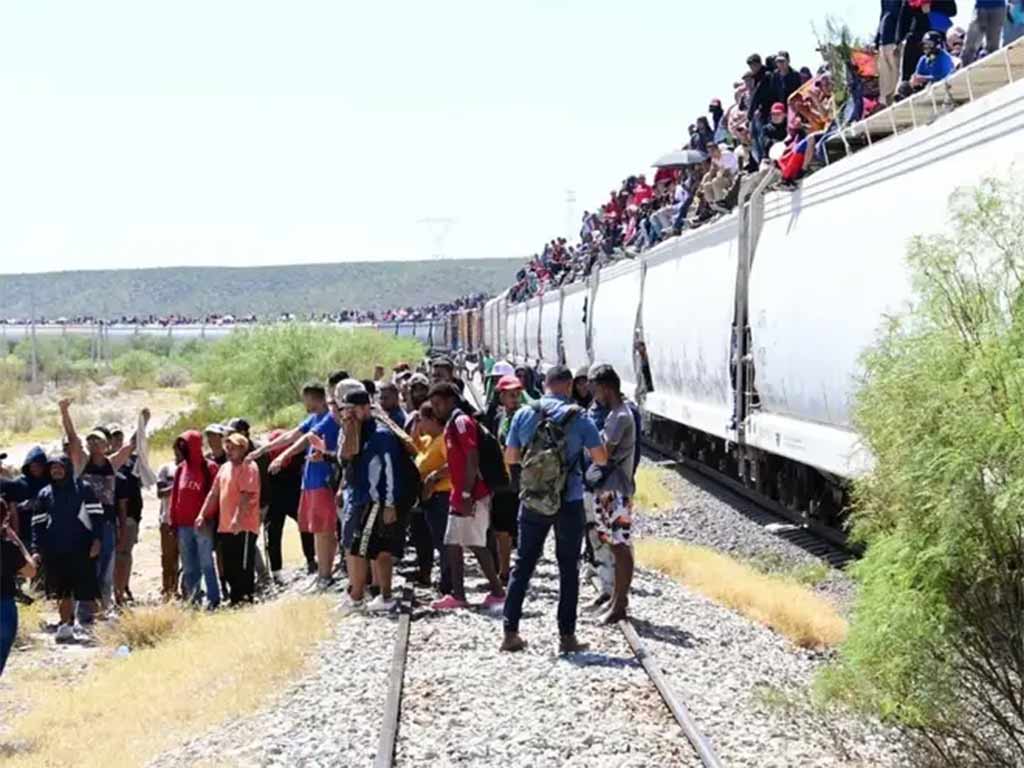
From Palenque, Chiapas, Latin American leaders call for migration solutions

In recent weeks, my partner and I took a long drive from British Columbia through the western United States and then almost the length of Mexico to arrive in Chiapas.

While people who migrate northwards either for seasonal work or for more permanent refuge from poverty, violence and impacts of climate change were on our minds and in the news, at least some of the people we met alongside us in gas stations and cafés were seasonal workers heading home for the winter. 

Migration, my friends, is normal. In southern Texas and northern Mexico, we encountered thousands of monarch butterflies as they headed for Michoacán. And here in Chiapas, the migratory birds are arriving daily.

At around the time of our trip, leaders of ten nations of Latin America and the Caribbean – frustrated by slow progress with the United States (and other northern countries) in advancing meaningful human development and managing the flow of people – gathered in the historic Maya city of Palenque, Chiapas, and proposed some ways forward.

Photo from the Office of the President of Mexico

Led by Mexico, the governments of Belize, Colombia, Costa Rica, Cuba, El Salvador, Haiti, Honduras, Panama and Venezuela signed the Palenque Declaration on Oct. 22 and called for solutions. (A representative of the newly-elected government in Guatemala also joined the talks.)

In the declaration, presented by the Mexican Foreign Minister, Alicia Bárcena, the leaders described several structural causes of migration: internally political, economic, social factors and the effects of climate change. But they also pointed to “external factors such as unilateral coercive measures of an indiscriminate nature – dictated from the United States – that negatively affect entire populations and, to a greater extent, the most vulnerable people and communities.”

They urged the United States to lift the sanctions imposed on Cuba and Venezuela that help drive the exodus. Such sanctions are against international law and, as the migration flow shows, they have impacts beyond the countries to which they are applied.

The document also proposed undertaking efforts to modify the financial architecture of debt; to close social gaps to as to reduce the impulse to migrate; push for measures aimed at increasing agricultural activity to promote food self-sufficiency in the region; and to promote intraregional trade and investment for socioeconomic development.

The signatory nations stressed that measures must be taken to confront transnational organized crime, human trafficking and corruption, as well as promote joint cooperation in security matters.

They called for destination countries to “adopt immigration policies and practices in line with the current reality of our region and abandon those that are inconsistent and selective, to avoid arbitrarily producing both ‘call effects’ and ‘deterrent effects’ – advantages given to certain countries for political reasons while nationals of other countries are blocked.

They encouraged destination countries to widen their regular migration pathways, with emphasis on labour mobility and promotion of re-integration and safe return of temporary workers to their homes.

The declaration makes special mention of Haiti, and called on nations to support efforts by the United Nations and others to re-establish conditions for human security so that the political, economic and social situation may be normalized, and to focus on sustainable development. (The presence of the Haitian president at the gathering angered some of the Haitian migrants camped out in the centre of Palenque, reported La Jornada.)

Undated photo from Prensa Latina.

The declaration’s emphasis on economic drivers of migration did not satisfy everyone. Eunice Rendón of the Mexican advocacy group Agenda Migrante told Courthouse News Service that while insecurity was mentioned as a factor driving migration, “it’s not one of the causes, it’s the principal cause,” Rendón said.

“People go because the gang members threaten to kill them, because they try to forcibly recruit them,” she said. (Some might argue that the lack of education and employment opportunities are drivers as well in recruitment for organized crime.)

Meanwhile, migration dramas continue. On Nov. 9, authorities reported that they found found 123 Central and South American migrants trapped in a trailer in Matehuala, San Luís Potosí (less than a week after we passed through there). And than 400,000 migrants have crossed the Darien Gap from Colombia into Panama in 2023, according to the Panamanian government, up from 250,000 in 2022.