
by Jim Hodgson
I write today from northwest Chiapas, part of the traditional territory of the Zoque Indigenous people in southeastern Mexico. But I am thinking of friends and family in the Canadian province of British Columbia, who will elect a new provincial government today, and of the people of Brazil who will choose a president Sunday.
In all of these places, politics have become sharply polarized. The right attacks even the concept of Indigenous rights as an impediment to private property and to their notions of development – usually tied to ecologically-destructive resource extraction. They also attack 2SLGBTQIA+ people, especially trans people. And the left, rather tepidly in my opinion, defends the rights of Indigenous people, ecological protection and the rights of queer and trans people.
Today, let’s look at my home province, so-called British Columba, a land where virtually no treaties were signed during colonization.
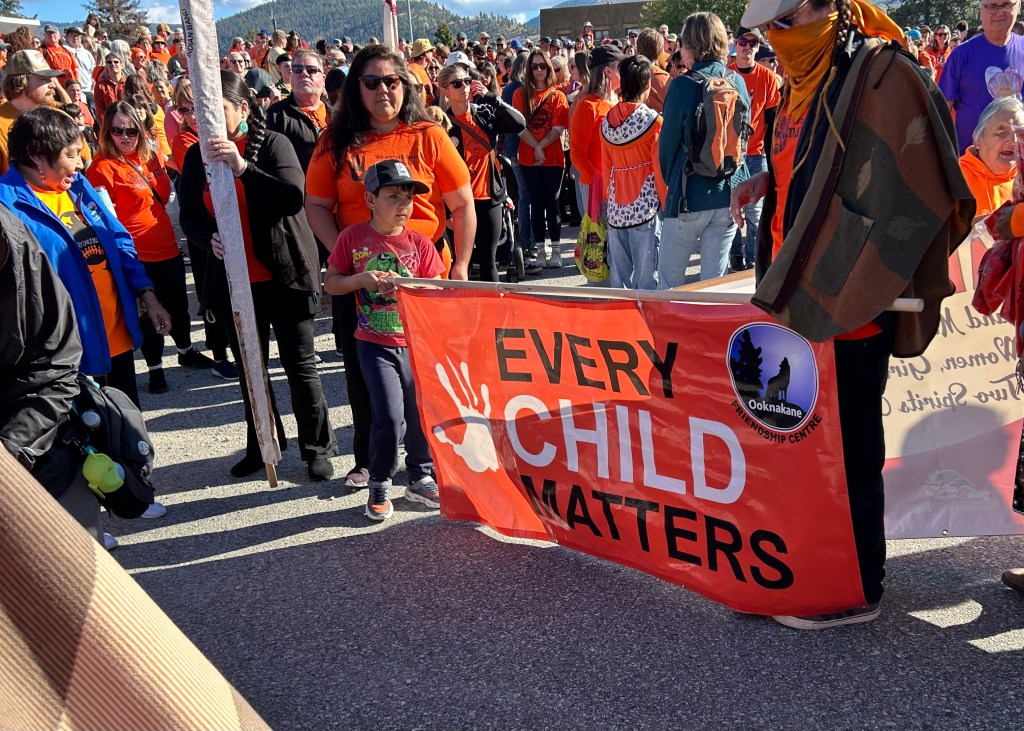
In the B.C. provincial election, two acronyms have been bandied about. DRIPA and SOGI. Conservative politicians say they’re bad: threats to your property on the one hand and to your family on the other. And the relatively progressive government has not shown much courage in defending these policies.
What are they?
In this piece by Grand Chief Stewart Phillip, president of the Union of B.C. Indian Chiefs (UBCIC), DRIPA is explained.
In times like these, First Nations and our rights are often the first to be thrown under the bus. In the territory known as British Columbia (B.C.), this has resulted in politicians placing a target squarely on the United Nations Declaration on the Rights of Indigenous Peoples (UNDRIP) and the Declaration on the Rights of Indigenous Peoples Act (DRIPA). Lost in all the related bluster and rhetoric is what UNDRIP and DRIPA actually are and are meant to do, and what those who seek to weaken or do away with them are asking British Columbians to give up.
Understanding UNDRIP and DRIPA
UNDRIP is an international human rights instrument. Developed through a series of forums beginning in 1982 and ending with the UN General Assembly voting to adopt UNDRIP in 2007, it is the product of more than 20 years of international deliberations, diplomacy, and compromise between UN member States and Indigenous Peoples’ representatives.
UNDRIP does not create new rights, nor does it extend any unique privileges or entitlements to Indigenous Peoples. Rather, it expresses long-standing international human rights norms in the specific context of the world’s Indigenous Peoples. Grounded fundamentally in the inherent right to self-determination enjoyed by all peoples, it is intended to protect the collective human rights of the more than 470 million Indigenous People worldwide that may not be adequately addressed in other human rights instruments that emphasize individual rights, and it also further elaborates on specific individual human rights with particular emphasis on the rights of Indigenous women and children.
Stated simply: UNDRIP recognizes and is meant to protect broadly accepted, basic human rights. Indigenous rights are human rights.
DRIPA, on the other hand, is a provincial statute which the B.C. legislature passed unanimously in 2019. The purpose of DRIPA is to advance the domestic implementation of these rights in B.C. DRIPA made B.C. the first jurisdiction in Canada to formally adopt UNDRIP as its framework for reconciliation, as the Truth and Reconciliation Commission of Canada explicitly called for. Since then, DRIPA has played a key role in enabling First Nations to take our rightful place at the decision-making table while facilitating economic growth and prosperity. …
There are legitimate questions about how DRIPA should operate, how its obligations should interact with existing law, and what role courts should play when conflicts arise. But those questions should not be allowed to obscure the fundamental question at the heart of this debate: whether the rights of First Nations will be treated as enduring human rights or as political concessions that can be suspended whenever they become politically inconvenient.
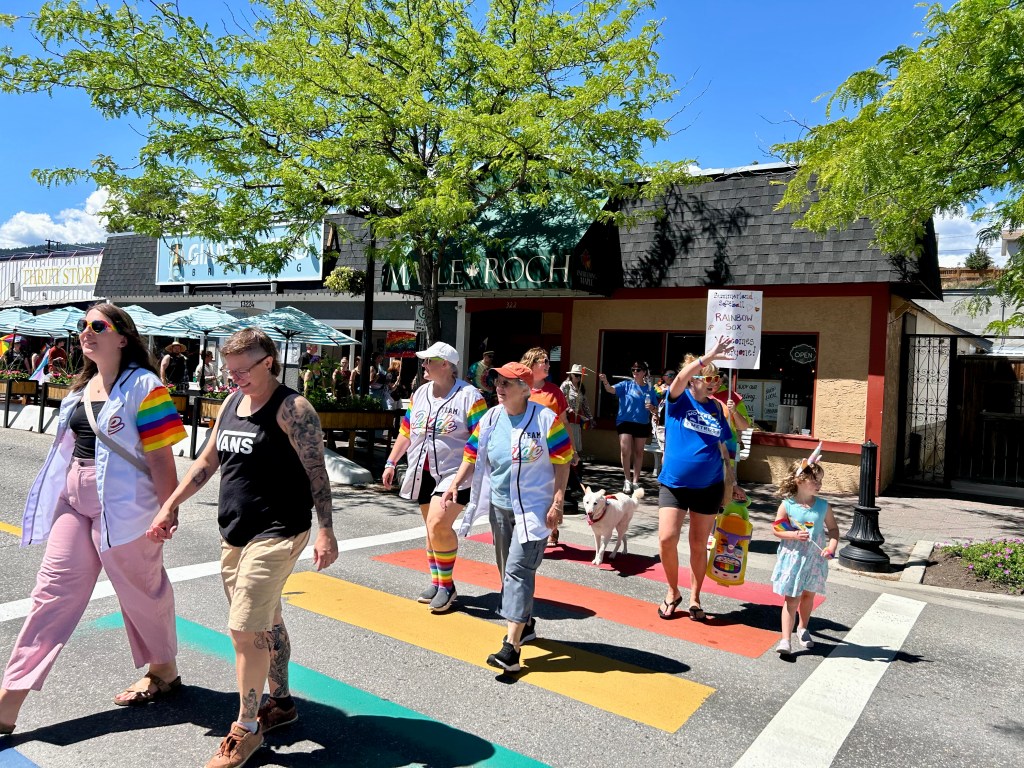
And SOGI – sexual orientation and gender identity – is explained here by Wilbur Turner, president and executive director of Advocacy Canada (a Kelowna-based 2SLGBTQIA+ advocacy organization).
SOGI 123 was introduced in BC schools in 2016, ten years ago. It is a set of resources to help schools be safe for every student, and it was never a stand-alone curriculum. Researchers at UBC’s Stigma and Resilience Among Vulnerable Youth Centre, led by Dr. Elizabeth Saewyc, evaluated it using BC Adolescent Health Survey data from more than 98,000 students in grades 7 to 12 across 482 schools. They found that SOGI 123 reduced bullying and sexual orientation discrimination for students in the rainbow community and for their heterosexual classmates too. “We’ve now got 10-year evidence that it works,” Saewyc said.
Thousands of students have now graduated after spending most of their school years with these resources in their classrooms. The sky hasn’t fallen. What has happened is that more kids feel safe at school.
British Columbians face real problems this fall, from housing and health care to the cost of groceries. Let’s get serious about those, and leave the kids out of this culture war.
I’ll write about Brazil’s election in days to come. In the meantime, for excellent updates check out posts from Panamerican Dispatch.

