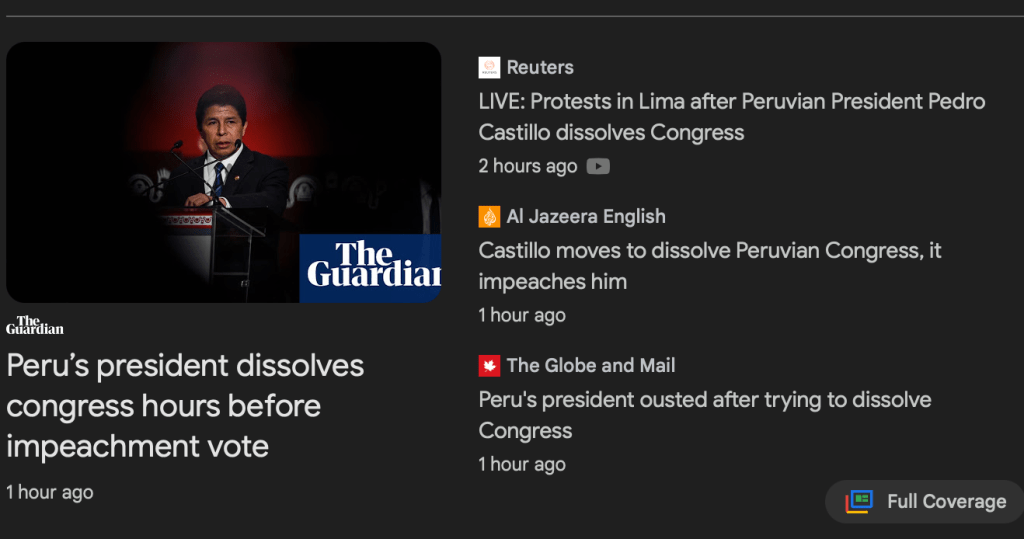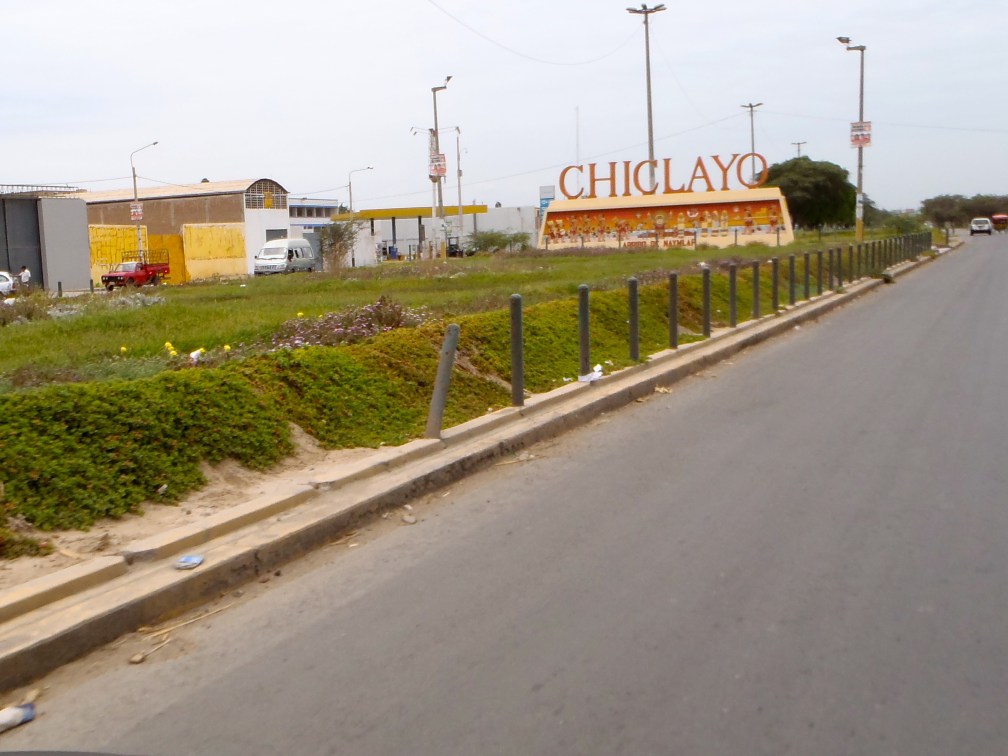
From bishop of Chiclayo to Pope Leo XIV

by Jim Hodgson

Like many who have worked in Latin America, I rejoiced when I saw that cardinal-electors chose Robert Francis Prevost, the former bishop of Chiclayo (Peru) to serve as Pope, the bishop of Rome. 

And as one who believes Catholic social teaching is not studied sufficiently, I was over the moon when I understood that Prevost had chosen to be called Leo XIV. The last Leo was Pope Leo XIII, who served from 1878 to 1903. He is respected as a pioneer of modern Catholic social teaching. In his famous 1891 encyclical Rerum novarum, Pope Leo outlined the rights of workers to a fair wage, safe working conditions, and the formation of trade unions.
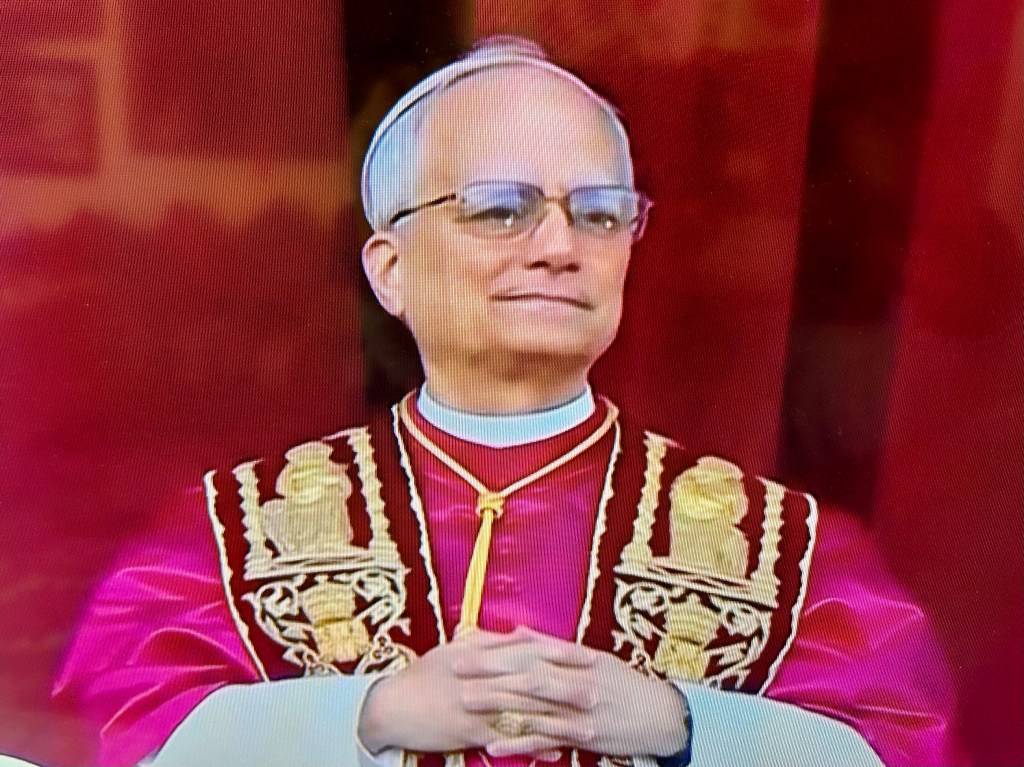
Yes, there are controversies over the selection of Prevost. 

Prevost talked negatively in 2012 about sexual and gender diversity. But in that same year, Archbishop Jorge Bergoglio (a year later Pope Francis) was still in Buenos Aires and fighting legal reforms promoted by the Kirchner-Fernández governments in favour of same-sex marriage. Jesuit Father James Martin, long an ally of LGBTQIA+ people, spoke positively about Prevost after being part of a table group with him during the Vatican’s Synod on Synodality.

There are allegations that Prevost did not pay sufficient attention to victims of clerical sexual harassment while bishop in Chiclayo. Tragically, it is hard to find any bishop, living or dead, who has adequately served survivors of clerical abuse. The real issue is making rules that are effective in making dioceses submit to civil authorities in cases of crime, and to take victims’ allegations seriously in all cases of harassment or abuse. Perhaps his proximity to scandal will help him and others take further steps toward justice for all victims of clerical abuse. 

Much has changed; more needs to change; and Leo XIV may be a step in the right direction. Let’s work toward full inclusion of—and leadership by—women and 2SLGBTQIA+ people.

The church in Chiclayo

Today, I found myself going back through decades of notes. Here is something I wrote during a visit to Chiclayo in 2017:

“Chiclayo has a new bishop who is more in the line of Pope Francis—a positive sign after many years of traditionalist Opus Dei bishops. The new bishop, my friends said, still needs some education around gender justice, but he’s pretty good on economic justice and on developing lay leadership. Social movements here have bloomed outside of the church, including the LGBTIQ and People Living with HIV and AIDS (PLWHA) movements.”

That conversation unfolded with members of Centro Esperanza, a United Church partner from 2006 to 2018. Their work had roots in progressive Christian base communities. It began with a focus on women, particularly those who were involved in community kitchens organized and run by women in impoverished neighbourhoods. Over time, activities expanded to include programs to prevent domestic violence, stimulate learning in early childhood, and gender justice education among high school students.

Several of my Canadian friends have worked in Chiclayo over the decades, beginning with members of the Scarboro Foreign Missionary Society. Their leadership is part of what shaped Chiclayo’s influence on its new bishop.

Catholic Social Teaching

And I went back through my notes on Catholic social teaching. One of the most complete—and still quite short—summaries is a presentation by Bill Ryan, a Canadian Jesuit and social activist. He was a general secretary of the Canadian Conference of Catholic Bishops (CCCB) during part of the time I worked with the Canadian Council of Churches.

In 2000, he spoke to the Coady International Institute at St. Francis Xavier University in Antigonish, Nova Scotia, on the development of Catholic social teaching. Some key points:

What is Catholic Social Teaching? It is a formula or a set of principles for reflection to evaluate the framework of society and to provide criteria for prudential judgment and direction for current policy and action.

  • The inherent human dignity of every person that makes them “sacred”—created in God’s image. This is the ultimate grounding for human rights.
  • The principle of human solidarity. Every person is radically social by nature and by nurture, destined to build up and share human community. The basic element of all creation is interconnectivity, interdependence, and relationships between and among all creatures. Without community we are not human.
  • The principle of subsidiarity. This principle balances the power between the individual and community. It calls for a pluralistic structuring of power in society. That is, human society is more than government; it is the thousands of voluntary and corporate associations that make up civil society. Decisions in society should be taken at the lowest competent level of society.
  • The neediest among us have a special claim on our care and compassion.
  • The common good: the social conditions that allow people to reach their full human potential and to realize their human dignity.
  • And remember that fidelity in relationships extends also to our caring for our “mother” earth.

All of this, it seems to me, is “teaching”—asserting principles, not doctrine.

Ryan said it was untidy, and it is. Church leaders, he said, attempt “to balance the maintenance needs of the church with those of its prophetic mission. What priority should they place on safeguarding unity in the church while preaching the prophetic preferential option for the poor?”

The process, he added, may become even more untidy as more conferences of bishops learn with their people how better to “read the signs of the times” and to “engage Christian communities in believing, preaching and acting on a preferential option for the poor.”

Pope Francis opened a process—“synodality”—for bishops to talk with their people. From his opening remarks, Pope Leo XIV seems determined to keep that door open.

The next morning, the new pope said Christians must offer witness in a world that prefers power, pleasure, and success to faith. Where Christians are “mocked, opposed, despised or at best tolerated and pitied” is where the Catholic Church’s “missionary outreach is most desperately needed,” he said in his first homily as leader of the world’s 1.4 billion Catholics.
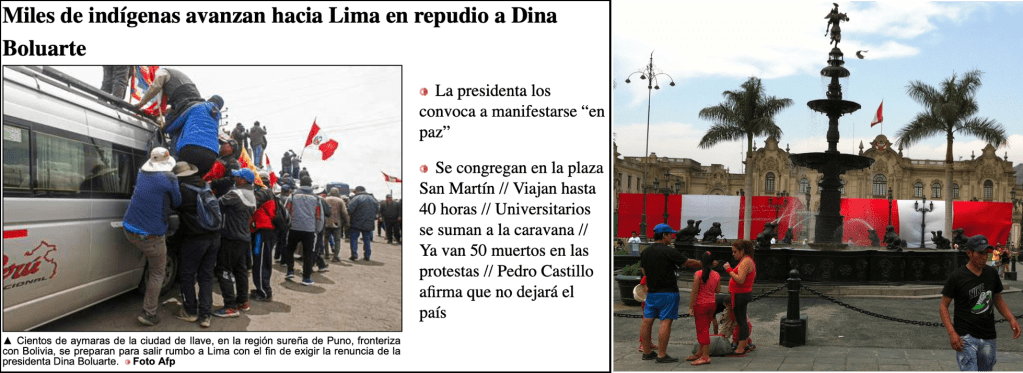
In Peru, the “battle between rich and poor” continues in wake of parliamentary coup

Indigenous people from Puno region head for the capital city, Lima (La Jornada, Jan. 18); the Government Palace on a quieter day in 2015.

For many years, Peruvians have endured political crises repeatedly. Few presidents have been able to serve full terms and even if they do, they may end up in jail for corruption – the fate of six of the last 10 presidents. 

In the 20th century, elected presidents faced military coups. Today, those have given way to parliamentary coups: impeachment and removal from office. What might be a normal state of tension between executive and legislative branches in Peru today is toxic. There was a week in November 2020 when Peru had three presidents. The last of these presided through the electoral period that saw Pedro Castillo, a teacher from rural Peru, triumph narrowly over Keiko Fujimori, daughter of a former dictator, on June 6, 2020.

More than 40 days after Castillo’s arrest and replacement by his vice-president, Dina Boluarte, about 50 people have been killed in protests and more than 600 injured, including 30 injured just yesterday (Thursday, Jan. 19). 

The protesters demand (with some variations): that Boluarte resign; that new congressional elections be held; that a constituent assembly be chosen to draft a new constitution; new presidential elections before the end of this year; and release of Castillo from prison.

Headlines from Peru on Dec. 7

The fury right now is that Castillo was elected by the rural poor – farmers, workers, Indigenous peoples – and in this latest conflict, they feel their vote is not respected by racist, urban elites. It may be that Castillo erred in trying to suspend congress on Dec. 7, but its summary impeachment (no trial) was at least as illegal. In his defence, Castillo’s move came after 18 months of confrontation: he was never allowed to lead. It’s the system that’s broken.

The outcome is consistent with 520 years of colonialism and keeping those of Indigenous ancestry out of the halls of power. During the election campaign, Castillo had said it was “a battle between the rich and the poor, the struggle between master and slave.” That is what is playing out on the streets and at the roadblocks today.

A fact-finding mission by the Inter-American Commission of Human Rights (IACHR) visited Peru in mid-January. Right: in Canada, Amnesty International launched an urgent action campaign to send letters to Peruvian and Canadian authorities.

The Latin American ecumenical news agency ALC Noticias spoke with several Peruvian church leaders.

We have arrived at social collapse, said Rev. Rafael Goto, a Methodist minister in Lima long active in human rights causes. “The crisis in which Peru is living shows us again the discrimination and contempt faced by those who are most impoverished. Once again, it seems that two different ways of looking at society are at play. On one side, that of political power, the historic colonial and oppressive mentalities are revived. On the other side, the excluded population continues to resist so as to break the chain of marginalisation, invisibility, and contempt.”

Rev. Luzmila Quezada, a Wesleyan minister, teacher and leader in the women’s movement, warned that Peru is reaching a point where “dehumanization” is apparent. “This crisis challenges us to connect with the suffering of our brothers and sisters in the Andean South who have suffered for centuries from the exclusion and social stigmatization of a racist and fascist elite that only cares about material goods and forgets the maximum and urgent value of human life: who is our neighbour in this country?”

Meanwhile, a Catholic priest who worked for 26 years in the Puno diocese in southeast Peru (where some of the most extreme repression occurred), has returned to his native Argentina after his bishop ordered him to resign as parish priest in the city of Juliaca. In response to violence in Juliaca on Jan. 9, Fr. Luis Humberto Béjar had demanded Boluarte’s resignation. 

Later, he told reporters that he made the call because he believes that peace can only be achieved with her resignation. “I do not regret saying what I said, and I would say it 50 times more. In three hours, if I am not wrong, they killed 17 people, and one more died of wounds later.” A policeman was also killed in Juliaca that day.

A Quechua Indigenous woman whom I know in the Andean highlands sent a note to say that she and others are doing what they can to support the protests, but that it is difficult knowing that most of the victims of the violence are Quechua. 

“Our leaders are threatened,” she wrote. “There are no lawyers who will defend them. Everyone is afraid because the army and police are acting on behalf of the congress and Dina [Boluarte]. We have returned to the time of [Alberto] Fujimori [dictator in the 90s].”

What is to be done? Tolstoy, Lenin, John the Baptist and recent elections

Xiomara Castro, president-elect in Honduras. Right: “Long live the People in Resistance” – post coup graffiti.

Soon after my return to Canada from my first visit to the Dominican Republic in 1983, I saw Peter Weir’s brilliant film, In a Year of Living Dangerously. As a socialist option in Indonesia collapses through local intrigue and U.S. intervention, Linda Hunt’s character, Billy Kwan, asks obsessively: “What is to be done?”

In the wake of my encounters with Haitian cane-cutters and Dominican and Haitian activists, it became my question too.

Billy Kwan’s question alludes to Lenin’s 1902 manifesto that called for a new vanguard organization that would be dedicated to taking power. Lenin took his title from two earlier works by Russian authors. In 1863, Nicholas Chernyshevsky issued a manifesto that imagined a new social order. Twenty years later, Leo Tolstoy took the same title to offer a vision of the renewal of individual moral responsibility.

But the question actually comes from the Bible. In Luke 3:10—part of the lectionary readings in many churches this Sunday, Dec. 5, the second Sunday of Advent—the people ask John the Baptist: “What are we to do?” And John answered, “If you have two coats, give one to the person who has none; and if you have food, do the same.” 

Later, in Luke 12:16-21, the question appears in Jesus’ story about the rich fool: “There was a rich man and his land had produced a good harvest. He thought: ‘What shall I do? For I am short of room to store my harvest.’So this is what he planned: ‘I will pull down my barns and build bigger ones to store all this grain, which is my wealth. Then I may say to myself: My friend, you have a lot of good things put by for many years. Rest, eat, drink and enjoy yourself.’ But God said to him: ‘You fool! This very night your life will be taken from you; tell me who shall get all you have put aside?’ This is the lot of the one who stores up riches instead of amassing for God.”

Life is too short for the poor to wait for wealth to trickle across the greatest breach between rich and poor that this planet has ever known. While some of us in the North think we have the luxury of sitting back to see how things go—except that climate change seems to have finally got our attention—the impoverished must always take risks and try something new.

Since the election of Salvador Allende in Chile in 1970 and despite the coup led by Gen. Augusto Pinochet three years later, the left in power in Latin America has tried to govern according to the rules of liberal democracy, arguably without sufficient regard for the roles of money, foreign interference and private media companies.

Confronted by poverty, after “lost decades” of development, social movements in Latin America began to develop alternative policy approaches in the 1990s. Smart politicians paid attention and in one country after another—imperfectly, with lots of mistakes—the “formal democracies” of old began to be transformed.

That “pink wave” did not last. A military coups in Honduras and Bolivia, parliamentary coups (or “lawfare”) in Paraguay and Brazil, devastating impacts of U.S.-led (backed by Canada) sanctions in Venezuela, the power of money in Ecuador and petty corruption all weakened the drive for lasting change.

Left and centre: Chile’s election pits Gabriel Boric against José Antonio Kast. Right: the party of Nicolás Maduro won most regional elections in Venezuela. (Images from Página 12, Argentina)

A second progressive wave?

In October 2020, voters in Bolivia restored the “Movement for Socialism” (MAS) party to power just a year after the coup. In June, voters in Peru elected a rural teacher, Pedro Castillo, to be their president. In November, Venezuela’s ruling PSUV party won almost all state-governor races. Later in November, voters in Honduras chose Xiomara Castro, whose husband Mel Zelaya had been overthrown in a coup backed by the United States and Canada in 2009, to be their new president. 

The next test comes in Chile on Dec. 19, when a Pinochet-loyalist, José Antonio Kast, faces a centre-left candidate, Gabriel Boric, in a second-round run-off vote.

No country is the same as another, and specific issues pertain to each of the elections noted above. But the big loser in most of these votes is the United States, together with ever more deferential Canada. Latin Americans are again choosing leaders who do not have the interests of the United States at heart.