Vaccine equity: Release the patents!

For those of us concerned about global vaccine equity—“none of us is safe until we’re all safe,” the politicians keep saying—there was good news and bad news over the weekend.

Good news is that Pope Francis lent his powerful voice to those calling for fair access. “In the name of God,” he said Saturday to a world gathering of social movements, “I ask all the great pharmaceutical laboratories to release the patents. Make a gesture of humanity and allow every country, every people, every human being, to have access to the vaccines. There are countries where only three or four per cent of the inhabitants have been vaccinated.”

Bad news is that the World Trade Organization has again failed to agree to suspend intellectual property rights for COVID-19 vaccines. MoneyControl, a Mumbai-based financial news site, reported that further action on the patent waiver may not come until December, when trade ministers of all WTO member states will meet.
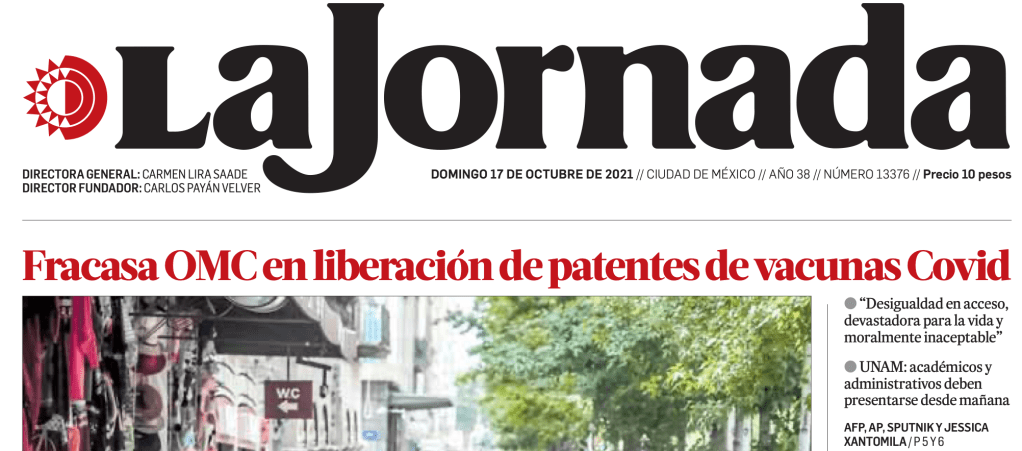
The WTO’s failure last week to “liberate” the COVID vaccines from patent protection was front page news in Mexico City, but got limited attention in English-language media.

More than 100 countries, led by India and South Africa, have demanded a temporary waiver of intellectual property rights for vaccine manufacturers. Such a waiver would suspend certain parts of the WTO Agreement on Trade-Related Aspects of Intellectual Property Rights (TRIPS) so that vaccines and testing technology for COVID-19 could be easily shared. It was the WTO’s “TRIPS Council” that failed to make any progress during meetings Oct. 13-14.

The WTO works by consensus: all 164 member states must agree to any change. MoneyControl said the lack of progress is due to opposition from the European Union and a handful of other rich countries, including Switzerland, Norway and the United Kingdom. “They have been emboldened by a noncommittal United States, despite the support of almost all WTO member nations. Since all WTO decisions have to be unanimous, there is nothing that can be done even if a single nation is unwilling,” a senior trade negotiator said. U.S. President Joe Biden said May 5 that he supported the waiver.

“AIDS drugs for every nation” was one of the cries heard at the International AIDS Conference in Toronto in 2006. Photo: Jim Hodgson  

I have written about this issue before and, indeed, the current fight to overcome the big pharmaceutical companies’ patent “rights” is an echo of the struggles in the first years of the new millennium to win access to antiretrovirals and other HIV and AIDS medications.  

Then as now, Canada has refused to support the TRIPS waiver. In May, 75 MPs from all parties sent a letter to Prime Minister Justin Trudeau in support of the COVID vaccine waiver. 

On Oct. 14, Vancouver MP Don Davies of the New Democratic Party spoke again about the struggle for vaccine equity. “We’ve seen the incredible impact that vaccines have had in the fight against COVID-19 in developed countries, and much of the research for COVID vaccines has been publicly funded,” he said.

“Yet many countries in the developing world have been unable to access vaccines due to global patent regulations. This is unacceptable not just from a humanitarian standpoint, but also a practical one, as we know that without a coordinated global vaccination effort, new COVID-19 variants will continue to develop.” 

Medical Xpress reports that COVID vaccination rates are on average 30 times higher in wealthier countries than in impoverished ones. For medical reasons, some countries are now rolling out third doses of vaccines while billions of people have yet to get access to a first dose.

The WTO director, Ngozi Okonjo-Iweala, has said the gap in vaccination rates between the haves and the have-nots was “devastating for the lives and livelihoods of Africans” and “morally unacceptable.”

Pope Francis took up the vaccine equity issue in the context of the fourth in a series of world gatherings of social movements. He said he would be a “pest”—“pedigüino,” in Spanish: one who asks too many questions—on vaccines, mining companies, debt cancellation and other issues. His calls:

Cuba IV: Rethinking development in a revolutionary situation

“Peace + Friendship = Development”

My time in the Dominican Republic and Mexico had convinced me that most proponents of “development” failed to address the unjust structures in the world, including inequalities that have roots in colonial times. Development needed to be understood (as Gustavo Gutiérrez and others argued) in terms of liberation: a radical transformation of global systems of power and domination.

And so, once I had the opportunity to work among churches in Cuba, I was eager to learn about the practice of development in a revolutionary, socialist society.

In the years after the Cuban government’s rapprochement with organized religion in the early 1990s, some churches and especially their ecumenical agencies made major efforts to contribute to the overall well-being of Cuban society. Cuba was in its “special period” of adjustment to the loss of the Soviet Union as a major trade and aid partner. Cuban churches drew from their own creativity and resources from their global partners to assist.

Today, church-based development programs include strong emergency response capacity and training to manage small businesses and to produce and conserve food (including urban farming). Such training includes empowerment of vulnerable groups, notably farmers with disabilities and senior citizens.

Juan Carlos Cabrera, Sibanicú, Camagüey: a hearing-impaired participant in the CIC’s project with farmers who have disabilities.

The Cuban Council of Churches (CIC) has long supported a pastoral ministry among people living with disabilities. In recent years, that ministry began to focus on farmers with disabilities. You can hear from some of the families and learn about their work in a video I helped to make with The United Church of Canada in 2019. 

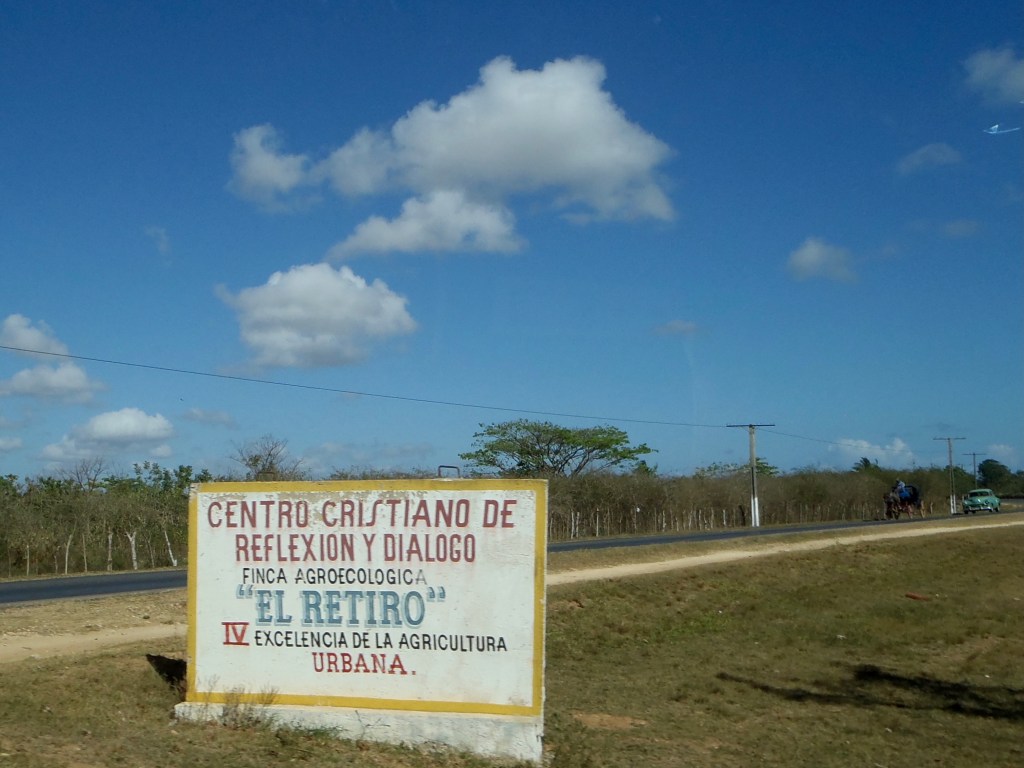
In Cárdenas (near Varadero in Matanzas province), the Christian Centre for Reflection and Dialogue (CCRD) has run a “meals-on-wheels” style program for people in need because of age or illness. Support goes beyond delivery of a daily meal, and includes (according to need) provision of clothing, laundry service, house-keeping, medication, and attention to health and hygiene. 

Much of the food used in that program (and in schools and hospitals around Cárdenas) is produced at CCRD’s 32-hectare farm, El Retiro. It is also a place for training of farmers in the area. You can read more about the farm and about agriculture in Cuba in an article by Gary Kenny (a friend and former staff colleague at the United Church).

CCRD’s farm: “development means that… everyone has a voice”

In conversations with CCRD staff in March 2018, the word “development” kept coming up. I asked them what the concept meant to them. At first, they did what I sometimes do: add an adjective (“community development” or “participatory development”) or an object (“development of capacities”). Eventually, they said: “that everyone has a voice.” And: “Participation means the extent to which people can participate in community, as persons; to express themselves, with their collective and individual interests.” 

In practical terms, that means holding fast to a vision of the common good that embraces all—even as the Cuban government opens the economy to small business initiatives. Tourists already know independent restaurants (paladares) and bed-and-breakfast places (casas particulares). But now there are beauticians, repair shops, and designers of fashion and everything else. In Cuba, they are called cuentapropistas: people who work on their “own account.”

At the same time, the government also encourages people to take up farming. But the new farmers need training in everything from bookkeeping to organic farming practice. This work is carried out in a decentralized way by the CIC together with CCRD and various NGOs and state agencies. Challenges include lack of machinery; ecological awareness; impacts of climate change (drought, hurricanes); market distortions (some hotels buy directly from farmers, bypassing public systems intended to ensure food security for all); and the risk of introduction of GM seeds. 

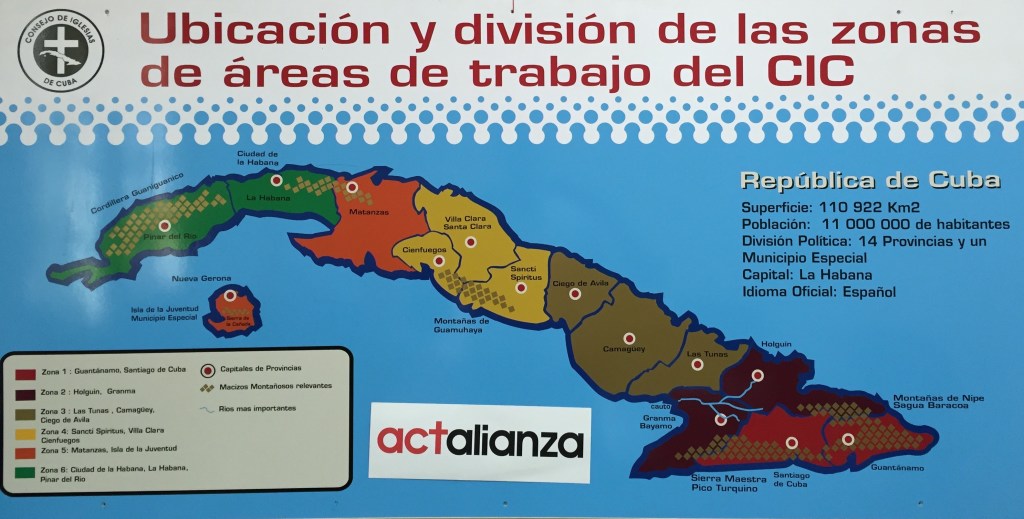
The Cuban Council of Churches’ areas of work.

As market systems evolve and while holding fast to that vision of the common good, CIC and CCRD are taking up concepts of “social and solidarity economies” and structures of cooperatives (as opposed to individual or competitive initiatives). These are not top-down programs, but initiatives hatched in networks across the country. The idea is to get people with different interests matched up with people who have capacity and experience within the same area, working with municipalities, churches and other non-governmental organizations. The networks come together without money for projects, but proposals can emerge from their work—which is what happened with the effort to support farmers with disabilities.

In Cuba and beyond, debates continue about development. We may have “sustainable development goals,” but does the practice change? Are we transforming systems and practicing liberation?

From their experience, Cuban church leaders and theologians contribute to the global ecumenical conversation that unfolds in the World Council of Churches and the ACT Alliance of 135 faith-based development and relief agencies.

In December 2010, Reinerio Arce (a former CIC president who was then serving as rector of the Evangelical Seminary of Theology in Matanzas) called for what he called “prophetic diakonia.” (Diakonia is a Greek word used in the New Testament to refer to service—every kind of service: helping people, serving at tables, and offering leadership in faith communities.)

“In our country the churches are playing a more active role serving the people in need at this moment when our economy is shifting increasingly; we need to build capacity for this task,” he said an interview with the WCC news service.

“God sends us out in mission to bring the good news to the poor and oppressed, in word and in deed. Faithful to this call, we try to serve human needs, focusing on the marginalized, the ‘least of these,’ not only by comforting them but also by addressing the root causes of their pain, sorrow and shortages. This ministry of prophetic diakonia seeks to confront the powers of this world that lead to violence, exclusion, death and destruction, and it calls for the transformation of unjust structures and practices into God’s kingdom of justice, with fullness of life for all and for creation.” 

In Matanzas on Oct. 4, 2016, we watched on TV (left) as Hurricane Matthew crossed southwest Haiti before moving on to eastern Cuba. Three days later, I joined CIC staff as they continued their emergency response (right), including provision of shelter in churches.

Peru’s election: a battle between “rich and poor, master and slave”

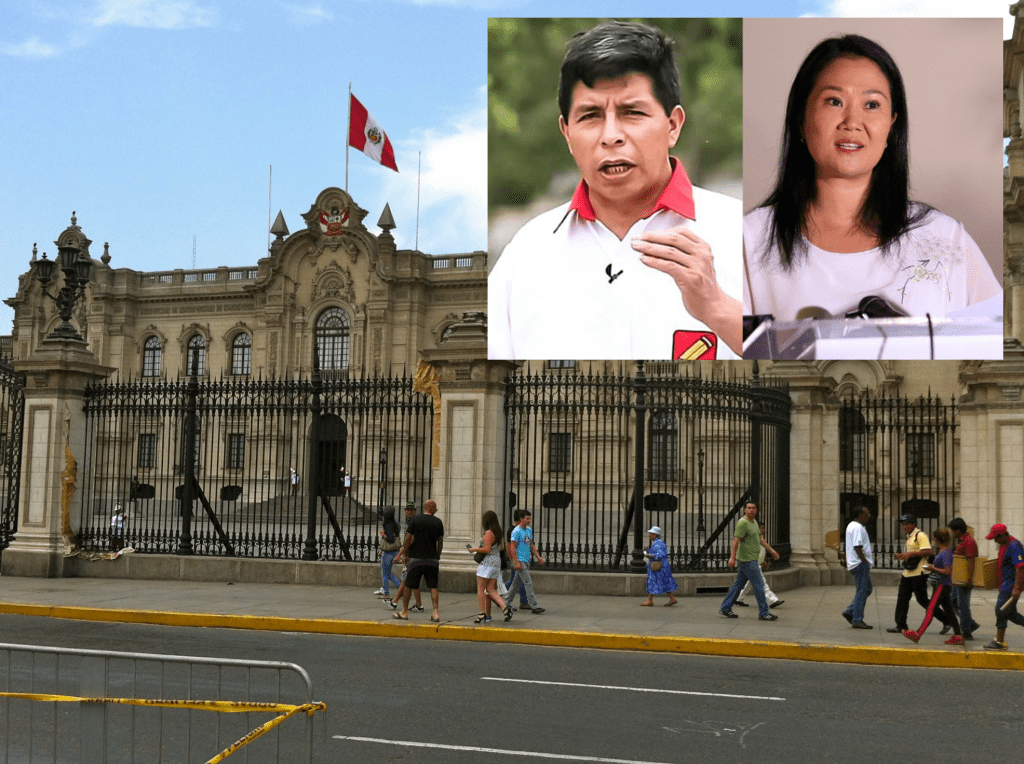
The government palace in Lima. Inset: Pedro Castillo and Keiko Fujimori

On June 6, Peruvians will choose between Pedro Castillo, a rural teacher described in mainstream media as “far left,” and Keiko Fujimori, described in mainstream media as “market friendly.” Those tags obscure deeper truths about the political moment.

A day after first-round results of the presidential election gave Peruvians a choice between these political opposites for the second round, I asked my Facebook friends what they thought. Several responded, and I have been learning.

First lesson came in a message from a friend: an Indigenous woman who is a medical doctor serving communities high in the Andes and far from Lima. 

“What happened in Peru is that, in the midst of this pandemic that further deepened the injustice and the inequities in health, education, access to work and extreme poverty: as always, Lima, the capital, only saw its own context. It had no interest in the regions and their right to decide by whom they should be government. For this reason, they were surprised when the teacher, Pedro Castillo, led the voting and passed to the second round. He is someone they treat as a nobody, who in social media they insult because he is part of Perú profundo (deep Peru), where every day survival is a challenge, not just because of Covid, but also because of hunger and unemployment. 

“There were other options, but as a people, we know those who give flowery and beautiful speeches but then in real life reject us, when they use our culture that they have learned about through books without feeling respect for us and connection with our land and spirituality, our Pachamama and Apus. I think this is a good time for someone who is like the majority of Peruvians to assume the leadership of our country, just as our brother Evo Morales did in Bolivia. Perhaps we will make a mistake, but I think that after so many years of being pushed aside and made invisible in our own land, we have the right. I hope that I have been able to express the feeling of a great many of my sisters and brothers.

“My people are suffering a lot. They don’t have masks. They don’t have water to wash their hands. They get sick and die alone. But in the midst of all of this, they are in solidarity, they care for their elders. These are my people and ojalá (I hope) they have the chance to be heard and taken into account.”

Second lesson came from several friends, either writing directly to me or posting in social media. Be cautious about media coverage. Fujimori, appearing on the final ballot for the third time, is well-known. She is the daughter of a former president who is in prison for corruption; she faces her own criminal charges related to money-laundering and irregular campaign contributions arising from her time in Congress.

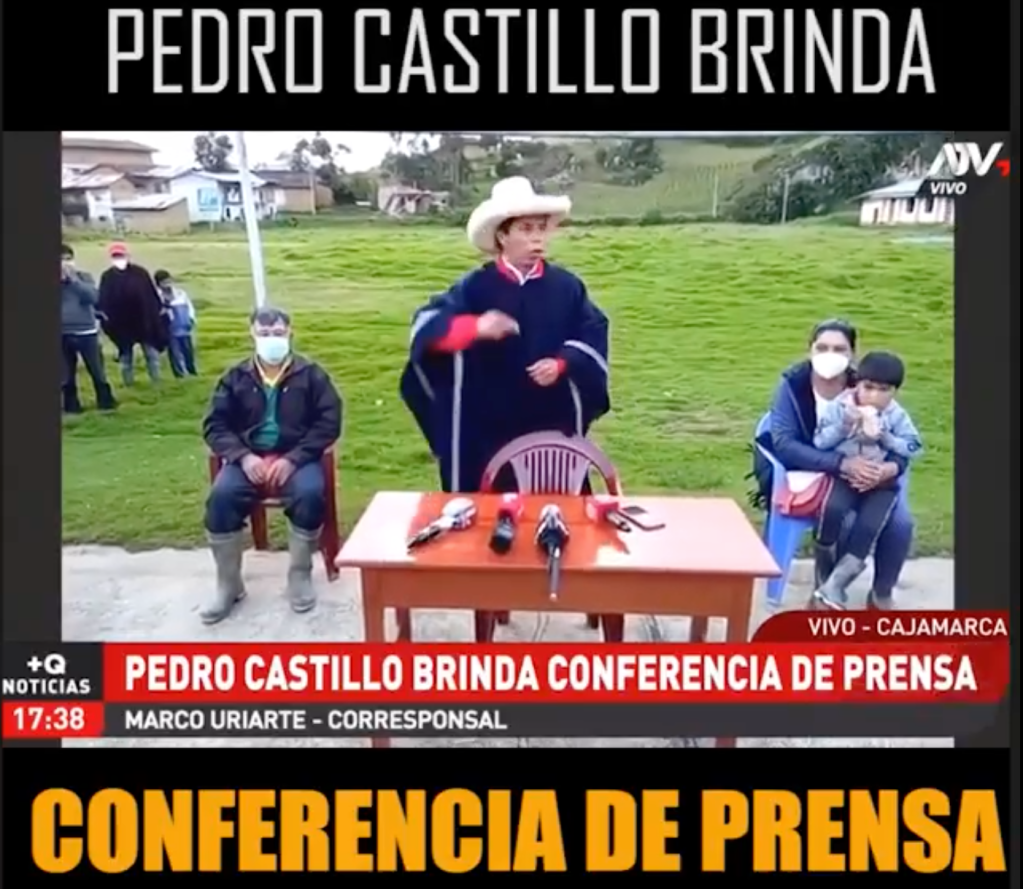
Castillo, as someone whom the media have ignored, is harder to get to know. The Bolivian news service Kawsachun translated one of his speeches into English so that you can read his own words as you watch the video. Here, Castillo himself excoriates the media: 

“I want to denounce publicly those media outlets with national coverage that twist reality. Those outlets that do what they want and defend the oligarchy, but they forget about the people who have no bread, no education, no healthcare. They forget about those who demand their rights and ask for justice. That’s why we’re here, if we have to give our lives for a better country then we’ll do it with dignity. We won’t back down.”

Fujimori and mainstream media decry Castillo, tagging him as a Communist and worse, a supporter of the old Sendero Luminoso (Shining Path) guerrilla movement. It’s a false claim, given that he was part of the ronderos campesinos, rural patrols that were key to defeating Sendero.

In many communities today, the ronderos protect collectively-held land and the rights of the Indigenous and peasant farmers who live there. Their role is constitutionally-protected and built into municipal structures. Moreover, the state is required to attend to people in their language and people are recognized as having rights to their ethnic and cultural identities. The ronderos are also responsible for administration of communal justice. Some of the women’s groups I know train the ronderos so that they will bring a gender justice perspective to their work, so as to protect the rights of women.

Castillo is a rural teacher in the city of Chota in the Cajamarca region, 600 km north of Lima. An organizer in the teachers’ union, he was one of the leaders of a 2017 strike by teachers that sought to defend their employment rights and increase salaries. The academic Roger Merino writes that Castillo’s “left” might be more the classic trade union left—and certainly an emphasis on issues confronting urban and rural workers would be a step forward—and not the multi-sectoral left that has won power (and lost it) in many Latin American countries in the past two decades.

Farms in Peru’s Sacred Valley, high in the Andes

Castillo campaigned on the slogan, “no more poverty in a rich country.”  He has won the support of Veronika Mendoza, who represented a more broadly inclusive left, and he will need to build bridges with social movements of environmentalists, women, LGBTI people and Indigenous peoples. He has promised to re-write Alberto Fujimori’s 1993 constitution (which favours private enterprise and restricts the role of the state), improve the quality of Peru’s media through regulation, and increase public spending on health and education. Like many Peruvian families, his is religiously diverse: he is Catholic and his wife and children are part of the Nazarene Church. 

Keiko Fujimori, on the other hand, would not hesitate to break with democratic commitments or institutions. She is favoured by the business elites who warn of capital flight. Writing for the ALAI news service, Jesús Ospina Salinas says Peru’s current polarization comes from those who have no interest in “reducing inequalities, and who would continue a model that only brings short-term economic gains, but not structural ones that are sought and needed by the poor. The campaign of fear will not cease.”

“This is a battle between the rich and the poor, the struggle between the… master and the slave,” Castillo has said. With three weeks and one more debate before the election, the rich, who control most media, are doing all they can to catch up in opinion polls.