U.S. interference mars Latin American elections

by Jim Hodgson

As I write, Colombians and Peruvians await confirmation of a victor after presidential election day results proved too close to call.

Like mid-term elections in Argentina last October and the Honduras election in November, Colombia’s vote was marred by overt U.S. interference. 

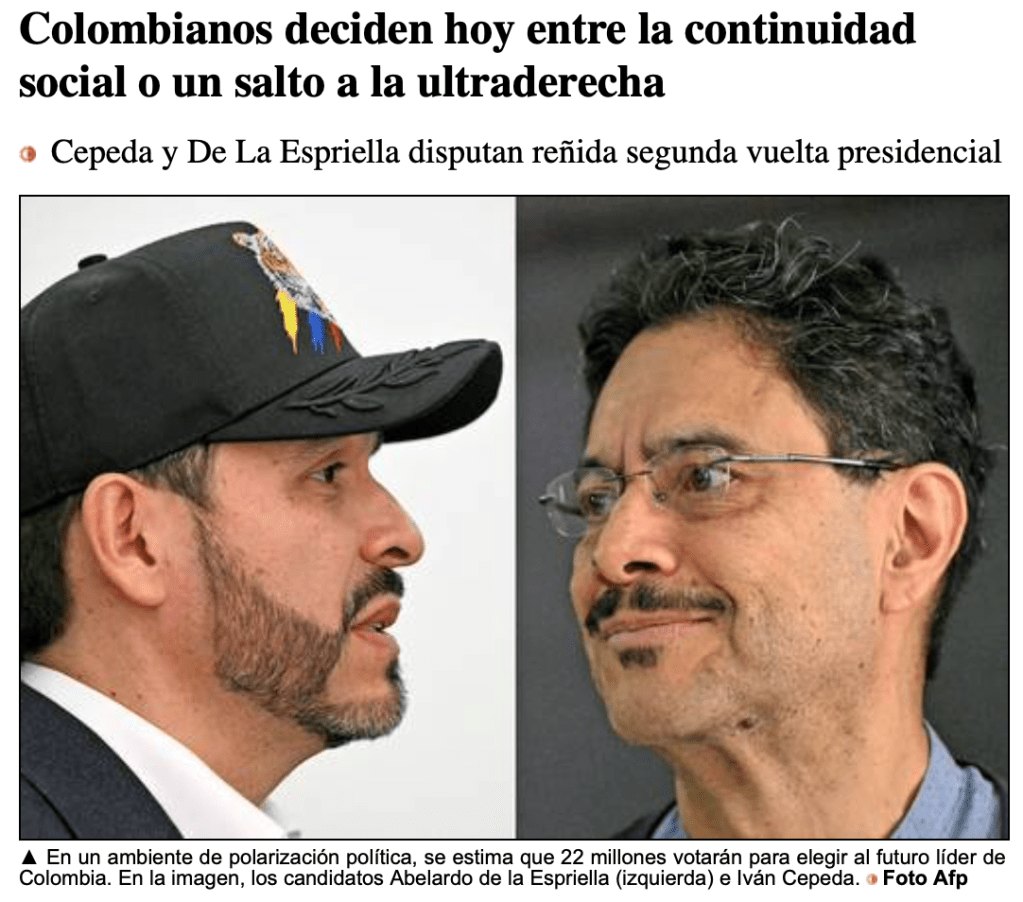
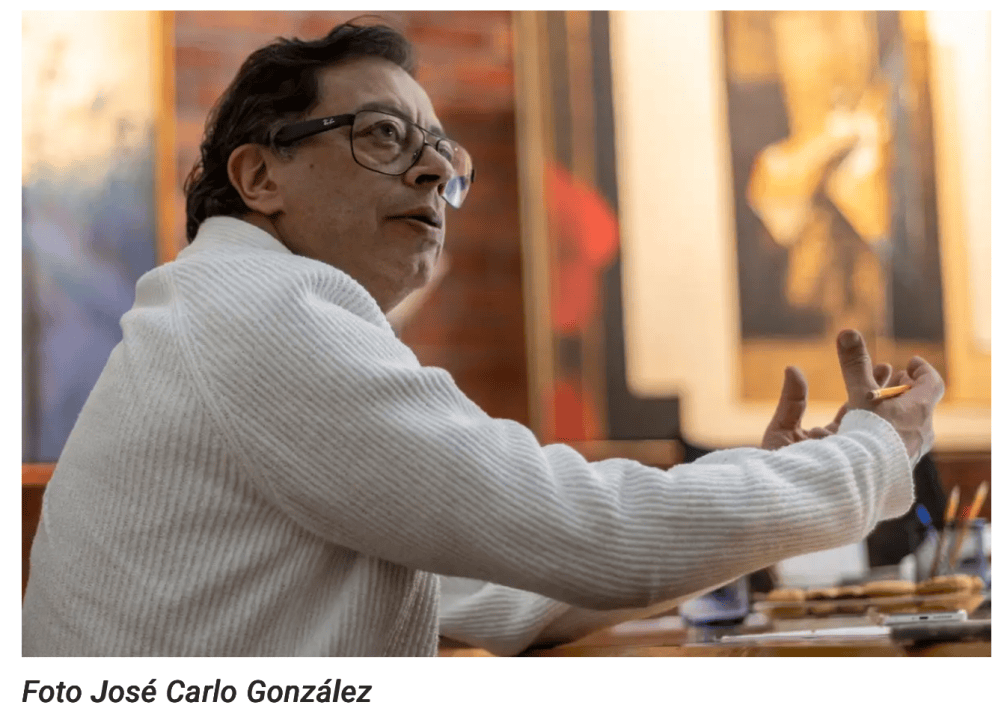
On June 21, Colombians had to choose between a progressive human rights defender, Iván Cepeda, and a far-right political new-comer, Abelardo de la Espriella. Cepeda would continue current President Gustavo Petro’s commitment to achieving peace with several armed groups that have so far resisted joining a prolonged peace process.

As Colombians headed for the polls, I received an email from Dayana Mosquera, Colombia consultant at Global Exchange

In recent days, foreign figures have openly inserted themselves into Colombia’s campaign. 

It began in Washington. President Trump posted his “Complete and Total Endorsement” on Truth Social, and de la Espriella answered on X, casting the two countries as “sister nations” bound to defend Western civilization. A chorus followed. Secretary of State Marco Rubio, whom de la Espriella met privately this year, said Washington would be “very forceful in guaranteeing” a free and fair vote. U.S. Representative María Elvira Salazar urged Colombians to rally behind him.

It did not stop there. Beyond Washington, de la Espriella has secured the unconditional support of other leaders including Presidents Daniel Noboa of Ecuador, José Antonio Kast of Chile and Argentina’s Javier Milei, who interpreted the result as a rejection of the “failed socialist model” and said the forces of freedom across the region were watching and lending their support. From Madrid, Vox leader Santiago Abascal said Colombians could recover the “sovereignty taken from them.” 

Each framed it the same way: as a defense of Colombia’s freedom and even its sovereignty. 

That is the contradiction at the heart of this election. Sovereignty and freedom are not gifts foreign politicians can hand a country by meddling in its vote. They are the very things such interference denies. Nor is this happening in isolation. 

Since Trump reshaped American politics, a familiar style has spread: elections become contests to be won by any means, opponents are cast as enemies, and institutions are treated as obstacles. That style is no longer staying home. It is carried across borders by a networked right, by officials willing to amplify it, and by compliant allies in the region eager to satisfy Washington for their own gain. This weekend, Colombia is where the line is drawn.

Next target for the far-right will be Brazil, where presidential elections are set for October.

Crime and the far-right backlash

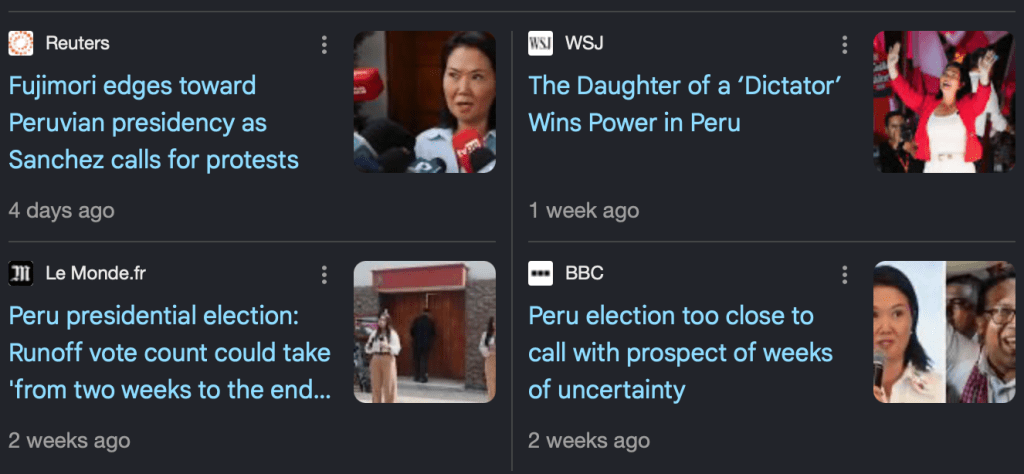
In Peru, voters have waited since June 7 for a final result. Keiko Fujimori – daughter of a former dictator – faced Roberto Sánchez who served as foreign minister under former president Pedro Castillo, elected in 2021 but forced from office in December 2022. 

Like Castillo, Sánchez wears a traditional hat popular in rural parts of Peru. He says his hat serves as “the expression of all hats and of the diversity” of Peru. His economic proposals differ from the “market-friendly,” neo-liberal policies applied in recent decades by most Peruvian leaders. He has said he would renegotiate contracts with mining companies, saying that the state should collect more taxes. He has also said that rural communities should own a share of the mines operating in their territory and that he opposes open-pit operations.

Fujimori ran on a law-and-order platform, promising to deploy the military in prisons and on borders. In Peru, where extortion has increased fivefold in the past five years, the approach won votes, as it did in February in Costa Rica in February. Shaken by higher levels of drug-related killings, Costa Ricans chose conservative Laura Fernández for her tough-on-crime platform. 

To an extent, these right-wing politicians draw inspiration (and slogans) from El Salvador’s president, Nayib Bukele, another Trump ally. His heavy-handed security strategies have seen tens of thousands of young men imprisoned without due process, and have targeted environmental protectors (the Santa Marta 5) and human rights defenders like Ruth López Alfaro.

Proposals from the centre and left for community violence prevention programs, better police training, and prison and judicial reforms, show results over years. But the right uses crime as an emotional rallying cry. Their short-term security strategies promise to make people feel safe soon. They come with a high price to human rights and democracy, but to people who live with real fear on a daily basis, those values seem abstract. 

Meanwhile, another right-wing strong man, Daniel Noboa, holds power in Ecuador, neighbour to Peru and Colombia. A week ago, he declared a new 60-day state of emergency across ten provinces and several additional municipalities on Tuesday, suspending constitutional rights and authorizing security forces to conduct searches of private homes without a judicial warrant when organized crime is suspected. His decree came shortly after a meeting at the Pentagon with U.S. Secretary of War Pete Hegseth to discuss joint military operations.

Trump officials, including his ambassadors, insist on such joint operations, often with the threat of acting unilaterally if governments do not comply – and the example of U.S.-government-sponsored killings of more than 200 people in aerial attacks on small boats in international waters that are alleged (without evidence) to be carrying illegal drugs.

As a result, the centre-left government of Guatemala declared a state of emergency to crack down on gang violence this year and welcomed Trump’s “help” targeting drug traffickers.

In Mexico, the U.S. Central Intelligence Agency was found to be working hand-in-hand with the conservative government of the northern border state of Chihuahua – without the knowledge of the federal government – after two agents were killed in a car crash. As that scandal exploded in Mexico, the U.S. government launched indictments against the governor and other officials of Sinaloa state, and sought their extradition. 

In an editorial, La Jornada newspaper described these events as “heavily charged acts of political interference, compounded, to top it off, with an implicit threat.” 

Venezuelans head to the polls July 28 under shadow of sanctions

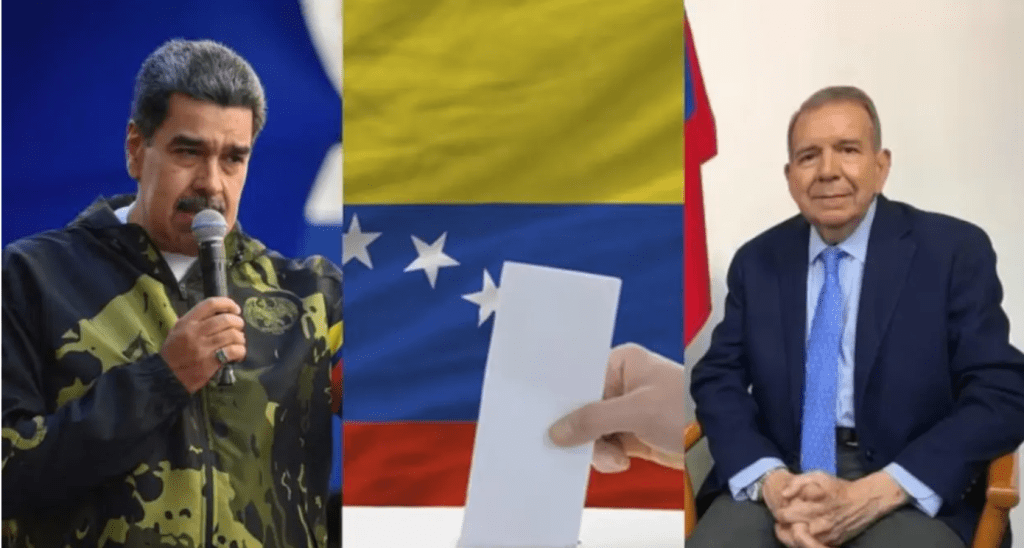
President Nicolás Maduro (left) is challenged by retired diplomat Edmundo González. (TeleSUR graphic)

by Jim Hodgson

Just over a week from now, Venezuelans will again head to the polls. For the election in 2018, I was there as an observer. This time, I’m watching with concern but from a distance as Venezuelans vote under the pressure of U.S., European and Canadian sanctions that have made living conditions worse for most people.

I got involved with Venezuela soon after the election of Hugo Chávez in December 1998. Those of us concerned about the expansion of corporate-driven “free trade” across the Americas had created the Hemispheric Social Alliance (HSA), a coalition of networks that included Common Frontiers Canada, the Mexican Action Network on Free Trade, Brazil’s Network for Peoples Integration and the U.S. Alliance for Responsible Trade.

At a meeting in Toronto in November 1999 with some of the region’s trade ministers, we found we had a new ally. Venezuela’s trade minister won applause when she said that concern for the rights of the poor needed to be central in trade talks and public policy.

The trade ministers, nevertheless, forged ahead with plans for a Free Trade Area of the Americas (FTAA).When their heads of government gathered in Quebec City in 2001, President Chávez was the one participant who refused to endorse the timetable for FTAA by 2005. By 2005, spurred by pressure from social movements, Chávez and other new leaders were able to defeat the FTAA.

Between 2004 and 2019, I visited Venezuela about a half-dozen times. I observed the 2004 recall referendum and the 2018 presidential election. With encouragement from faith-based organizations in Cuba and Colombia, I joined ecumenical encounters in 2004, 2006 and 2019, and attended the Americas Social Forum in Caracas in 2006.

Inside Venezuela, opposition to Chávez and to his successor Nicolás Maduro has been unrelenting. But their coup in 2002 failed. Their recall referendum in 2004 failed. Their attempt in 2019, in alliance with Canada’s then-foreign minister Chrystia Freeland and the “Lima Group,” to impose an interim head of a past national assembly, Juan Guaidó, as president failed—along with three coup attempts and then a botched invasion.

The May 2018 elections followed months of internationally-sponsored negotiations in the Dominican Republic between the government and opposition that, by February that year, achieved an agreement. But at the last minute, part of the opposition movement said no: other parties, notably that of Henri Falcón, did participate. Our Canadian delegation saw the May election as free and fair. Maduro won. I wrote about our experience in a series of articles for rabble.ca

After the vote, the pressure continued: the Lima Group’s Guaidó gambit; sanctions strengthened again in order to force regime change; and assets of the state oil company, PDVSA, and its U.S. subsidiary, CITGO, were blocked or seized, as were gold reserves held in London. Humanitarian aid became heavily politicized, even blocking access to vaccines during the Covid pandemic. In those circumstances, migration became a normal response. (International organizations set the number of Venezuelan who have left over the past dozen years above 7 million. The government says their figure is about 2.5 million and that of those, about 1.2 million returned between 2020 and 2023—almost half of them with government support.)

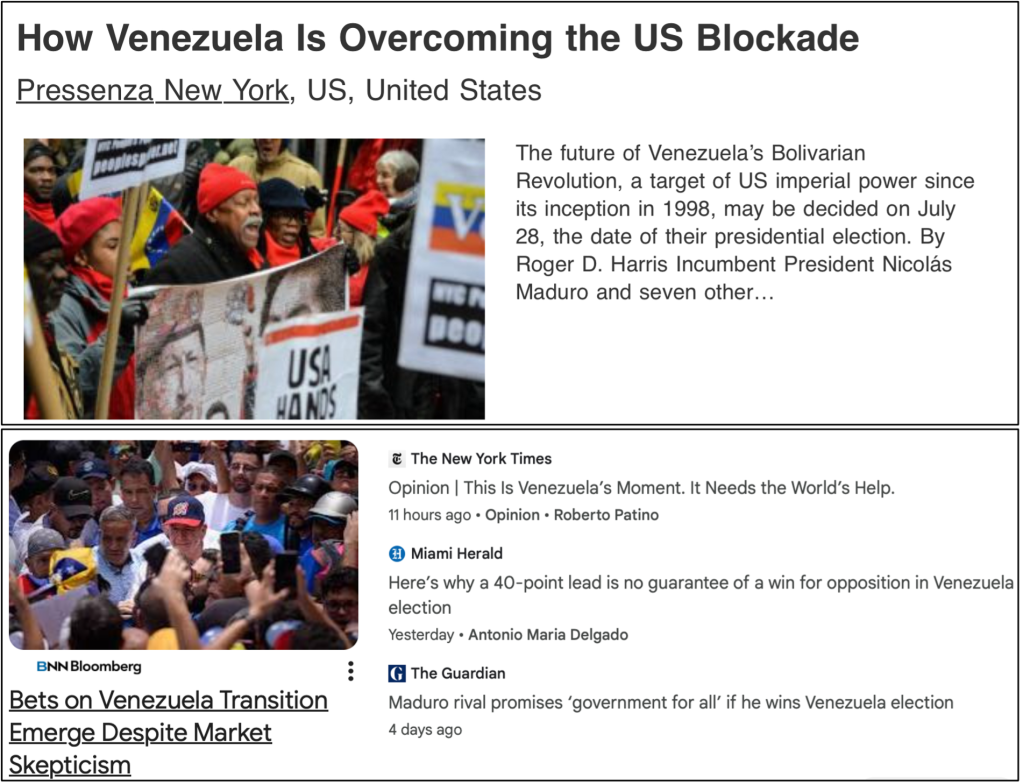
A deep dive into both mainstream media and alternative media (Pressenza, Orinoco Tribune, Venezuelanalysis, TeleSUR, among others, is necessary to get a reasonable sense of what is happening in this election. The far-right may reject official results, much as Trump did in the United States in 2020.

The July 28 vote

This election takes place while Venezuelans suffer under more than 930 “unilateral coercive measures”—sanctions—imposed by the United States, Canada and their European allies. “These should be elections without imperial sanctions,” argued the Mexican philosopher Fernando Buen Abad Domínguez recently. But that is not what is happening.

Early in 2023, UN High Commissioner for Human Rights Volker Türk said sanctions on Venezuela “have exacerbated the economic crisis and hindered human rights,” and called for the measures to be lifted. Türk visited Venezuela in January 2023. His comments reflected similar remarks made two years earlier by Alena Douhan, the UN special rapporteur on the negative impact of unilateral coercive measures on the enjoyment of human rights. She said that the Venezuelan “government’s revenue was reported to shrink by 99% with the country currently living on one per cent of its pre-sanctions income.”

Again this time, complex international negotiations unfolded to produce a basis for the election, finally established through the Barbados Accords. The document was signed in October 2023 by the Maduro government and an alliance of opposition parties known as the Unitary Platform.

The leading opposition candidate is retired diplomat Edmundo González. He is regarded as a stand-in for María Corina Machado whose candidacy was blocked because of her involvement in organizing violent street protests (sometimes called guarimbas) between 2014 and 2018, and for demanding sanctions. González and another far-right candidate, Enrique Márquez, refused to sign a declaration requested by the Electoral Authority promising they would respect the elections results and refrain from violence in its aftermath.

In the campaign, Maduro and his allies report a number of gains made over the past decade with regard to child care, medical attention, job-training and education. More recently, the inflation rate has dropped to 7.8 per cent, and that the GDP is up by seven per cent. The government has sought ways to diversify the resource-dependent economy and increase national production.

Throughout these 25 years, the government has expanded access to health care, education, housing, public transit, food and pensions through misiones—popular campaigns that use oil revenue for public benefit. 

A recent example is the “Great Mission Return to the Homeland” (Vuelta a la Patria). “We want to ensure that the vast majority of those who have not returned come here, with their family, with their friends,” said Maduro. Pointing to foreign sanctions as the principal cause of emigration, he added that it is his desire to “heal this wound” that the departure of millions of people caused , inviting them to return and to invest and enjoy their country.

It’s not that there are no legitimate criticisms to be made of the government. One might wish, for example, that much more had been done long ago to reduce criminal violence, advance LGBTQIA+ rights,* protect the country’s ecology, reduce dependence on oil revenue, and stimulate food production. If only such criticism could be made in an atmosphere of civil debate without threats to overthrow the government or to foment violence.

Since the 1970s in Latin America, the left in power has tried to govern according to the rules of liberal democracy, perhaps without sufficient regard for the roles of money, foreign interference and private media conglomerates. When the poor win power and actually have a shot at changing the rules of politics and economics—at transforming the structures that made them poor—what may they do to hold on? 

“It is not just any election. It is an election that defines the future,” said former vice-president Jorge Arreaza recently. In the face of strong external and internal opposition, Venezuelans sought to transform democracy so that they could continue re-inventing Latin American politics and economics in ways that benefit most people, not just the rich and not the corporations.

Will they have a chance to continue the effort? Or must they rebuild the social movements and networks necessary for a new attempt that may be decades away?

* Regarding LGBTQIA+ rights. In 2016, Venezuela’s Supreme Court declared that the state will provide protection without distinction to all families, including to children born into same-sex families. In the same year, Venezuela’s Public Ministry announced that transgender people may request a new identity card according to their gender identity.

Recent Pride celebrations are reported in the Orinoco Tribune, with some critical comments:

Venezuela is among the few countries in Latin America that have not legalized marriage equality and, unfortunately, a marriage equality bill has been languishing for nearly a decade in the Venezuelan National Assembly.

Recently, some Chavista politicians have been using socially conservative slogans that replicate US conservative approach towards the LGBTQ+ community and promoting so-called “family and traditional values” against what they call the “perversion” of “Western LGBTQ+ values.”

The ruling PSUV has failed to achieve adequate protections for the LGBTQ+ community which is both a failure of its responsibility to the nation and a national security vulnerability that is being exploited by the imperialists.