
by Jim Hodgson
More than 42 years after my first visit to Haiti, I can’t disagree with that assessment. It was offered June 16 by UN secretary general António Guterres near the end of his one-day visit to Port-au-Prince.
The visit came 40 years after the fall of the Duvalier family dictatorship; 36 years after the election of a liberation-theology-inspired priest named Jean-Bertrand Aristide; 35 years after the first coup against him; 22 years after the second coup; 16 years after the earthquake killed at least 220,000 people; five years after the assassination of Haiti’s last elected president; and after a decade of still-surging gang violence in the capital city and beyond.
A week after the visit by Guterres, Canada’s Foreign Affairs Minister Anita Anand announced $35 million in new funding Tuesday for projects aimed at shoring up security and curbing violence in the Caribbean. Just $7.5 million was to support the Haitian National Police service’s fight against gang violence.
Now two-and-a-half months have passed since Guterres denounced indifference and Anand offered money. But by any measure, everything has gotten worse.
Two events caught my attention over in recent days.
Gang coalition attacks Kenscoff
First was a vicious gang attack in Kenscoff, a farming community high in the mountains above Port-au-Prince. At least 47 people were killed, including five children. Fifty others were abducted, though six children and seven women in the group were later released. Many of those killed had sought refuge in a church compound at L’église de l’Arche de la Nouvelle Alliance.
Days later, Pope Leo XIV called for release of all remaining hostages. Bishop Pierre André Dumas of the diocese of Anse-à-Veau et Miragoâne called for more action from Haiti’s government to protect the population and to end impunity:
“Haiti cannot become an immense cemetery where we come now and then to leave flowers, recite our condolences and publish statements.”
Gang violence has displaced about 1.5 million people in Haiti, where at least 3,050 people were reported killed from January to June, according to U.N. statistics released Aug. 25.
The Trump regime’s assault on Haitians in the U.S.
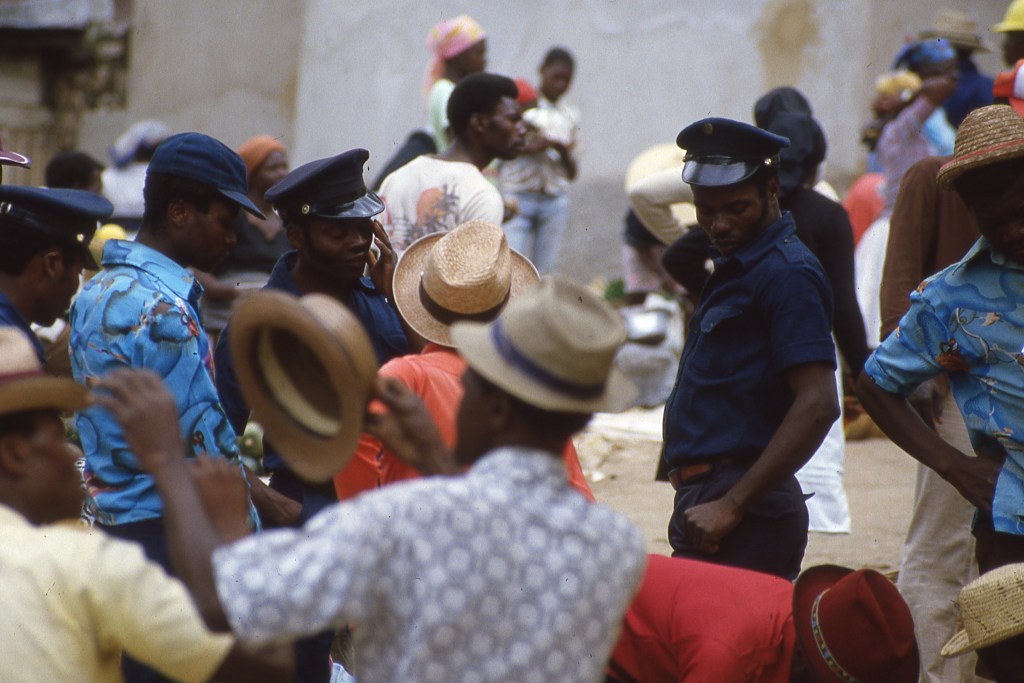
The second matter that grabbed my attention is that the United States has abruptly ended the “temporary protected status” that had kept Haitian asylum-seekers in years since the earthquake from being deported. On Aug. 27, the Department of Homeland Security posted on social media: “Haiti TPS has been TERMINATED. Those with TPS are in our nation illegally. They have two options: LEAVE IMMEDIATELY or be DEPORTED.” Attached was a video of chained Black men and women being moved through the rain toward a waiting plane.
Historian Heather Cox Richardson wrote: “Officials at DHS chose to publish a video of Black people in chains that evoked the slave coffles of the Old South.”
That news came at around the time that Eleazar S. Fernandez, a theologian from the Philippines currently teaching in Minnesota, wrote an excellent appreciation of Haitians and their rebellion that ended slavery in 1804. When he posted the text on Facebook, however, it was met with vile, bot-driven racist attacks that recalled phrases used by Trump, Vance and others in the current U.S. regime to malign Haitians.
UN Security Council speeches reveal the failure of the international community
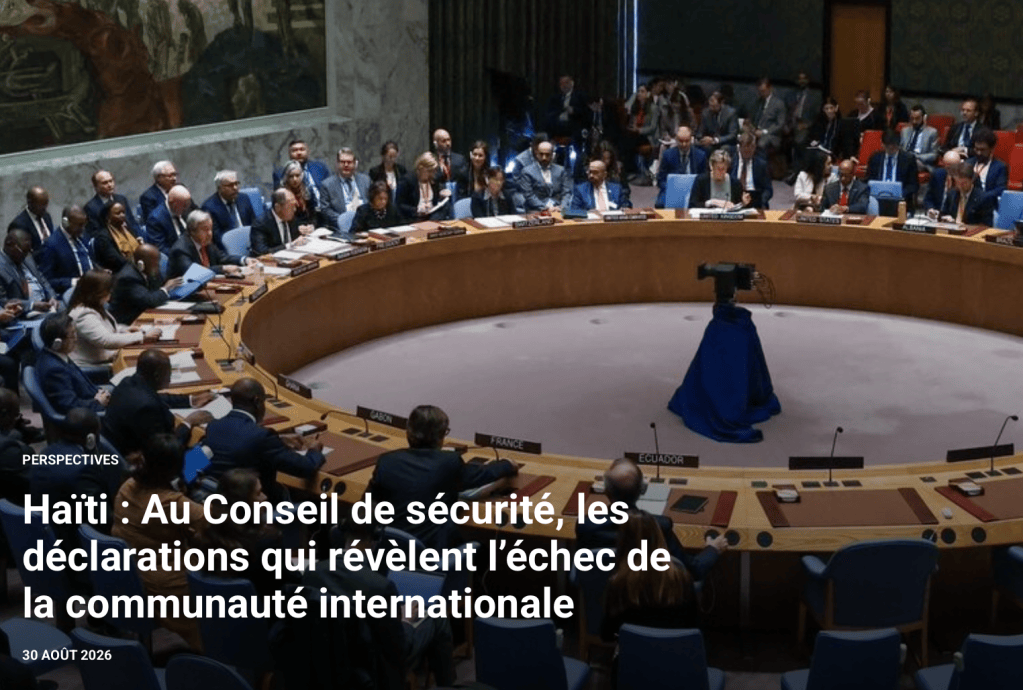
The UN Security Council held an emergency meeting about Haiti on Friday, Aug. 28. Like conversations about Gaza, Sudan or Somalia, the meeting only revealed failures.
Gotson Pierre, editor of Haiti’s Alterpresse news service, wrote:
“Three years after authorization of an international mission intended to support the Haitian National Police action against the gangs, results remain largely insufficient when measured against announced objectives.”
After one failed effort (known as the Multinational Mission to Support Security, MMAS), the UN created the Gang Suppression Force (FRG).
The intent was to deploy a force of 5,500 international members but, as Dominican foreign affairs minister Roberto Álvarez Gil told a UNSC meeting in July, barely 1,000 were on the ground. On the surface, the problem was logistical – insufficient aircraft to bring police from countries that had promised them (Sri Lanka, Bangladesh, Côte d’Ivoire and others) – but it shows the deeper problem of UN member-state arrears. As you might guess, the United States under Trump is the largest and most reluctant debtor. And the United States seems to have plenty of aircraft that it uses for deportations all over the planet.
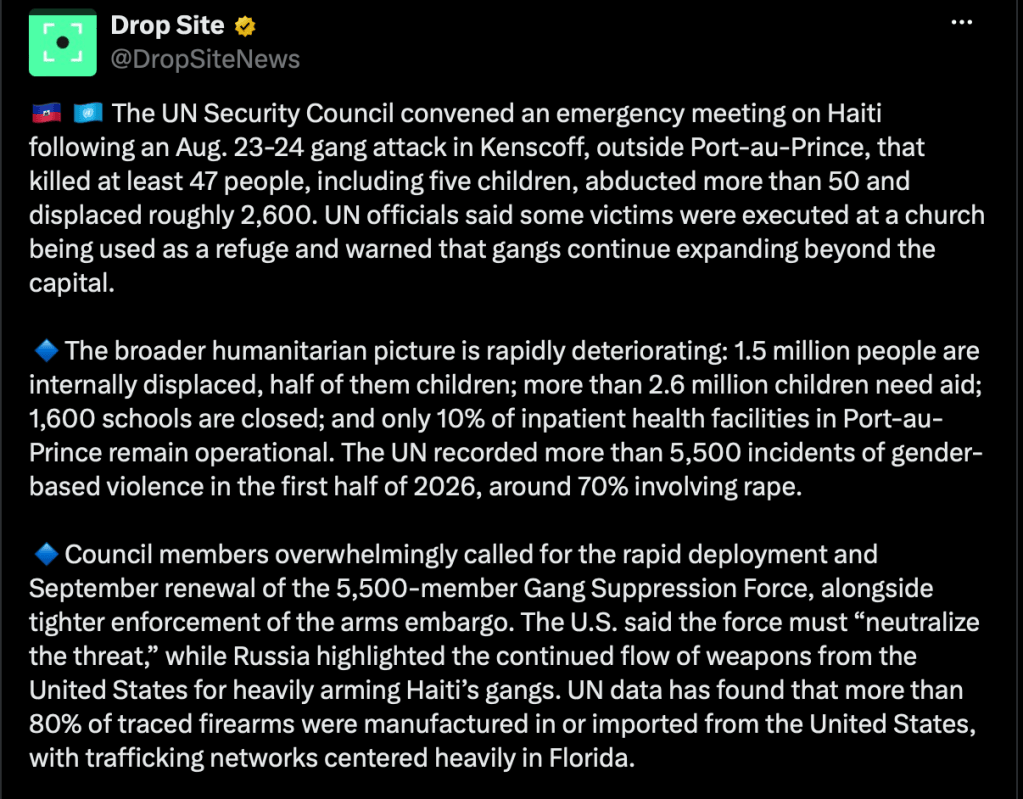
Two other problems. As noted in the Drop Site report above, the humanitarian situation continues to deteriorate. Meanwhile, Haiti’s illegitimate interim government, headed now only by Prime Minister Alix Didier Fils-Aimé after U.S.-led manoeuvres in January that removed the previous Transitional Presidential Council, is trying to hold general elections for the first time in more than a decade on Dec. 13. It has been registering voters in Port-au-Prince and beyond.
But, given the history of U.S. interference (and worse) in Haiti over more than a century, my expectation is that such an election will have a low voter turnout and produce a new president who is favourable to U.S. security and business plans, much like those of Michel Martelly (2011-16) and Jovenel Moïse (2017 until his assassination on July 7, 2021). Again, the parties, popular organisations and social movements with different visions for Haiti will be shoved aside.

