From Bogotá, the Global South charges Israel with genocide

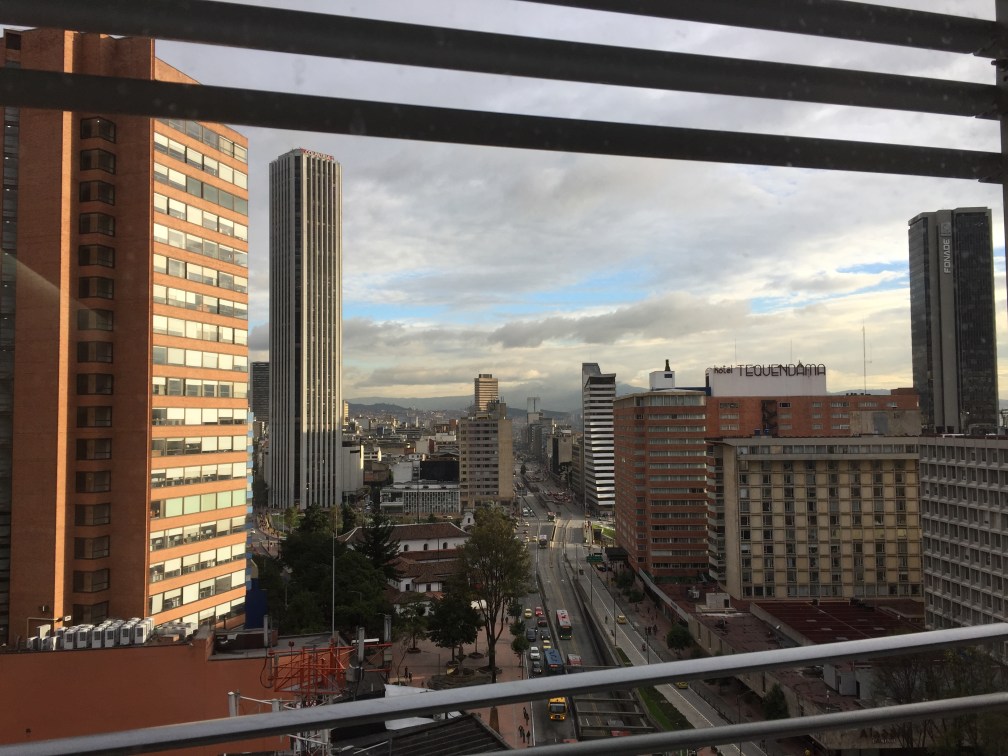
A two-day meeting this week in the Colombian capital ended with renewed commitment to pursue accountability for Israeli abuses in Gaza, including by preventing the transfer of weapons to Israel.

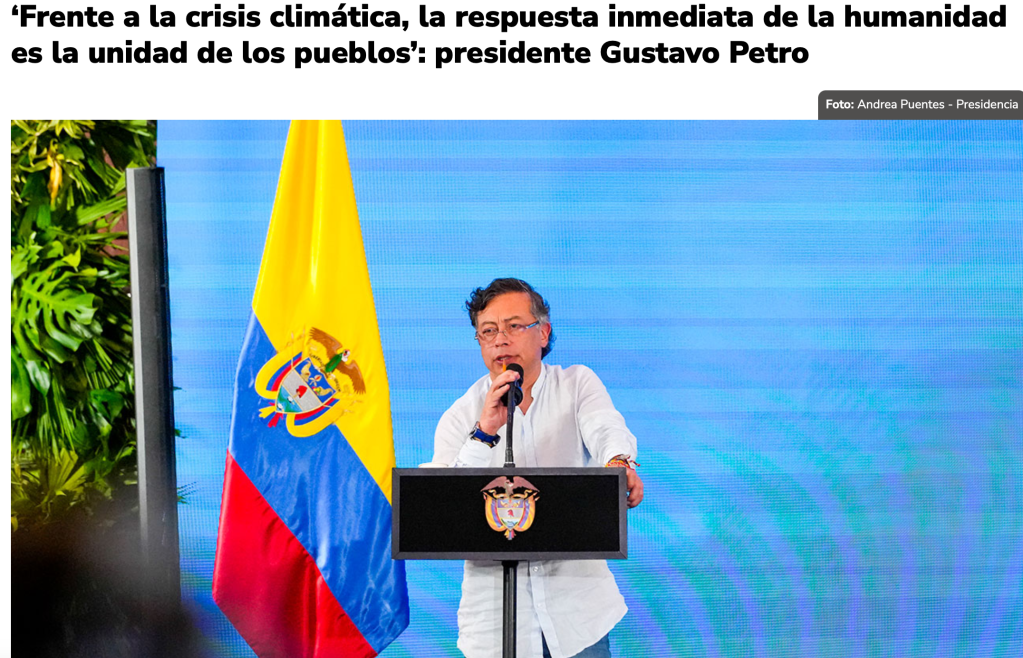
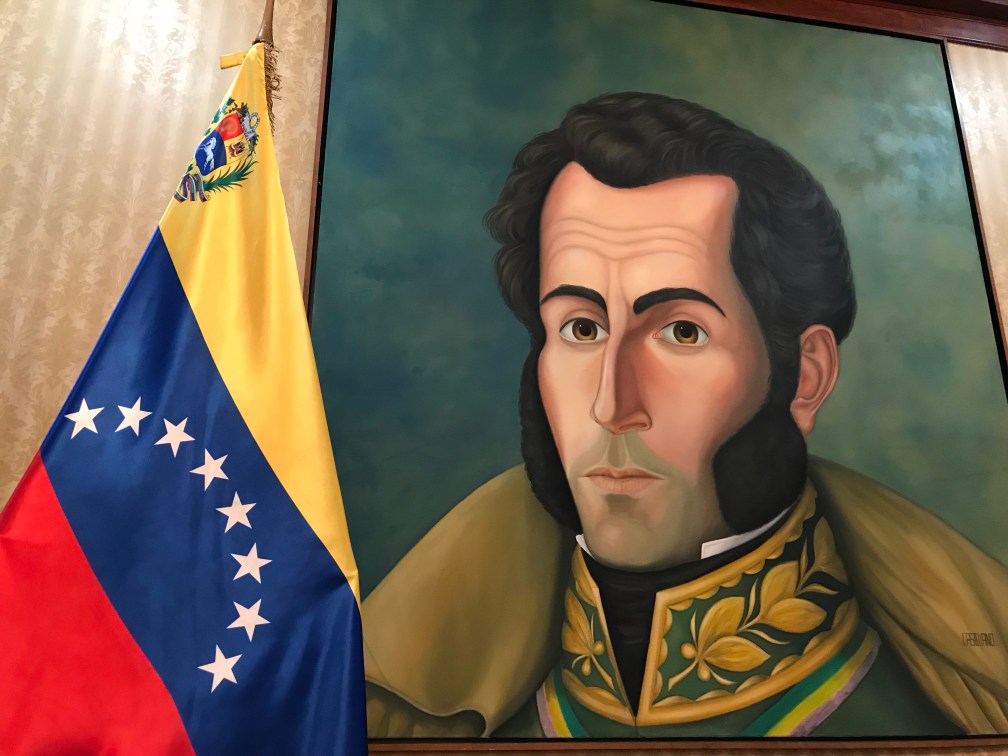
As the event drew to a close Wednesday (July 16), Colombian President Gustavo Petro (above) told participants, “Gaza is simply an experiment by the ultra-rich to show the impoverished people of the world how they will respond to humanity’s rebellion.”

Petro also distanced himself further from the North Atlantic Treaty Organization (NATO), which in 2022 had designated Colombia as a “non-member strategic ally.” 

“What are we doing in NATO, if its principal leaders are with the genocide?” he asked. “We must leave.”

A coalition known as The Hague Group organised the summit. It was born in January last year through the help of Progressive International (PI), an organization founded in 2020 to unite, organize, and mobilize progressive forces around the world. PI called the Bogotá meeting the “most ambitious multilateral action since the start of Gaza genocide 21 months ago.”

Jointly convened by the governments of Colombia and South Africa as co-chairs, the Hague Group also includes Bolivia, Cuba, Indonesia, Iraq, Libya, Malaysia, Namibia, Nicaragua, Oman and Saint Vincent and the Grenadines. At least 18 other countries, plus the United Nations and the World Council of Churches, sent representatives. Qatar and Egypt, which are overseeing negotiations between Hamas and the Israeli government, attended.

Israel’s offensive in Gaza has killed more than 58,000 Palestinians, according to Gaza’s Health Ministry, which has said women and children make up more than half of the dead. At least 90 were killed on Thursday (July 16), including those who were crushed at an Israeli-controlled food distribution site. Holy Family Church also came under attack, sparking criticism and new calls for peace from Pope Leo XIV and from the World Council of Churches.

During Tuesday morning’s opening event, various officials spoke, calling for an end to Israel’s attacks on Gaza. Colombia’s foreign minister, Rosa Yolanda Villavicencio, said during her morning address that Israel’s attacks constitute an unequivocal “genocide.”

Another key participant was Francesca Albanese (above), the U.N. special rapporteur for the Palestinian Territories. She denounced the inaction of the international community. She accused the West of justifying Israeli actions as the “right to defense” and said the vetos in the U.N. Security Council “protect war crimes” carried out in the sight of all.

“Palestine has changed global consciousness, drawing a clear line between those who oppose genocide and those who accept it or are part of it,” she said. Albanese was recently sanctioned by the US for her outspoken criticism of Israel’s actions.

“We believe in protagonism, not supplication,” said Varsha Gandikota-Nellutla, the executive secretary of The Hague Group. “Today marks an end to the era of the impunity and the beginning of collective state action by governments of conscience.”

The group members committed to implementing six measures immediately through their domestic legal and administrative systems to break the ties of complicity with Israel’s campaign of devastation in Palestine. They set September 20 as a date for other states to join them, coinciding with the 80th U.N. General Assembly. Consultations with capitals across the world are now ongoing.

“We hereby announce the following measures,” the Joint Statement on the Conclusion of the Emergency Ministerial Conference on Palestine reads, “to be adopted based on states’ domestic legal and legislative frameworks:”

  • Prevent the provision or transfer of arms, munitions, military fuel, related military equipment, and dual-use items to Israel…
  • Prevent the transit, docking, and servicing of vessels at any port…. in all cases where there is a clear risk of the vessel being used to carry arms, munitions, military fuel, related military equipment, and dual-use items to Israel
  • Prevent the carriage of arms, munitions, military fuel, related military equipment, and dual-use items to Israel on vessels bearing our flag… and ensure full accountability, including de-flagging, for non-compliance with this prohibition.
  • Commence an urgent review of all public contracts, to prevent public institutions and funds from supporting Israel’s illegal occupation of the Palestinian Territory and entrenching its unlawful presence.
  • Comply with obligations to ensure accountability for the most serious crimes under international law, through robust, impartial and independent investigations and prosecutions at national or international levels, to ensure justice for all victims and the prevention of future crimes.
  • Support universal jurisdiction mandates, as and where applicable in national legal frameworks and judiciaries, to ensure justice for victims of international crimes committed in the Occupied Palestinian Territory.

“These 12 states have taken a momentous step forward,” said Albanese about the joint statement. “The clock is now ticking for states—from Europe to the Arab world and beyond—to join them.”

The full joint statement is here.

Complete text of Albanese’s remarks is here.

"Another World is Possible," World Social Forum, Porto Alegre, Brasil (2005)

Pope Francis and Our Common Home

By Jim Hodgson

On this Earth Day, I want to share with you a reflection by Bishop Francisco Duque of the Anglican Church in Colombia. I worked with him in a larger team in one period (already a dozen years or more ago) of ecumenical efforts for peace with justice in Colombia. 

Indeed, it was during that work that I stood with friends in a coffee shop in Bogotá and watched news of the election of the archbishop of Buenos Aires, Jorge Mario Bergoglio, as pope on March 13, 2013.  I did not rejoice. All that I knew of Bergoglio was that he had opposed several of the initiatives of the governments of Néstor Kirchner and Cristina Fernández as it expanded sex education in public schools and legalized same-sex marriage in 2010.

Images of St. Francis. Left: preaching to the birds. Right: “Make me an instrument of your peace / Bless your people, Lord” is one I saw in Real de Catorce, San Luis de Potosí, in October 2024.

But Pope Francis surprised me: first by choosing to be known by the name Francis, signalling he would follow St. Francis of Assisi, long admired for his inspiration to contemporary ecological commitment and for initiating dialogue with Muslim leaders during Christian Europe’s “crusades” in the Middle East. And then he surprised me again with steps that showed respect for LGBTQIA+ people: first, “Who am I to judge?”, and later with his openness to diverse voices heard through synods, his advocacy for peace, the rights of migrants and debt forgiveness. I can only wish he had done more with regard to the rights of women and pray that his successor can go further.

In Canada, Pope Francis will undoubtedly be remembered most for his “penitential pilgrimage” and encounters with Indigenous peoples in 2022. Despite resistance from most of Canada’s Catholic bishops, he came, offered a (not fully accepted) apology, and gave truth and reconciliation efforts a dramatic push forward in public awareness.

But I think his lasting global legacy will be his way of holding faithful action for social justice and action for ecological justice together coherently. Here’s what Bishop Duque had to say.

Left: Bishop Duque at a Methodist assembly in Medellín in 2012. Right: Pope Francis meets representatives of social movements in 2024.

Francis, pope of Amazonia and our common home

Francisco Duque

The world mourns the loss of a spiritual leader who transcended borders, creeds and generations. Pope Francis not only was the first Latin American pontiff. He was, above all, the pope of the Amazon and caretaker of our Common Home. His legacy, immense and profoundly humanist, will remain inscribed in the planet’s memory as a prophetic voice that urges us to hear the clamour of the earth and the cry of the poor as a single call.

From the time of the publication of his encyclical Laudato Si’ in 2015, Pope Francis illuminated the ways of global ecological awareness. With valiant and committed language, he denounced the structural causes of environmental collapse, unlimited resource extraction, climate injustice and indifference toward the suffering of communities that are most vulnerable, especially those who live in the lungs of the world: tropical forests, the Amazon in particular. 

His spiritual leadership was also political and ethical. He convened scientists, Indigenous leaders, activists and religious authorities from around the world to make a new pact between humanity and nature. He promoted an integral ecology that did not separate the environment from the social. He recognized in Indigenous peoples that they are millennial guardians of wisdom. His encouragement of the Synod of the Amazon in 2019 marked a before and after: Amazonia was heard in the heart of the Vatican, not as a forgotten periphery but as a vital centre for the future of the planet.

From the Inter-Religious Initiative for the Tropical Forests (IRI-Colombia), we hold up a prayer of gratitude and hope. Gratitude for his strong words, for his planetary vision, for having returned to the faith its active dimension of protection of creation. Hope because the fertile seeds he planted will continue to bear fruit in the struggles of those who do not resign ourselves to ecocide or silence in the face of injustice.

Pope Francis leaves us a road map for humanity. There will not be peace without environmental justice. There will be no future without forests. There will be no reconciliation without a deep ecological conversion. His legacy challenges governments, businesses, religions and people. His voice remains alive, inspiring a global inter-religious movement that is committed to life. In these days of farewell, we echo his own question, charged with urgency and tenderness:

“What kind of world do we want to leave to those who come after us, to children who are now growing up?” (LS 160).?”

Thank you, Pope Francis, for reminding us that care for Amazonia is an act of faith, love and justice.

From Palenque, Chiapas, Latin American leaders call for migration solutions

In recent weeks, my partner and I took a long drive from British Columbia through the western United States and then almost the length of Mexico to arrive in Chiapas.

While people who migrate northwards either for seasonal work or for more permanent refuge from poverty, violence and impacts of climate change were on our minds and in the news, at least some of the people we met alongside us in gas stations and cafés were seasonal workers heading home for the winter. 

Migration, my friends, is normal. In southern Texas and northern Mexico, we encountered thousands of monarch butterflies as they headed for Michoacán. And here in Chiapas, the migratory birds are arriving daily.

At around the time of our trip, leaders of ten nations of Latin America and the Caribbean – frustrated by slow progress with the United States (and other northern countries) in advancing meaningful human development and managing the flow of people – gathered in the historic Maya city of Palenque, Chiapas, and proposed some ways forward.

Photo from the Office of the President of Mexico

Led by Mexico, the governments of Belize, Colombia, Costa Rica, Cuba, El Salvador, Haiti, Honduras, Panama and Venezuela signed the Palenque Declaration on Oct. 22 and called for solutions. (A representative of the newly-elected government in Guatemala also joined the talks.)

In the declaration, presented by the Mexican Foreign Minister, Alicia Bárcena, the leaders described several structural causes of migration: internally political, economic, social factors and the effects of climate change. But they also pointed to “external factors such as unilateral coercive measures of an indiscriminate nature – dictated from the United States – that negatively affect entire populations and, to a greater extent, the most vulnerable people and communities.”

They urged the United States to lift the sanctions imposed on Cuba and Venezuela that help drive the exodus. Such sanctions are against international law and, as the migration flow shows, they have impacts beyond the countries to which they are applied.

The document also proposed undertaking efforts to modify the financial architecture of debt; to close social gaps to as to reduce the impulse to migrate; push for measures aimed at increasing agricultural activity to promote food self-sufficiency in the region; and to promote intraregional trade and investment for socioeconomic development.

The signatory nations stressed that measures must be taken to confront transnational organized crime, human trafficking and corruption, as well as promote joint cooperation in security matters.

They called for destination countries to “adopt immigration policies and practices in line with the current reality of our region and abandon those that are inconsistent and selective, to avoid arbitrarily producing both ‘call effects’ and ‘deterrent effects’ – advantages given to certain countries for political reasons while nationals of other countries are blocked.

They encouraged destination countries to widen their regular migration pathways, with emphasis on labour mobility and promotion of re-integration and safe return of temporary workers to their homes.

The declaration makes special mention of Haiti, and called on nations to support efforts by the United Nations and others to re-establish conditions for human security so that the political, economic and social situation may be normalized, and to focus on sustainable development. (The presence of the Haitian president at the gathering angered some of the Haitian migrants camped out in the centre of Palenque, reported La Jornada.)

Undated photo from Prensa Latina.

The declaration’s emphasis on economic drivers of migration did not satisfy everyone. Eunice Rendón of the Mexican advocacy group Agenda Migrante told Courthouse News Service that while insecurity was mentioned as a factor driving migration, “it’s not one of the causes, it’s the principal cause,” Rendón said.

“People go because the gang members threaten to kill them, because they try to forcibly recruit them,” she said. (Some might argue that the lack of education and employment opportunities are drivers as well in recruitment for organized crime.)

Meanwhile, migration dramas continue. On Nov. 9, authorities reported that they found found 123 Central and South American migrants trapped in a trailer in Matehuala, San Luís Potosí (less than a week after we passed through there). And than 400,000 migrants have crossed the Darien Gap from Colombia into Panama in 2023, according to the Panamanian government, up from 250,000 in 2022.