From Palenque, Chiapas, Latin American leaders call for migration solutions

In recent weeks, my partner and I took a long drive from British Columbia through the western United States and then almost the length of Mexico to arrive in Chiapas.

While people who migrate northwards either for seasonal work or for more permanent refuge from poverty, violence and impacts of climate change were on our minds and in the news, at least some of the people we met alongside us in gas stations and cafés were seasonal workers heading home for the winter. 

Migration, my friends, is normal. In southern Texas and northern Mexico, we encountered thousands of monarch butterflies as they headed for Michoacán. And here in Chiapas, the migratory birds are arriving daily.

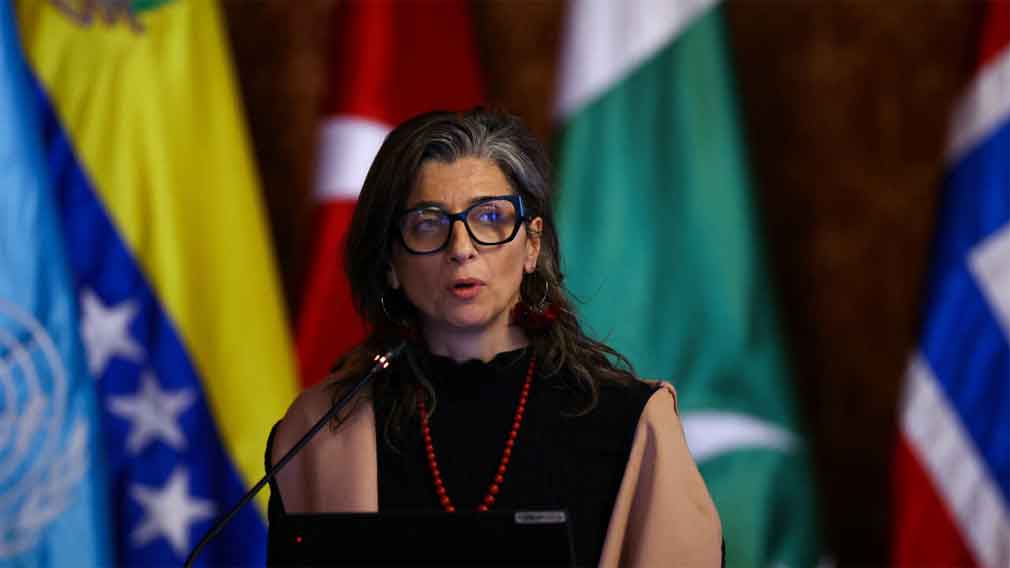
At around the time of our trip, leaders of ten nations of Latin America and the Caribbean – frustrated by slow progress with the United States (and other northern countries) in advancing meaningful human development and managing the flow of people – gathered in the historic Maya city of Palenque, Chiapas, and proposed some ways forward.

Photo from the Office of the President of Mexico

Led by Mexico, the governments of Belize, Colombia, Costa Rica, Cuba, El Salvador, Haiti, Honduras, Panama and Venezuela signed the Palenque Declaration on Oct. 22 and called for solutions. (A representative of the newly-elected government in Guatemala also joined the talks.)

In the declaration, presented by the Mexican Foreign Minister, Alicia Bárcena, the leaders described several structural causes of migration: internally political, economic, social factors and the effects of climate change. But they also pointed to “external factors such as unilateral coercive measures of an indiscriminate nature – dictated from the United States – that negatively affect entire populations and, to a greater extent, the most vulnerable people and communities.”

They urged the United States to lift the sanctions imposed on Cuba and Venezuela that help drive the exodus. Such sanctions are against international law and, as the migration flow shows, they have impacts beyond the countries to which they are applied.

The document also proposed undertaking efforts to modify the financial architecture of debt; to close social gaps to as to reduce the impulse to migrate; push for measures aimed at increasing agricultural activity to promote food self-sufficiency in the region; and to promote intraregional trade and investment for socioeconomic development.

The signatory nations stressed that measures must be taken to confront transnational organized crime, human trafficking and corruption, as well as promote joint cooperation in security matters.

They called for destination countries to “adopt immigration policies and practices in line with the current reality of our region and abandon those that are inconsistent and selective, to avoid arbitrarily producing both ‘call effects’ and ‘deterrent effects’ – advantages given to certain countries for political reasons while nationals of other countries are blocked.

They encouraged destination countries to widen their regular migration pathways, with emphasis on labour mobility and promotion of re-integration and safe return of temporary workers to their homes.

The declaration makes special mention of Haiti, and called on nations to support efforts by the United Nations and others to re-establish conditions for human security so that the political, economic and social situation may be normalized, and to focus on sustainable development. (The presence of the Haitian president at the gathering angered some of the Haitian migrants camped out in the centre of Palenque, reported La Jornada.)

Undated photo from Prensa Latina.

The declaration’s emphasis on economic drivers of migration did not satisfy everyone. Eunice Rendón of the Mexican advocacy group Agenda Migrante told Courthouse News Service that while insecurity was mentioned as a factor driving migration, “it’s not one of the causes, it’s the principal cause,” Rendón said.

“People go because the gang members threaten to kill them, because they try to forcibly recruit them,” she said. (Some might argue that the lack of education and employment opportunities are drivers as well in recruitment for organized crime.)

Meanwhile, migration dramas continue. On Nov. 9, authorities reported that they found found 123 Central and South American migrants trapped in a trailer in Matehuala, San Luís Potosí (less than a week after we passed through there). And than 400,000 migrants have crossed the Darien Gap from Colombia into Panama in 2023, according to the Panamanian government, up from 250,000 in 2022.

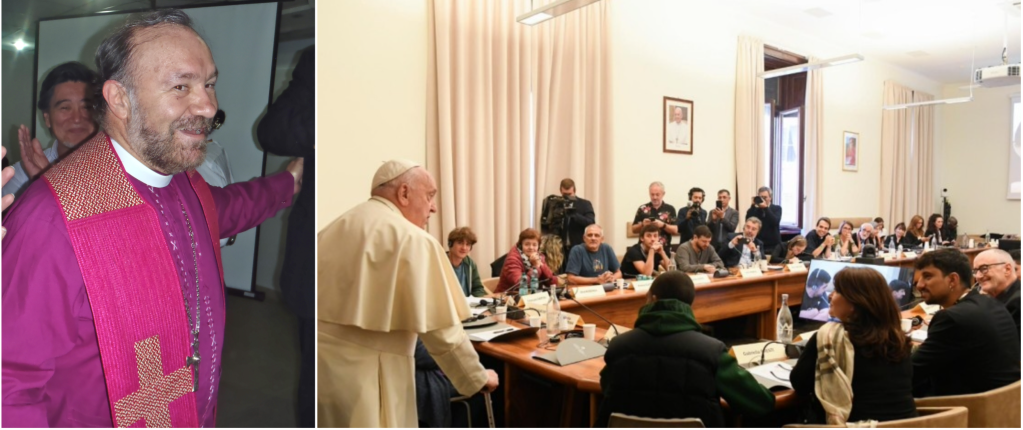
World Council of Churches: for peace, against sanctions, and sexuality talks continue

From this small city in southwest Germany, impacts of the WCC Assembly may be felt from Cape Town (9,284 km) to to Phnom Penh (9,519 km).

KARLSRUHE – As sometimes happens in large gatherings, I found myself on a single track in this Assembly of the World Council of Churches. For several years, I have participated in Rainbow Pilgrims of Faith, a global coalition that has accompanied the WCC work on sexuality (specifically) and gender justice (generally). 

Here in Karlsruhe, I led the group’s media work: blog posts, news releases and a few interviews. My colleagues managed more direct forms of engagement with delegates and other participants through an information booth and in various panels and workshops. 

At the same time, 660 delegates and more than 2,000 other participants from all parts of the world worked to shape ecumenical priorities for the next eight years or so.

Signs are positive that WCC will continue work on sexuality (sexual orientation, gender identity and expression), but that was just one thread in a tapestry of concerns addressed here.

There are many documents and scores of news releases to pour over, but two stand out for me. 

One, the more theological or spiritual of the two, is A Call to Act Together. For inspiration, it drew from the last book of the Bible, Revelation, and its themes of human suffering at work in the world: war, death, disease, and famine. “We were conscious of their manifestations in the world today. In their wake come injustice and discrimination, where those who have power often use it to oppress others rather than to build inclusion, justice, and peace.”

The message continues: “As the climate emergency accelerates, so does the suffering experienced by impoverished and marginalized people.”*

A sign of peace in Toronto’s distillery district.

The second document, The Things That Make For Peace, is also worthy of attention. It is longer and more focused on policy options.

“We understand that making peace involves addressing racism, xenophobia, antisemitism, hate speech and other forms of hatred of the other (all of which have increased and intensified during these years, in large part encouraged by populist nationalist movements); crisis and competition for essential resources for life; economic injustice and inequality in the marketplace; interstate conflicts and re-emergence of war; and the raising of the spectre of nuclear war.”

It is specific about Russia’s invasion of Ukraine and other armed conflicts – from Colombia to Eritrea and Ethiopia – calling for a global ceasefire “as an urgent moral imperative.”

Particularly close to my heart are sections that call for “support for the churches and peoples of Syria, Cuba, Venezuela and Zimbabwe in the midst of oppression due to international sanctions that affect these populations’ human rights and dignity.” 

Syria is an important case in point, the document says. “International and unilateral sanctions are contributing to worsening the humanitarian situation, harming a civilian population already made vulnerable by war. Moreover, sanctions are damaging the historical multicultural and multi-religious fabric of the Syrian society, forcing Christians and other indigenous groups to flee the country.”

The document calls for the removal of Cuba from the U.S. list of countries that sponsor terrorism and to “accompany the churches as prophetic voices of peace, hope, cooperation and mutual respect.”

* There is a third, equally-impressive document that I found later: The Living Planet: Seeking a Just and Sustainable Global Community. The document calls governments to “practical actions… to meet the pressing need to avert ecological disaster.”

On murder and a birthday cake: Reflections on Colombia’s search for peace with justice

In human rights work, one’s first duty is to those who are harmed. But once in a while, one of the murderers says something that seizes attention as it reveals again the full banality of evil.

On July 19 in northern Colombia, the former professional solider Álex José Mercado asked forgiveness from a young woman for the murder of her father, saying: “The day that he was turned over to me (for killing), he had gone out to get a cake for your birthday.” In another moment, he said that he was not worthy to ask forgiveness from family members, but could only ask for pardon from God. “I lent myself to murder innocent people,” he said. He was 19 at the time at the time of his crimes.

This occurred during a hearing in Valledupar of Colombia’s Special Jurisdiction for Peace (referred to in Spanish as JEP). It’s the transitional tribunal that was set up to prosecute the perpetrators of crimes committed during six decades of armed conflict between the FARC-EP guerrilla fighters and the Colombian state. This hearing focused on the  falsos positivos, the false positives, that occurred just in the northern departments of Cesar and Guajira. In the country as a whole, Colombia’s armed forces kidnapped more than 6,000 young men, murdered them, dressed them as guerrillas, and then tried to pass them off “successes” in its war on “terrorism.”

Others spoke for the victims: 

Left: Pedro Loperena, representing the Wiwa Indigenous people, said: “The economic aid policies of those who gave funds to the military forces must also be re-evaluated, because those resources were used to carry out these misdeeds.” Right: Daniela Rodríguez, spokesperson for the legal representatives of the victims and in the name of the Political Prisoners Solidarity Committee and the José Alvear Restrepo Lawyers’ Collective (CCAJAR), asked that the “centrality of the victims, their desires and expectations, be drives these proceedings.”

When he spoke about aid to the Colombian military, Loperena was polite and understated the problem:

This chart from U.S. civil society organizations shows more than two decades of U.S. aid to Colombia.

Over decades, the U.S. and Colombian governments have successively painted the war as: first, a war against communism; then, a war against drugs; and now, a war against terrorism. But the war in Colombia had its roots in the same struggle that has gone on in Latin America since the time of the European Conquest: the struggle by small farmers, Indigenous people and urban workers for land, social justice and basic human rights.

In the face of a peace process that has had limited support (and sometimes overt opposition) from the Colombian state, headed these past four years by Ivan Duque, that these tribunals continue to function is a triumph

One of the hardest parts of achieving a peace agreement between the Colombian state and the FARC guerrillas was to find language about how to manage crimes committed by state and non-state actors during the conflict. The two sides began negotiating in Havana in November 2012. The agreement on transitional justice and reparations was achieved in 2015 and the full peace accord signed in December 2016. The former adversaries agreed to a form of transitional justice, creating special tribunals to judge crimes committed by both members of the FARC and by state agents. 

It is not an amnesty, despite former president Álvaro Uribe’s characterization of the accord. In fact, that was what was avoided. Under international law that has come into force since the South African transition from apartheid to democracy in 1994, a full amnesty would not be legal. 

In November 2019, the Mesa Ecuménica por la Paz (Ecumenical Table for Peace) presented its report, “Blood of Martyrs, Seeds of Liberation,” to the chair of Colombia’s Truth Commission, Fr. Francisco de Roux SJ. In presenting the report, Omar Fernández acknowledged that it was not possible to encompass all of the many Christian martyrs of this long war: the team focused on those whose pastoral work represented the Church of the Poor.

Another triumph in recent weeks is the publication June 28 of the report of Colombia’s Truth Commission. Speaking July 14 to the United Nations Security Council, commission president Fr. Francisco de Roux said  that Colombia has demonstrated that those wounded by war can come together to build peace, happiness and “produce a tomorrow where there is hope”.  Over the last four years, the Commission has heard from more than 30,000 individuals and bodies and reviewed over 1,000 reports from victimized communities. He urged  the international community to give Colombia “nothing for war.”

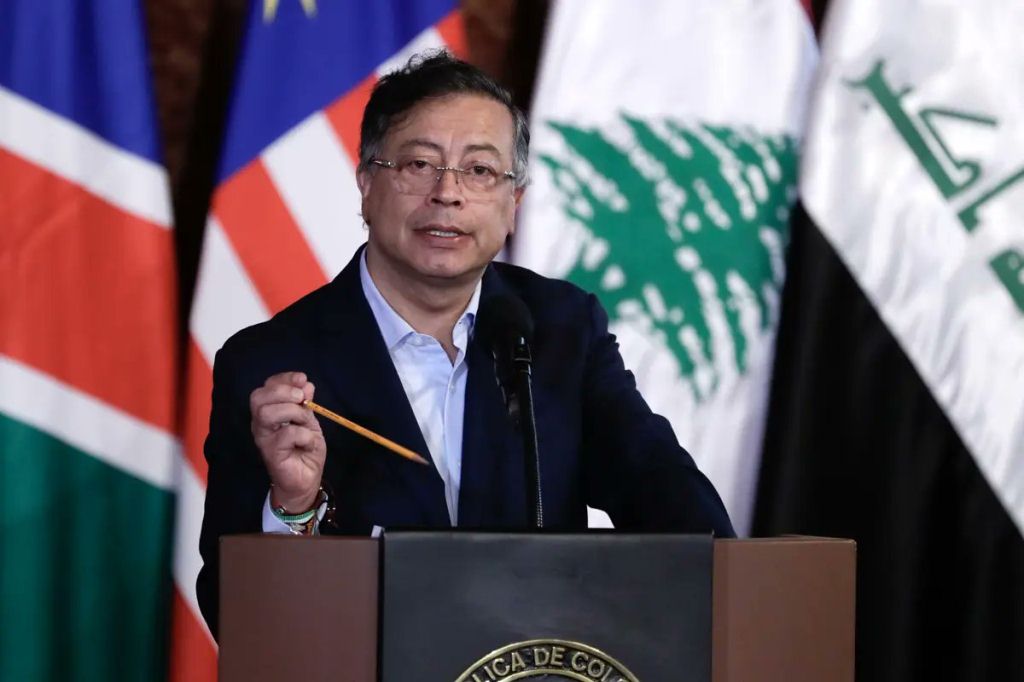
Top of the list of recent triumphs is, of course, is the election of a new president, Gustavo Petro, and vice-president, Francia Márquez. Like the truth commission, Petro has criticized the U.S.-led war on drugs. The truth commission has urged Petro to lead a global conversation on changing drug policies, with a focus on regulation over criminalization.

Petro and Márquez will take office on Aug. 7, and already there is talk of capital flight – in effect, a boycott of Colombia by rich investors, including Colombians who already have one foot in Miami. The road ahead – ending the alliances of military forces with paramilitary death squads and drug-traffickers, ending the practice of assassinating leaders of social movements (at least 145 in 2021), protecting rain forests and reducing the grotesque gaps between wealth and poverty – will be difficult as evidenced by this long (and nevertheless incomplete) list of U.S.-sponsored coups and invasions launched against left leaders in Latin America.