Turning the world upside down: systemic change needed now

Photo: Granma.cu

by Jim Hodgson

In the face of deep inequality within and among the nations of the world, leaders of the so-called “less developed countries” find they must still appeal for basic fairness from their richer neighbours.

More than 75 years after the United Nations was formed, and almost that long since the first development programs were implemented (e.g., the Colombo Plan, 1950), and almost 60 years since the first gathering of the Group of 77 developing nations, leaders gathered last week in Havana and this week in New York to plead their case again.

Not that you would have read about the Havana meeting in mainstream media, but representatives from 114 countries attended the G77+China meeting in Havana. Among them were 30 heads of state or government, as well as senior officials from international organisations and agencies, including UN Secretary-General Antonio Guterres.

The meeting was held under the banner title, “Current development challenges: The role of science, technology and innovation,” but the talk was all about the systems of wealth and power that are rigged against developing countries.

In their final declaration Sept. 16, the G77 demanded fair “access to health-related measures, products and technologies” – a problem highlighted by “vaccine apartheid” during the Covid pandemic when richer countries had first access to vaccines. 

G77 called for an end to “existing disparities between developed and developing countries in terms of conditions, possibilities and capacities to produce new scientific and technological knowledge.”

They revived calls for a “new international economic order” and “new financial architecture,” including “through increasing the representation of developing countries in global decision and policy-making bodies which will contribute to enhance the capacities of developing countries to access and develop science, technology and innovation.”

Among the countries participating (including the host, Cuba) were several that have been harmed by sanctions that are usually imposed by wealthier countries to try to provoke changed behaviour by less powerful countries. Sanctions (referred to in the declaration with the UN Human Rights Council term “unilateral coercive measures”), together with external debt, inflation, displacement of peoples, inequality and “the adverse effects of climate change” are all among the “major challenges generated by the current unfair international economic order” and there is “no clear roadmap so far to address these global problems.”

Criticism of the existing international order carried over from the G77 meeting to the UN General Assembly, which met days later in New York.

“They don’t have the $100 billion to aid countries so that they can defend themselves against floods, storms and hurricanes,” said Colombian President Gustavo Petro, referring to the Loss and Damage Fund promoted at the COP climate negotiations to “new and additional” funding from donor nations.

Wars and climate change, he said, are related to that other unprecedented crisis: migration. “The exodus of people toward the north is measured with excessive precision in the size of the failure of governments. This past year has been a time of defeat for governments, of defeat for humanity.”

The political systems that we use to effect policy changes are failing to respond to the urgent needs of our time. Most politicians are beholden to the corporations and rich people who fund their political parties and perpetuate their hegemony. In four-to-six year electoral cycles, the deep changes needed to confront those problems are rarely undertaken. 

In Canada, think of the power that mining corporations have wielded to block meaningful investigation of human rights and environmental abuses by their subsidiaries overseas. Or the influence land speculators have over the Ontario government. Or the actions of oil, gas, coal and pipeline companies to stall meaningful action to cut greenhouse gas emissions. 

And then scale that up globally. Think of the ways pharmaceutical companies blocked access to HIV and AIDS medications until a global fund was found to pay them – and then pulled the same stunt over Covid vaccines. At the UN on Sept. 20, Guterres said time was running short for climate action thanks to the “naked greed” of fossil fuel interests.

What is delivered through Official Development Assistance and Sustainable Development Goals may be crumbs and band-aids. While necessary, those funds are not sufficient to counter instruments of power like corporations and their allies in the international financial institutions like the World Bank and the International Monetary Fund.

Political change is required to make the systems change.

As Xiomara Castro, president of Honduras, told the G77 in Havana: “The time has come to put an end to the backyards [using a U.S. term referring to its relationship to Latin America] because we are not pieces on a chessboard of those who are apologists for dependence. Our nations should not continue to suffer the mass privatization of their territories.”
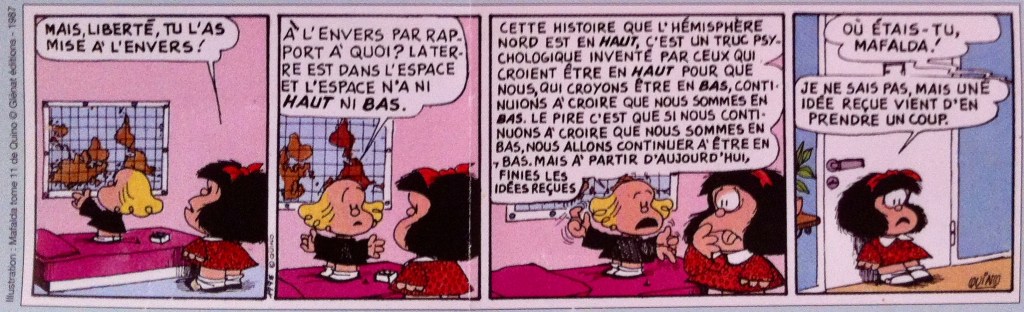
Mafalda: But Liberty, you’ve put the map upside down!
Liberty: Upside down compared to what? Earth is in space where there is no up or down.
Liberty: That story that says the north has to be above is a psychological trick invented by those on the top to make those who are on the bottom continue to believe that we are the bottom. But, beginning today, conventional ideas are over!
Last panel, a voice: Where were you, Mafalda?
Mafalda: I don’t know, but a conventional idea has taken a blow.

(For that last line, Quino, the great Argentinian cartoonist who created Mafalda, wrote in the original Spanish version, “No lo sé, pero algo acaba de sanseacabarse” – the sense being that something has ended.)
Jujuy, Argentina: “Despite pain and loss, the people always win”

by Jim Hodgson

In Jujuy, northwest Argentina, a struggle is playing out that shows how right-wing political forces repeatedly apply repression to hold on to power even as democratic space continues to open across most of Latin America.

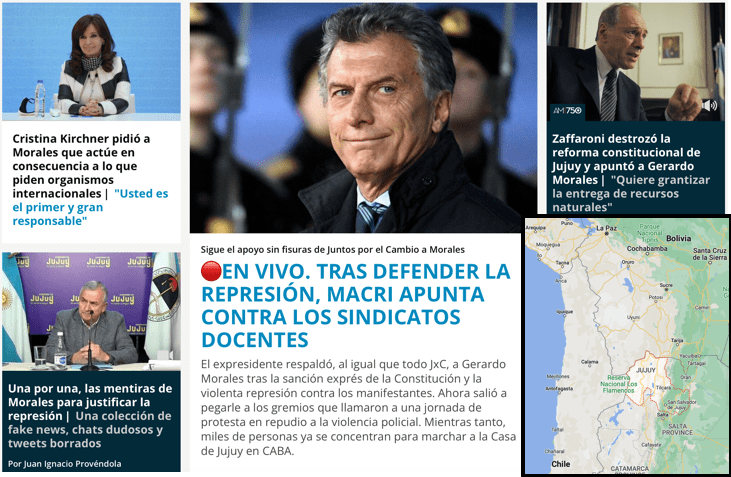
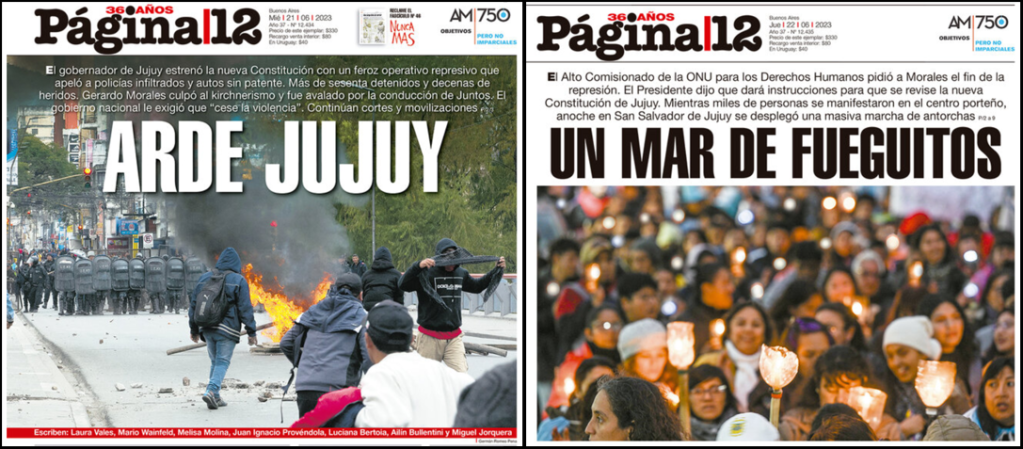
Front pages June 21 and 22 of a Buenos Aires daily, Página 12: “Jujuy burns” and “A sea of candles”

The most recent flare came after teachers went on strike to press their demand for salary increases amidst Argentina’s 114-per-cent inflation rate. Jujuy provincial governor Gerardo Morales responded by rushing through changes to the province’s constitution that restrict freedoms of assembly, protest and speech. The constitutional changes came without approval of the province’s Indigenous peoples.

 “We have received reports of events that could constitute an improper use of force against individuals in the context of the demonstrations,” said Jan Jarab of the South America regional office of the United Nations’ High Commissioner for Human Rights. In a letter addressed to the governor, he also questioned “the handling of the recent demonstrations by the security forces, as well as about some of the provisions of the approved provincial constitutional reform text.”

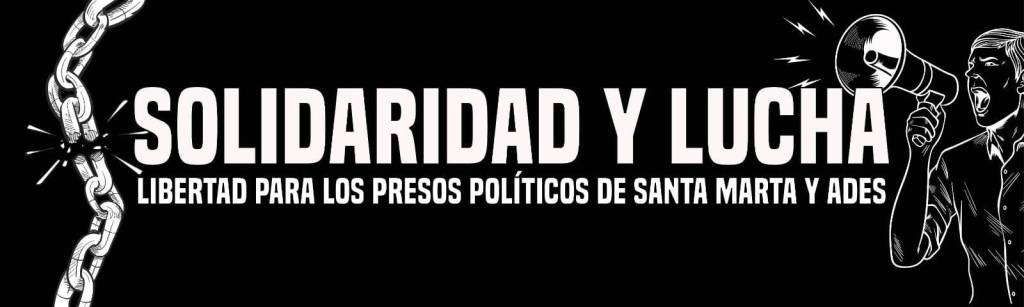
“Despite pain and loss, the people always win.” Canadian trade unions, solidarity groups and Common Frontiers joined together June 22 to send a message of solidarity.

Amnesty International also denounced those changes, and called for on the Jujuy government to cease the “excessive use of force against those exercising their right to peaceful protest, which has resulted in hundreds of people being injured in recent days.”

President Alberto Fernández responded to the continued unrest in Jujuy by saying he will seek to have the reforms to the provincial constitution struck down as unconstitutional.

Morales has used excessive measures before, notably in the case of Indigenous leader Milagro Sala, imprisoned since Jan. 16, 2016, after a protest. Sala is leader of the Movimiento Tupac Amaru, and led the creation of “workers’ neighbourhoods” that allowed workers to live for the first time in houses that they owned and to have access to schools and health centres.

Página 12 headlines describe different positions on the Jujuy conflict. Inset (bottom right): map showing the location of Jujuy in northwest Argentina.

The drama in Jujuy plays out against the backdrop of Argentina’s volatile political calendar. The two-term Jujuy governor is the presidential candidate of one of the conservative parties, the Unión Civic Radical (UCR). The UCR is part of the centre-right coalition, Juntos por el Cambio “Together for Change”) which also includes former president Mauricio Macri. 

That coalition, however, is fractured now by the emergence of Javier Milei, a libertarian economist, as a candidate who has drawn support from the right and from sectors of the centre-left dissatisfied with the current administration of Fernández and his vice-president, Cristina Fernández de Kirchner (triple-digit inflation and a deteriorating economic situation).

Primary elections will be held on Aug. 13 for parties that opt to choose candidates by that system. The general election is to be held Oct. 22, and a presidential run-off would follow Nov. 19 if necessary.

In a move that surprised many observers, the president and vice-president and other leaders of their Unión por la Patria (UP) coalition came together June 23 to back a single candidate and slate headed by Economy Minister Sergio Massa.

Along with the national political context, a second factor driving the repression is the presence of lithium in Jujuy (which borders the lithium-producing regions of northern Chile and southern Bolivia). Lithium is used in batteries for electronic vehicles. 

A recent visit to the region by film-maker James Cameron was manipulated by Jujuy’s governor to give a positive spin to lithium mining operations undertaken despite Indigenous opposition.

Cameron, the director of Avatar and Titanic, said later: “Ironically, the outcome of this is that I am now aware of the problem and we will now assist through my foundation with the issue of Indigenous rights with respect to lithium extraction.”

A third factor in the present conflict is the region’s history of 480 years of colonial exploitation and Indigenous resistance

A recent statement by archeologists and anthropologists declares their solidarity with the Indigenous people of Jujuy. “And without community territory, rights to the land and the possibility of social protest against diversion from that vision, there is no equality, inter-culturality, or social peace.”

Fake criminal charges, mining justice and solidarity in El Salvador

My friend Antonio Pacheco, renowned leader of a community development group in northern El Salvador, was arrested with five other men on Jan. 11 and charged in connection with a war-time death that happened more than 30 years ago. They are also charged with “illicit association,” the accusation that has led to detention of more than 60,000 alleged gang members by the government of President Nayib Bukele. 

The charges, say friends and allies, have nothing to do with achieving justice for any of the 75,000 people who died during the civil war, and everything to do with the government’s drive to re-open metals mining in El Salvador in the wake of its Bitcoin cryptocurrency failure.

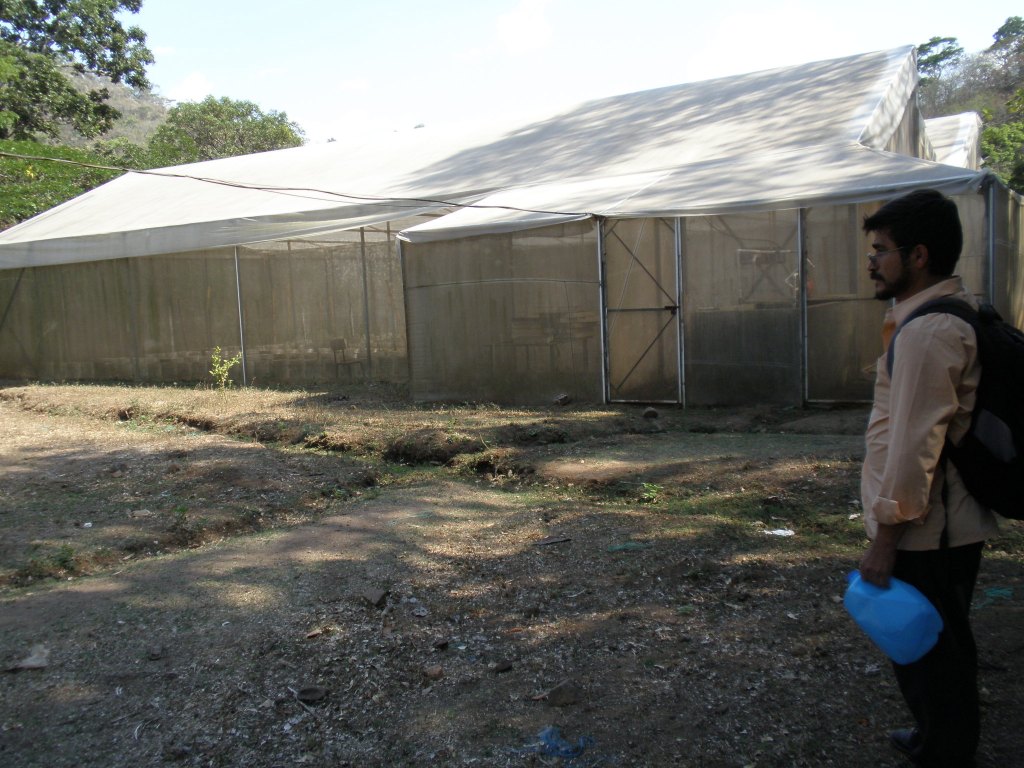
Antonio Pacheco observes an ADES greenhouse in Santa Marta in 2009. Photo: Jim Hodgson

Pacheco and members of the Santa Marta Development Association of El Salvador (ADES) were leaders in the successful effort to stop a gold mining project in Cabañas department, and part of El Salvador’s National Roundtable on Metals Mining that achieved a ban on metals mining in 2017. 

During the civil war in the 1980s, Santa Marta was targeted by the Salvadoran military and most residents fled to Honduras. Successive Salvadoran governments have not investigated the dozens of cases of human rights violations documented by the people of Santa Marta against the armed forces (including the Lempa River massacre in 1980, where 30 people were murdered and 189 others disappeared). 

The arrests last week drew global attention, including articles in The Guardian, the German news service DW and TeleSUR, and solidarity statements from the U.S. Institute for Policy Studies, the Honduran group COPINH, the U.S. Sister Cities network, and others. “Antonio Pacheco has struggled almost his entire life to build a country that seeks social, economic and cultural well-being and who is a friend to the causes of the Honduran people,” said COPIHN (the organization led by Bertha Cáceres until her murder in 2016).

I came to know Antonio, ADES and many other people the rural communities of northern Cabañas during the 20 years of my work with The United Church of Canada. I wrote about him several times, including a profile published in the United Church’s Mandate magazine in February 2011:

“A Life-Long Passion” (excerpt)

A child grows up in El Salvador in the 1960s. He asks: “Mamá, why are there poor people?”

Decades later, the question still animates Antonio Pacheco, executive director of ADES….

“I hardly ever talk about this,” Antonio said, smiling over his coffee in the food court below the United Church general council office in Toronto. “I had this intense curiosity. I asked lots of questions. I read, and read some more. I read the Bible, or tried to.”

In the sixties and seventies, Christians in Latin America began creating “base communities” to provide space for questions like those of Antonio and to share the Word of God among neighbours.

“One word caught my attention: solidarity. I began to understand why Jesus was taken to the cross,” Antonio said. 

“By the time I was 11, I understood that I wanted to work for the people. I wanted to be a doctor so that I could help.”

But as Antonio entered high school in the mid-seventies, El Salvador was in political upheaval. The base communities and church leaders became targets of repression. Antonio emerged as a leader of the student movement in his high school in San Salvador, and joined the revolutionary movement in 1977. Political and education work took him to Santa Marta for the first time in 1979, and by 1982 as the civil war raged, Antonio worked with the community directly in its education efforts. But aerial bombing grew so intense that the entire community fled into exile in Honduras in the mid-1980s.

It was after the return to Santa Marta in October 1987 that Antonio’s community development work really began to bear fruit. Even though a final peace accord was not achieved until 1992, the people of Santa Marta sought and found international help to rebuild. The United Church of Canada and the Anglican Primate’s World Relief and Development Fund were among the first partners. In 1993, ADES was born to secure and manage development funds. Antonio has served as executive director since 1998.

Today, formal education is one of Santa Marta’s great successes…. ADES continues to lead in agricultural development and training in northern Cabañas, but a number of programs have spun off in varying degrees of autonomy: a micro-credit program for market workers, a community radio station in nearby La Victoria, and an AIDS education program for rural youth that works on both sides of the border.

Now in the 2020s, ADES is working with support from the United Church and the Manitoba Council for International Co-operation to expand ecological agricultural practices in Cabañas.

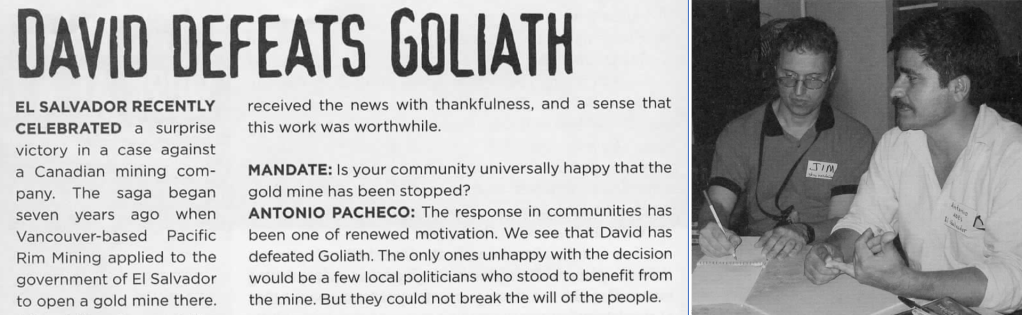
“David defeats Goliath”

With the mining victories in 2016 and 2017, Mandate published a short interview that I did with Antonio. At the end, I asked what he would say to Canadians about their responsibility to regulate their mining companies

“The Canadian people should be aware that Canadian companies operating outside the country have practices that fail to respect the human rights of the people in communities, and that they fail to repair damage to the environment. For those reasons, it is necessary and urgent that their actions abroad be regulated in Canada.”

Left: Mandate, February 2017. Right: Jim Hodgson with Antonio Pacheco, August 2006. Photo: Presbyterian World Service & Development.