
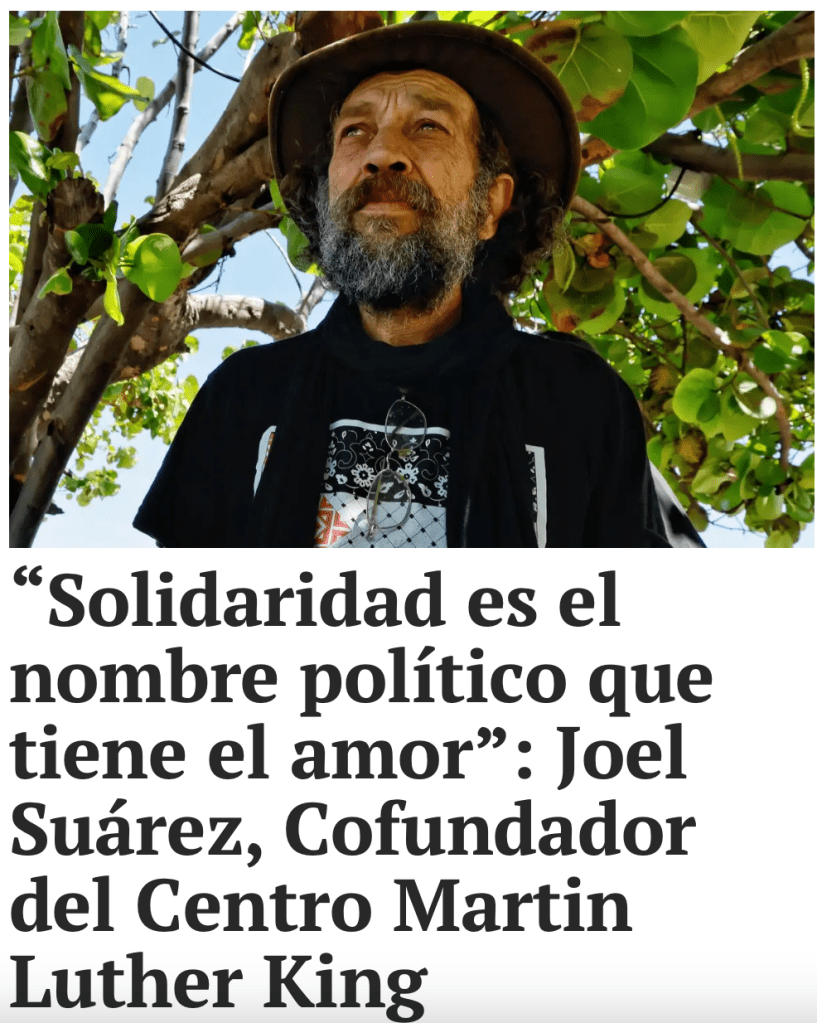
In the context of the arrival of the Nuestra América convoy in Cuba, Joel Suárez spoke with La Jornada opinions editor Luis Hernández Navarro about the motivations of those who have rallied to help the island in the face of President Donald Trump’s “cynical and genocidal siege.”
Suárez is a key figure in the weaving of global solidarity relations between Cuba and other countries. His father, Rev. Raúl Suárez, was founder of the Martin Luther King Memorial Centre (CMMLK) in Havana, and Joel served as its coordinator for about 20 years. Raúl and Joel were central to the successful rapprochement between churches and the government in the 1990s, and Joel was part of the drive to expand the World Social Forum from its roots in Porto Alegre, Brazil. CMMLK is a global partner of The United Church of Canada. I first met Joel in Kingston, Jamaica, in October 2000 when we both attended a Caribbean Conference of Churches consultation. He was among my guides to diverse ecumenical and political situations I encountered in Cuba, Brazil, Venezuela, Colombia and beyond.
I am pleased to share some excerpts of the conversation between Joel and Luis here below.
“Those who support us have an affinity for the revolution“
Luis: These days, support has been arriving in Cuba from various countries. How is this solidarity being received? The right wing claims they are “useful idiots.” What is your opinion?
Joel: No one came here out of foolishness. There is always political tourism, but here, people came motivated by deep feelings of love and solidarity, which is the political name for love.
We need to understand where this solidarity comes from. It comes from people who sympathize with the revolutionary project and oppose the Cuban dissidents and their closeness to the empire and the United States government. They are part of a camp where there are diverse opinions about Cuba, where people converge who think this is heaven and who question those who claim this is hell.
But we are neither heaven nor hell. This is the country we have been able to create and that we have built under very adverse conditions. In this solidarity, there are many well-intentioned people who, despite the obvious differences, compare what is happening in Gaza to what is happening in Cuba: policies of genocide that use food, hunger, and energy as weapons of war, and intensify the siege against the country.
These people say: let the Cubans do what they want. If they want to go to hell or heaven, let them do it. They have come motivated by this feeling of understanding of our sovereignty and the difficult situation we are experiencing. There is another group of people who have come because they feel immensely indebted. Cuba travels the world not sharing what it has in excess, but the little we have.
Luis: Who are these aid workers?
Joel: Here I met people who came because they are parents of young people who became doctors in Cuba. People who came because Cuban medical brigades assisted the population in their countries during natural disasters. People from Central America who were supported by Cubans in the days following Hurricane Mitch. I met Italians from regions like Calabria where, despite the US offensive, 400 Cuban doctors continue to treat the sick and provide healthcare. Africans also came who are familiar with Cuba’s long history of contributing to national liberation movements in Africa, to the independence of Namibia and Angola.
Members of platforms and networks organized at the regional and global levels came. The People’s Forum of the United States brought a delegation of 40 young people. They have a campaign in the United States to purchase solar panels. Solidarity needs to be given substance and a material dimension.
Luis: What kind of solidarity is being shown?
Joel: We are seeking to connect this solidarity aid with strategies that not only provide temporary relief to the current situation but also contribute to greater sustainability. The solar panels, along with the strategies being implemented by our Ministry of Energy and Mines, aim to provide energy to healthcare centers, public services, banks, and, above all, water sources.
Another important contribution is in the area of healthcare. They are donating both general and specialized medicines, as well as medical supplies for therapies. They are trying to revitalize the surgical system in the country. There are hundreds of children waiting for operations. There are groups that have practiced more sustained solidarity over the years, for example, with oncology.
It’s important to connect this support with material aid to our organizations in Cuba. Contributions from various partners of CMMLK in the United States, Europe, and Colombia are sent to rural areas of Guantánamo, where we have people organized in social transformation projects. These projects are in the strategic planning stage, based on participatory assessments conducted with the community.
Luis: So, this support doesn’t go through the state?
Joel: Solidarity in Cuba has diverse channels. Churches, neighbours who bring a suitcase to their neighbours, and the neighbour distributes it among their friends, family, and family doctor. The Martin Luther King Centre, as a legally established association, has the legal mechanisms and guarantees for its own import of containers. Not only for this energy crisis, but also since the pandemic, or in the face of natural disasters, especially hurricanes. We have an area that constantly mobilizes international solidarity to confront emergency situations and this cynical, genocidal siege by Trump and the United States government.
Luis: How does Cuban society view this solidarity? As mere crumbs, or does it have another meaning?
Joel: There’s a bit of everything, like in a pharmacy. Many people bring donations and don’t publicize it. In general, there’s respect for the dignity of Cubans, forged in the face of imperialism, so they won’t hesitate or be harmed by any charity that’s meant to be publicized. People are grateful. They get anxious, saying, “Where is it? It hasn’t arrived.”
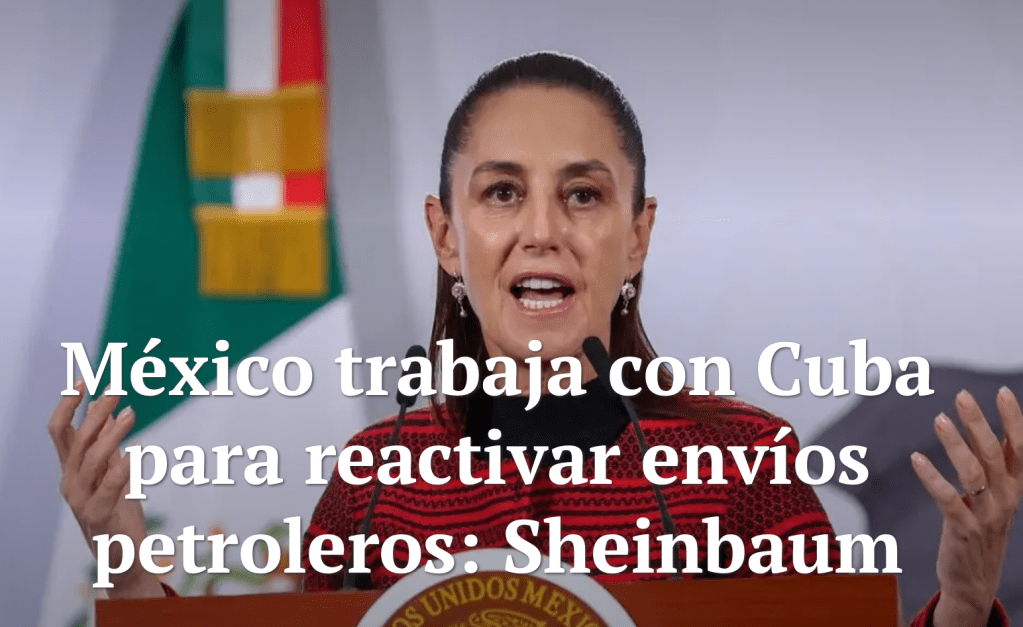
The aid that the Mexican government is sending, which is substantial, is distributed through the distribution systems of the Ministry of the Food Industry and the Ministry of Domestic Trade, and arrives at the bodegas (ration stores) in rationed quantities, free of charge. People are grateful.
It’s a dramatic situation, but we are grateful. Solidarity is a value that persists. What characterizes the new situation is the solidarity networks operating in communities, neighbourhoods, institutions, among people in civil society, and within the government agenda.
Likewise, we must not forget that the problem is marked by a global context of a fierce advance of the right, with an avalanche of a process of hegemony, domination and cultural homogenization of imperialism.
 Unwrapping Development