The “feminist foreign policy” is dead. What next?

by Jim Hodgson

A decade of promises and at least a measure of good will were flushed away with Prime Minister Mark Carney’s declaration that his government does not have a feminist foreign policy.

Speaking in Johannesburg at the end of the G20 summit, he said issues such as gender equality and reducing gender-based violence are an “aspect” of his government’s foreign policy. “But I wouldn’t describe our foreign policy as feminist foreign policy.”

Frankly, it was always hard to reconcile proclamations of feminist foreign policy (FFP, as it came to be known) by Prime Minister Justin Trudeau and his foreign ministers with Canada’s efforts to sell weapons abroadinaction in Gaza, and preference for threats and sanctions over dialogue in Venezuela. After all: wouldn’t a truly feminist foreign policy veto arms sales to Saudi Arabia because of its suppression of women’s rights? 

House of Commons finance committee chair Karina Gould, who served in several cabinet posts under Trudeau and ran against Carney for the Liberal leadership, told the Canadian Press that Carney’s words “certainly” mark a departure from the previous government. But she insisted the policy the prime minister described remains feminist.

“The ideals that he was talking about continue to be feminist, and I think that what it means is that as Canadians, we expect that we’re going to stand up for gender equality around the world and here in Canada,” she said.

“Prime Minister Carney is making it very clear he is no friend to women and he is no friend to gender equality in this country,” NDP MP Leah Gazan told reporters Nov. 24.

International Women’s Day march, Guatemala City, March 8, 2023 (Jim Hodgson photo)

Feminist aid policy

The Trudeau government did somewhat better with its Feminist International Assistance Policy (FIAP). Beyond policy documents, FIAP seemed to produce some results across the development cooperation sector with promotion of gender equity, empowerment of women and girls, and rights and inclusion for 2SLGBTQIA+ people. 

Even so, there were calls for more. Canada’s ecumenical justice coalition KAIROS said FIAP was “sound policy” but that its funding priorities needed “to align the advancement of human rights and women, peace and security with economic empowerment.”

After the Harper government in 2009 refused to support the KAIROS international assistance work, funding was restored by the Trudeau government to a revamped KAIROS Women, Peace and Security program. 

Now Trudeau is gone, his “sunny ways” undermined by the SNC Lavalin affair and his treatment of cabinet ministers who were women. And international development cooperation is being buried in favour of investment regimes, eternal debt and oceans that rise along with temperatures.

“Inside/outside strategies”

And so I find myself thinking in different ways. Sometimes I feel that I placed too much faith in the official spaces, even as I always identified most strongly with social movements. Sometimes we used “inside/outside” strategies: those who could talk to the politicians would do so; the rest of us would march in the street outside. I think of anti-free-trade demonstrations in Québec City in 2001 or the protests at the Toronto G7/G20 meeting in 2010.

Today in Mexico City’s La Jornada newspaper, Raúl Zibechi has a column in which he decries the “pyramids” of power we build within our progressive movements even as we denounce the pyramids of power in our capitalist “democracies.” He points to an event the Zapatistas will hold in San Cristóbal de Las Casas,  Chiapas, Dec. 26-30 this year. Zibechi and others will offer their “analyses on pyramids and on how histories are handled within the economic system, bad governments, laws and the judicial structure, resistance movements, the left and progressivism, human rights, the feminist struggle, and the arts.”

I can’t attend this year, but I will pay attention. As the new accord between Carney and the premier of Alberta showed this week, we can’t trust conventional power to make good choices on behalf of the people. We need to propose alternatives and press to make them reality.

Justice denied: U.S. sends Venezuelan asylum-seekers to Salvadoran prison

Even in the face of the Trump regime’s horrific arrests, extraordinary renditions, and forced disappearances of immigrants and asylum-seekers, there are shreds of hope.

Activists and journalists are gradually identifying and sharing the stories of victims, including the 238 Venezuelans and 23 Salvadorans shipped to a prison in El Salvador on March 15. And judges and some politicians are more vocal in support of “due process”—the U.S. constitutional guarantee of at least being heard before being deprived of liberty—for all migrants.

One group has built a website: thedisappeared.org. They make prominent use of the blue triangle, the symbol used by Nazis in their concentration camps to designate migrants. About the 238 Venezuelans, they say: “There is no evidence to support the allegations that they are hardened criminals.” The group also posts on Facebook.

Above on the left is Andry Hernández Romero, age 31. I learned of his case the way many others did. A photojournalist, Philip Holsinger, met the airplanes that brought the Venezuelans to El Salvador and then accompanied them to the prison. A man who caught Holsinger’s attention shouted “I’m innocent” and “I’m gay,” and was crying as his head was shaved. From Holsinger’s photo, friends and family members identified him as Andry. Details of his situation were covered first in LGBTQIA+ media (The Advocate and the Washington Blade) and later by NBCCBS and elsewhere. His lawyer has mobilized political support in California, including that of Gov. Gavin Newsom and U.S. Rep. Robert Garcia.

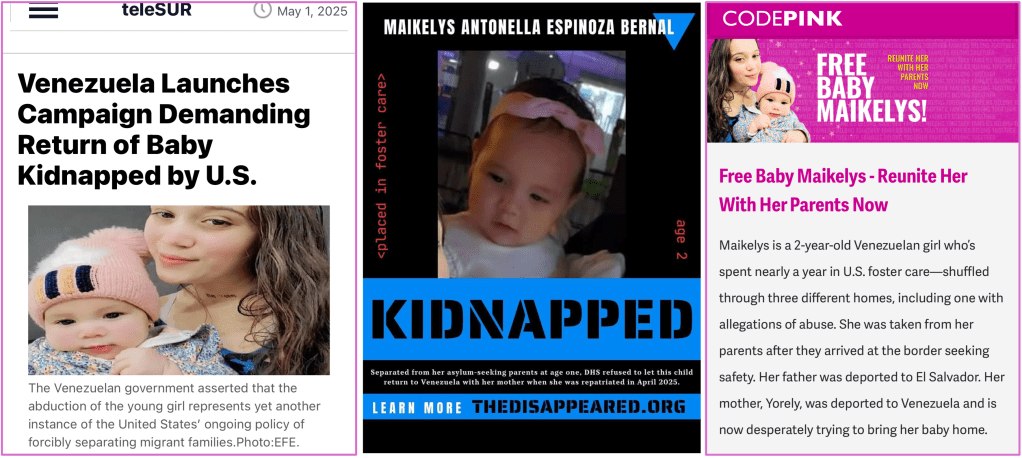
The disappeared.org site draws attention to many other cases, including that of two-year-old Maikelys Antonella Espinoza Bernal (below) whose father, Maiker Espinoza Escalona, was sent to the prison in El Salvador. She and her mother Yorely Bernal Inciarte, were supposed to be sent together on a deportation flight back to Venezuela—part of her homeland’s “Vuelta a la Patria” program for citizens willing to go home. But the United States refused to return the child to her mother before she left.

When Yorely arrived back home alone, Venezuelan media and the government took up the family’s cause (image on the left, above). So too did CodePink (right), a women’s peace network in the United States with which I have collaborated to draw attention to the negative impact on Venezuelans of U.S. economic sanctions

The Disappeared shared a piece from a group called United Strength for Action about the U.S. role in creating the disaster that Venezuelans face. I can’t concur with all the group said–many people in the United States just can’t see the historical context of U.S. imperialism–but I am relieved that they at least acknowledged the role of U.S. sanctions in creating a humanitarian crisis that drives the exodus of refugees. “This wasn’t foreign policy; it was collective punishment that pushed millions of Venezuelans past their breaking point.”

Since 1998, successive U.S. administrations have done all they could to be rid of Nicolás Maduro and his predecessor, Hugo Chávez: a coup attempt in 2002, a “revocatory” referendum in 2004, the effort to impose a “president” (Juan Guaidó) whom nobody had voted for, and through waves of sanctions. Given the failure of those efforts to induce regime change and seeing the flow of migrants out of Venezuela, President Joe Biden for a time tried a different approach, one of dialogue and engagement. The early weeks of Trump’s administration gave some hope this could continue, but the hard-liners seem to hold sway once again.

At a May Day march, President Maduro vowed to “rescue” Maikelys along with the Venezuelans now held by El Salvador. He also spoke directly to the hundreds of thousands of Venezuelans who have tried to reach the United States in recent years: 

“Stop going there. The true dream is that of our land to build with our hands. Stop being victims of xenophobia, of abuse… The only land that will welcome you and serve you like the prodigal son is called the Bolivarian Republic of Venezuela. We must take care of it, fertilize it, and build it. This homeland belongs to all!”

Maduro emphasized Venezuela’s right to build its own social model. “We have the right to true democracy, to our cultural identity. We are not gringos. We are proudly Bolivarian, Latin American, Caribbean. We are Venezuelans!”

Venezuela says it is willing to receive people deported from other countries. Between February and April 25 this year, 3,241 Venezuelans had returned on 16 government-funded flights. Yorely (the mother of Maikelys) came home on just such a flight.

Two more issues. Trump officials say that the people sent to jail in El Salvador were linked to the Tren de Aragua criminal gang, and that they used tattoos to identify the gang members.

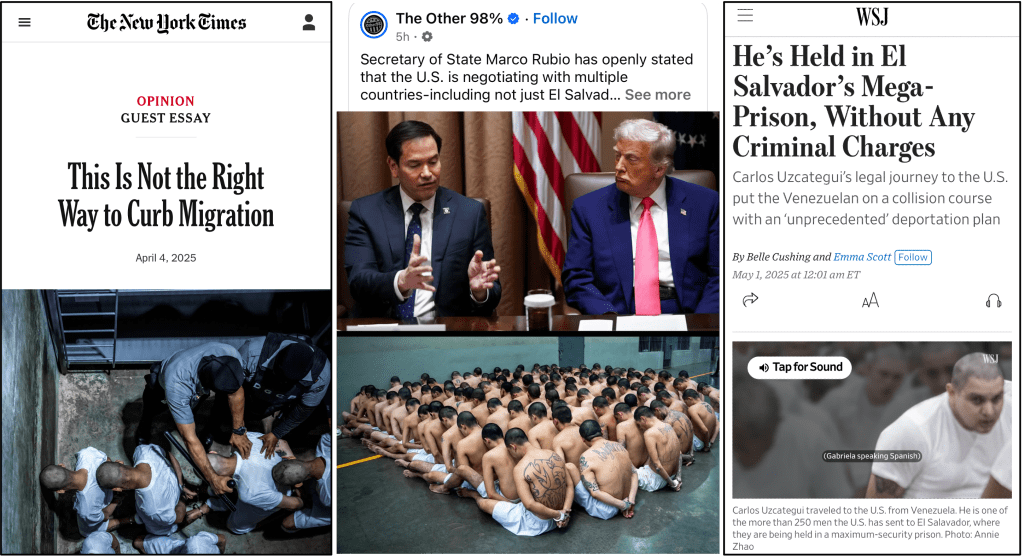
It’s good to see “mainstream” media like The New York Times (left) and Wall Street Journal (right) join the rest of us rabble-rousers in calling attention to the Trump regime’s actions.

Trump’s executive order decreeing the deportations said the gang is “conducting irregular warfare and undertaking hostile actions against the United States.”

But that is not true. In an article for The New York Times, a team of experts on violence in Venezuela said Tren de Aragua is not invading the United States. Nor is it a “terrorist organization,” and to call such “criminal groups terrorist is always a stretch since they usually do not aim at changing government policy.” The article goes on to show that Tren de Aragua is not centrally organized, though members were involved in migrant smuggling and the sexual exploitation of Venezuelan migrants in Colombia, Chile and Peru. 

The NYT piece adds that even U.S. intelligence officials do not believe the Maduro government is colluding with the gang, the key assertion in Trump’s justification for invoking the 1798 Alien Enemies Act to render Venezuelan migrants to El Salvador.

Immigration officials used tattoos to “determine” if someone was linked to Tren de Aragua, but the authors of the NYT piece say Venezuelan gangs (unlike Salvador groups like the MS-13) do not use tattoos that way. “Many young Venezuelans, like young people everywhere, borrow from the global culture of iconic symbols and get tattoos. That doesn’t mean they’re in a gang,” they wrote.

Moreover, the Tren de Aragua gang network in Venezuela is largely dismantled.

“The Tren de Aragua is cosmic dust in Venezuela; it no longer exists, we defeated it,” President Maduro said March 19. He was quoted by the English-language Orinoco Tribune in a longer article about the gang’s history in Venezuela.

Interior Minister Diosdado Cabello questioned whether all deportees were Tren de Aragua members, and demanded the US extradite captured suspects. “The US is acting in a confusing manner. They promised to send us Tren de Aragua members, but they have not. Someone there is lying.”

* Update, May 14 * Two-year-old Maikelys has been re-united with her mother in Venezuela. Her father remains in the Trump-Bukele prison in El Salvador. See the statement from CodePink.

From bishop of Chiclayo to Pope Leo XIV

by Jim Hodgson

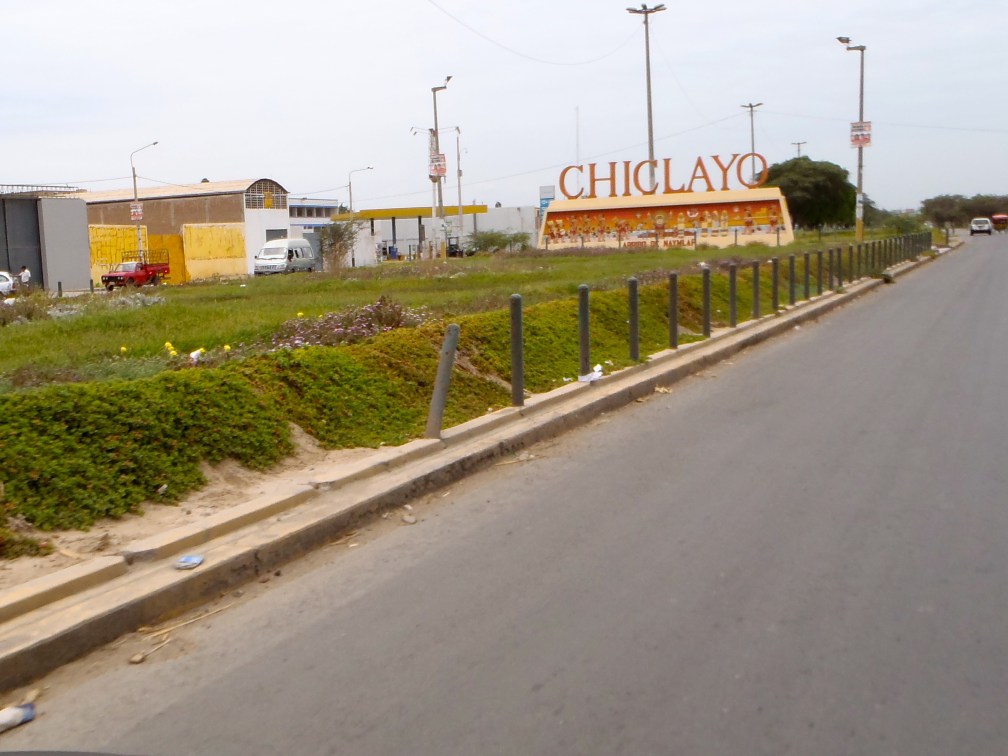
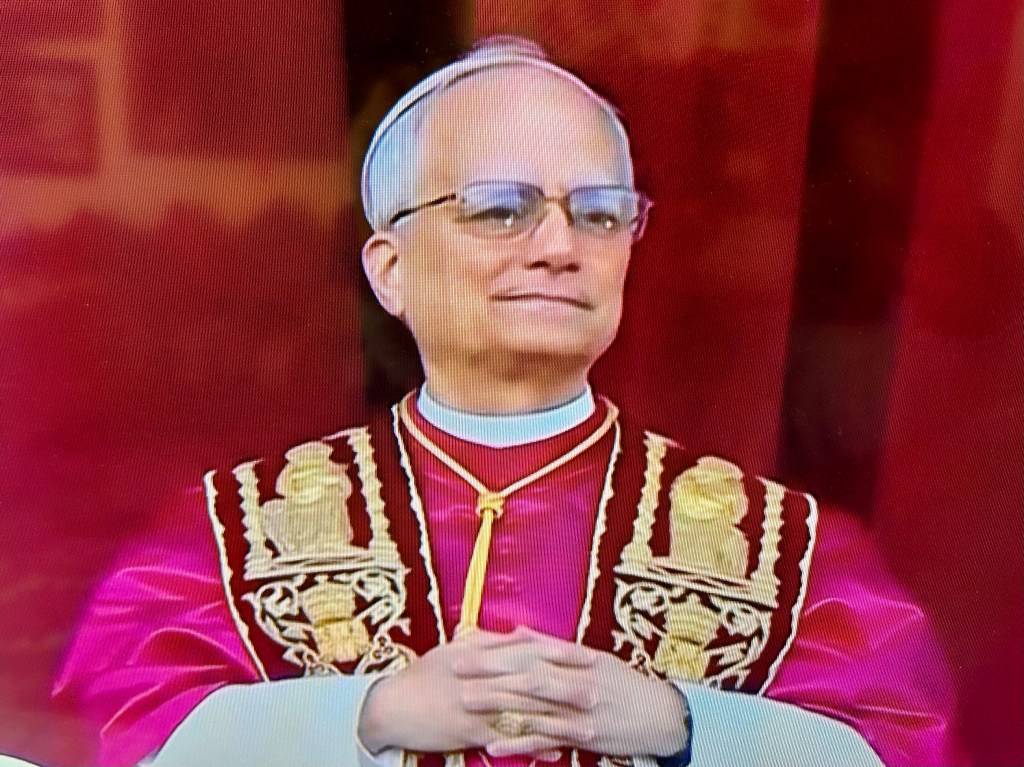
Like many who have worked in Latin America, I rejoiced when I saw that cardinal-electors chose Robert Francis Prevost, the former bishop of Chiclayo (Peru) to serve as Pope, the bishop of Rome. 

And as one who believes Catholic social teaching is not studied sufficiently, I was over the moon when I understood that Prevost had chosen to be called Leo XIV. The last Leo was Pope Leo XIII, who served from 1878 to 1903. He is respected as a pioneer of modern Catholic social teaching. In his famous 1891 encyclical Rerum novarum, Pope Leo outlined the rights of workers to a fair wage, safe working conditions, and the formation of trade unions.

Yes, there are controversies over the selection of Prevost. 

Prevost talked negatively in 2012 about sexual and gender diversity. But in that same year, Archbishop Jorge Bergoglio (a year later Pope Francis) was still in Buenos Aires and fighting legal reforms promoted by the Kirchner-Fernández governments in favour of same-sex marriage. Jesuit Father James Martin, long an ally of LGBTQIA+ people, spoke positively about Prevost after being part of a table group with him during the Vatican’s Synod on Synodality.

There are allegations that Prevost did not pay sufficient attention to victims of clerical sexual harassment while bishop in Chiclayo. Tragically, it is hard to find any bishop, living or dead, who has adequately served survivors of clerical abuse. The real issue is making rules that are effective in making dioceses submit to civil authorities in cases of crime, and to take victims’ allegations seriously in all cases of harassment or abuse. Perhaps his proximity to scandal will help him and others take further steps toward justice for all victims of clerical abuse. 

Much has changed; more needs to change; and Leo XIV may be a step in the right direction. Let’s work toward full inclusion of—and leadership by—women and 2SLGBTQIA+ people.

The church in Chiclayo

Today, I found myself going back through decades of notes. Here is something I wrote during a visit to Chiclayo in 2017:

“Chiclayo has a new bishop who is more in the line of Pope Francis—a positive sign after many years of traditionalist Opus Dei bishops. The new bishop, my friends said, still needs some education around gender justice, but he’s pretty good on economic justice and on developing lay leadership. Social movements here have bloomed outside of the church, including the LGBTIQ and People Living with HIV and AIDS (PLWHA) movements.”

That conversation unfolded with members of Centro Esperanza, a United Church partner from 2006 to 2018. Their work had roots in progressive Christian base communities. It began with a focus on women, particularly those who were involved in community kitchens organized and run by women in impoverished neighbourhoods. Over time, activities expanded to include programs to prevent domestic violence, stimulate learning in early childhood, and gender justice education among high school students.

Several of my Canadian friends have worked in Chiclayo over the decades, beginning with members of the Scarboro Foreign Missionary Society. Their leadership is part of what shaped Chiclayo’s influence on its new bishop.

Catholic Social Teaching

And I went back through my notes on Catholic social teaching. One of the most complete—and still quite short—summaries is a presentation by Bill Ryan, a Canadian Jesuit and social activist. He was a general secretary of the Canadian Conference of Catholic Bishops (CCCB) during part of the time I worked with the Canadian Council of Churches.

In 2000, he spoke to the Coady International Institute at St. Francis Xavier University in Antigonish, Nova Scotia, on the development of Catholic social teaching. Some key points:

What is Catholic Social Teaching? It is a formula or a set of principles for reflection to evaluate the framework of society and to provide criteria for prudential judgment and direction for current policy and action.

  • The inherent human dignity of every person that makes them “sacred”—created in God’s image. This is the ultimate grounding for human rights.
  • The principle of human solidarity. Every person is radically social by nature and by nurture, destined to build up and share human community. The basic element of all creation is interconnectivity, interdependence, and relationships between and among all creatures. Without community we are not human.
  • The principle of subsidiarity. This principle balances the power between the individual and community. It calls for a pluralistic structuring of power in society. That is, human society is more than government; it is the thousands of voluntary and corporate associations that make up civil society. Decisions in society should be taken at the lowest competent level of society.
  • The neediest among us have a special claim on our care and compassion.
  • The common good: the social conditions that allow people to reach their full human potential and to realize their human dignity.
  • And remember that fidelity in relationships extends also to our caring for our “mother” earth.

All of this, it seems to me, is “teaching”—asserting principles, not doctrine.

Ryan said it was untidy, and it is. Church leaders, he said, attempt “to balance the maintenance needs of the church with those of its prophetic mission. What priority should they place on safeguarding unity in the church while preaching the prophetic preferential option for the poor?”

The process, he added, may become even more untidy as more conferences of bishops learn with their people how better to “read the signs of the times” and to “engage Christian communities in believing, preaching and acting on a preferential option for the poor.”

Pope Francis opened a process—“synodality”—for bishops to talk with their people. From his opening remarks, Pope Leo XIV seems determined to keep that door open.

The next morning, the new pope said Christians must offer witness in a world that prefers power, pleasure, and success to faith. Where Christians are “mocked, opposed, despised or at best tolerated and pitied” is where the Catholic Church’s “missionary outreach is most desperately needed,” he said in his first homily as leader of the world’s 1.4 billion Catholics.