From bishop of Chiclayo to Pope Leo XIV

by Jim Hodgson

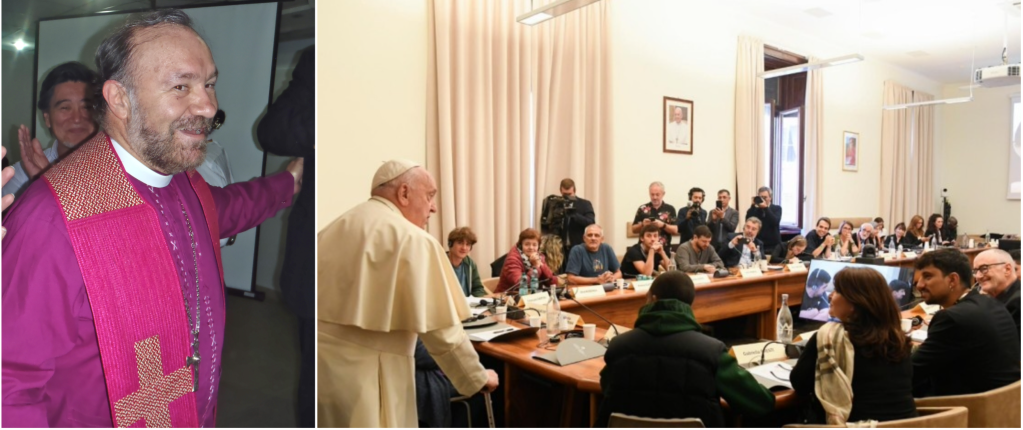
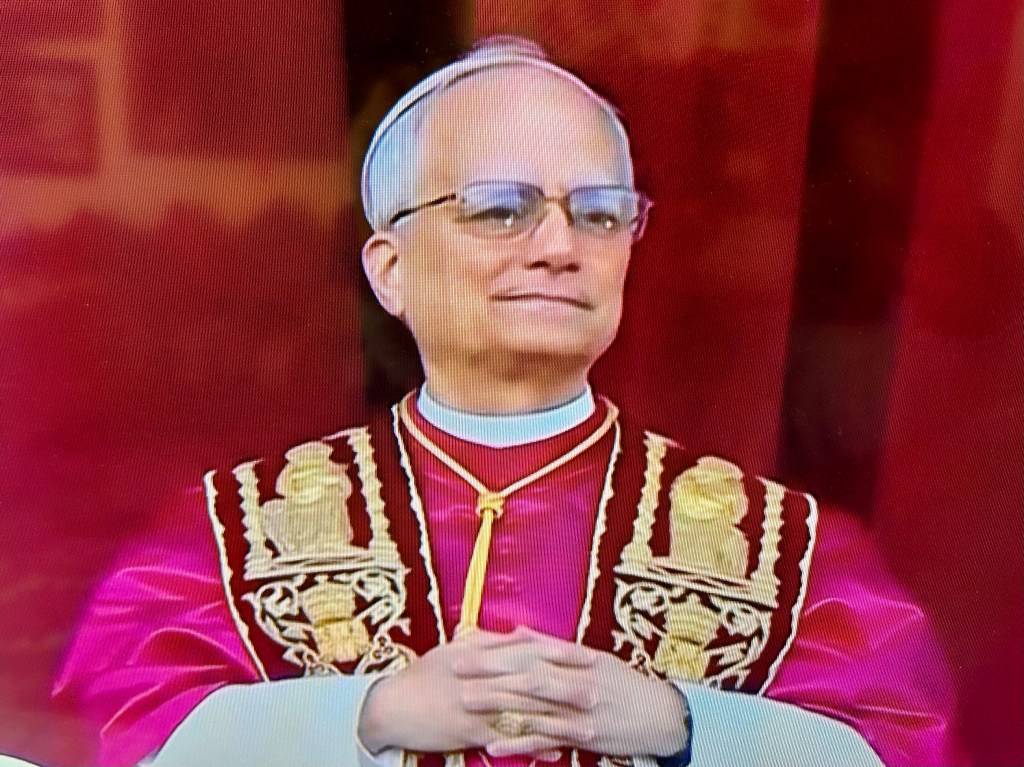
Like many who have worked in Latin America, I rejoiced when I saw that cardinal-electors chose Robert Francis Prevost, the former bishop of Chiclayo (Peru) to serve as Pope, the bishop of Rome. 

And as one who believes Catholic social teaching is not studied sufficiently, I was over the moon when I understood that Prevost had chosen to be called Leo XIV. The last Leo was Pope Leo XIII, who served from 1878 to 1903. He is respected as a pioneer of modern Catholic social teaching. In his famous 1891 encyclical Rerum novarum, Pope Leo outlined the rights of workers to a fair wage, safe working conditions, and the formation of trade unions.
Yes, there are controversies over the selection of Prevost. 

Prevost talked negatively in 2012 about sexual and gender diversity. But in that same year, Archbishop Jorge Bergoglio (a year later Pope Francis) was still in Buenos Aires and fighting legal reforms promoted by the Kirchner-Fernández governments in favour of same-sex marriage. Jesuit Father James Martin, long an ally of LGBTQIA+ people, spoke positively about Prevost after being part of a table group with him during the Vatican’s Synod on Synodality.

There are allegations that Prevost did not pay sufficient attention to victims of clerical sexual harassment while bishop in Chiclayo. Tragically, it is hard to find any bishop, living or dead, who has adequately served survivors of clerical abuse. The real issue is making rules that are effective in making dioceses submit to civil authorities in cases of crime, and to take victims’ allegations seriously in all cases of harassment or abuse. Perhaps his proximity to scandal will help him and others take further steps toward justice for all victims of clerical abuse. 

Much has changed; more needs to change; and Leo XIV may be a step in the right direction. Let’s work toward full inclusion of—and leadership by—women and 2SLGBTQIA+ people.

The church in Chiclayo

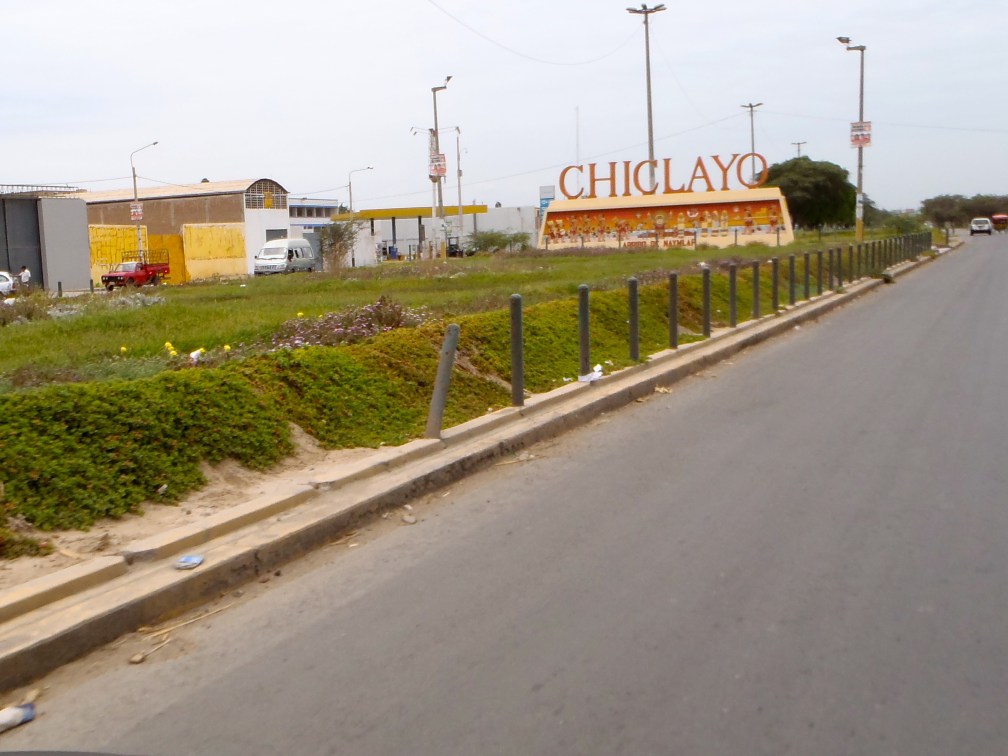
Today, I found myself going back through decades of notes. Here is something I wrote during a visit to Chiclayo in 2017:

“Chiclayo has a new bishop who is more in the line of Pope Francis—a positive sign after many years of traditionalist Opus Dei bishops. The new bishop, my friends said, still needs some education around gender justice, but he’s pretty good on economic justice and on developing lay leadership. Social movements here have bloomed outside of the church, including the LGBTIQ and People Living with HIV and AIDS (PLWHA) movements.”

That conversation unfolded with members of Centro Esperanza, a United Church partner from 2006 to 2018. Their work had roots in progressive Christian base communities. It began with a focus on women, particularly those who were involved in community kitchens organized and run by women in impoverished neighbourhoods. Over time, activities expanded to include programs to prevent domestic violence, stimulate learning in early childhood, and gender justice education among high school students.

Several of my Canadian friends have worked in Chiclayo over the decades, beginning with members of the Scarboro Foreign Missionary Society. Their leadership is part of what shaped Chiclayo’s influence on its new bishop.

Catholic Social Teaching

And I went back through my notes on Catholic social teaching. One of the most complete—and still quite short—summaries is a presentation by Bill Ryan, a Canadian Jesuit and social activist. He was a general secretary of the Canadian Conference of Catholic Bishops (CCCB) during part of the time I worked with the Canadian Council of Churches.

In 2000, he spoke to the Coady International Institute at St. Francis Xavier University in Antigonish, Nova Scotia, on the development of Catholic social teaching. Some key points:

What is Catholic Social Teaching? It is a formula or a set of principles for reflection to evaluate the framework of society and to provide criteria for prudential judgment and direction for current policy and action.

  • The inherent human dignity of every person that makes them “sacred”—created in God’s image. This is the ultimate grounding for human rights.
  • The principle of human solidarity. Every person is radically social by nature and by nurture, destined to build up and share human community. The basic element of all creation is interconnectivity, interdependence, and relationships between and among all creatures. Without community we are not human.
  • The principle of subsidiarity. This principle balances the power between the individual and community. It calls for a pluralistic structuring of power in society. That is, human society is more than government; it is the thousands of voluntary and corporate associations that make up civil society. Decisions in society should be taken at the lowest competent level of society.
  • The neediest among us have a special claim on our care and compassion.
  • The common good: the social conditions that allow people to reach their full human potential and to realize their human dignity.
  • And remember that fidelity in relationships extends also to our caring for our “mother” earth.

All of this, it seems to me, is “teaching”—asserting principles, not doctrine.

Ryan said it was untidy, and it is. Church leaders, he said, attempt “to balance the maintenance needs of the church with those of its prophetic mission. What priority should they place on safeguarding unity in the church while preaching the prophetic preferential option for the poor?”

The process, he added, may become even more untidy as more conferences of bishops learn with their people how better to “read the signs of the times” and to “engage Christian communities in believing, preaching and acting on a preferential option for the poor.”

Pope Francis opened a process—“synodality”—for bishops to talk with their people. From his opening remarks, Pope Leo XIV seems determined to keep that door open.

The next morning, the new pope said Christians must offer witness in a world that prefers power, pleasure, and success to faith. Where Christians are “mocked, opposed, despised or at best tolerated and pitied” is where the Catholic Church’s “missionary outreach is most desperately needed,” he said in his first homily as leader of the world’s 1.4 billion Catholics.

"Another World is Possible," World Social Forum, Porto Alegre, Brasil (2005)

Pope Francis and Our Common Home

By Jim Hodgson

On this Earth Day, I want to share with you a reflection by Bishop Francisco Duque of the Anglican Church in Colombia. I worked with him in a larger team in one period (already a dozen years or more ago) of ecumenical efforts for peace with justice in Colombia. 

Indeed, it was during that work that I stood with friends in a coffee shop in Bogotá and watched news of the election of the archbishop of Buenos Aires, Jorge Mario Bergoglio, as pope on March 13, 2013.  I did not rejoice. All that I knew of Bergoglio was that he had opposed several of the initiatives of the governments of Néstor Kirchner and Cristina Fernández as it expanded sex education in public schools and legalized same-sex marriage in 2010.

Images of St. Francis. Left: preaching to the birds. Right: “Make me an instrument of your peace / Bless your people, Lord” is one I saw in Real de Catorce, San Luis de Potosí, in October 2024.

But Pope Francis surprised me: first by choosing to be known by the name Francis, signalling he would follow St. Francis of Assisi, long admired for his inspiration to contemporary ecological commitment and for initiating dialogue with Muslim leaders during Christian Europe’s “crusades” in the Middle East. And then he surprised me again with steps that showed respect for LGBTQIA+ people: first, “Who am I to judge?”, and later with his openness to diverse voices heard through synods, his advocacy for peace, the rights of migrants and debt forgiveness. I can only wish he had done more with regard to the rights of women and pray that his successor can go further.

In Canada, Pope Francis will undoubtedly be remembered most for his “penitential pilgrimage” and encounters with Indigenous peoples in 2022. Despite resistance from most of Canada’s Catholic bishops, he came, offered a (not fully accepted) apology, and gave truth and reconciliation efforts a dramatic push forward in public awareness.

But I think his lasting global legacy will be his way of holding faithful action for social justice and action for ecological justice together coherently. Here’s what Bishop Duque had to say.

Left: Bishop Duque at a Methodist assembly in Medellín in 2012. Right: Pope Francis meets representatives of social movements in 2024.

Francis, pope of Amazonia and our common home

Francisco Duque

The world mourns the loss of a spiritual leader who transcended borders, creeds and generations. Pope Francis not only was the first Latin American pontiff. He was, above all, the pope of the Amazon and caretaker of our Common Home. His legacy, immense and profoundly humanist, will remain inscribed in the planet’s memory as a prophetic voice that urges us to hear the clamour of the earth and the cry of the poor as a single call.

From the time of the publication of his encyclical Laudato Si’ in 2015, Pope Francis illuminated the ways of global ecological awareness. With valiant and committed language, he denounced the structural causes of environmental collapse, unlimited resource extraction, climate injustice and indifference toward the suffering of communities that are most vulnerable, especially those who live in the lungs of the world: tropical forests, the Amazon in particular. 

His spiritual leadership was also political and ethical. He convened scientists, Indigenous leaders, activists and religious authorities from around the world to make a new pact between humanity and nature. He promoted an integral ecology that did not separate the environment from the social. He recognized in Indigenous peoples that they are millennial guardians of wisdom. His encouragement of the Synod of the Amazon in 2019 marked a before and after: Amazonia was heard in the heart of the Vatican, not as a forgotten periphery but as a vital centre for the future of the planet.

From the Inter-Religious Initiative for the Tropical Forests (IRI-Colombia), we hold up a prayer of gratitude and hope. Gratitude for his strong words, for his planetary vision, for having returned to the faith its active dimension of protection of creation. Hope because the fertile seeds he planted will continue to bear fruit in the struggles of those who do not resign ourselves to ecocide or silence in the face of injustice.

Pope Francis leaves us a road map for humanity. There will not be peace without environmental justice. There will be no future without forests. There will be no reconciliation without a deep ecological conversion. His legacy challenges governments, businesses, religions and people. His voice remains alive, inspiring a global inter-religious movement that is committed to life. In these days of farewell, we echo his own question, charged with urgency and tenderness:

“What kind of world do we want to leave to those who come after us, to children who are now growing up?” (LS 160).?”

Thank you, Pope Francis, for reminding us that care for Amazonia is an act of faith, love and justice.

Karl Marx in the Rose Garden

By Jim Hodgson

I take my title today from a subhead in a column by Enrique Galvan Ochoa in the Mexico City daily La Jornada. I’ll translate and summarise from his text here:

Not even Karl Marx would dare to imagine such a spectacular coup against neoliberalism and globalization as that carried out by President Donald Trump with his explosion of tariffs to the whole world on April 2 in the Rose Garden of the White House. The cathedrals of capitalism tumbled, from Wall Street to all the other global stock markets. In just a week, investors fled in search of refuge for their money: in gold, government bonds—swallows in search of a nest. The blow from that unpredictable businessman installed in Washington will have lasting effects. And it will hit the poor as well as the rich.

With respect, I am not so sure that it was a blow against neoliberalism so much as its logical next step: away from unrestricted movement of capital and toward concentration of wealth in ever-fewer hands. 

But that’s my point: I’m not sure. Daily—this has been going on since Trump began his run for political office a decade ago—new opinion pieces land in my inbox, many of them making strong historical analogies. Is he trying to restore a golden age/Belle Époque—think of the 1870s through to the start of the First World War and the beginning of income tax—for oligarchic billionaires and their closest allies, the mere millionaires? 

I loved seeing the rapper Lizzo on Saturday Night Live this past weekend wearing a cropped t-shirt emblazoned TARIFFIED. On the right: Trump in a storm.

What to make of these tariff wars and consequent stock market losses? I find myself pushed to go deeper.

You don’t have to be a Marxist—I think here of sociologist Max Weber and Canadian social democrat Tommy Douglas—to see how societies (including the liberal ones) are divided between the dominant structures defended by the elites and the counter movements supported by those with fewer privileges. 

And you don’t have to be a Marxist to appreciate his writing. A passage in The Communist Manifesto describes how love and poetry, religion and community, are “drowned in the icy waters of selfish calculation.”  All of these are drowned so that personal worth becomes exchange value—you sell your labour—and numberless freedoms are abolished in favour of “that single, unconscionable freedom—Free Trade.” * 

We might be forgiven if we thought free trade was invented at the time of the great debates ahead of the North American Free Trade Agreement (NAFTA) in 1994, or the Canada-U.S. agreement in 1989, or the advent of the common market in Europe in the 1960s. Some might know that elections in Canada were fought and lost at the end of the 19th and early 20th centuries over various proposals for free trade with the United States: “No truck or trade with the Yankees!” cried the Conservatives in 1911, defeating the Liberals of Sir Wilfred Laurier. 

Just before Marx and his co-author Friedrich Engels published their Manifesto in 1848, debate raged in Britain over the “Corn Laws.” These were tariffs and other trade restrictions on imported food enforced between 1815 and 1846. Large land-owners wanted the tariffs kept high to keep out competition. Industrialists wanted them lowered because cheaper food meant they could pay workers less. (The industrialists won.) In a speech in Brussels in January 1848, Marx said protectionism was conservative and free trade was destructive. But he also saw that free trade in that context “hastens the social revolution” and thus merited his support. 

I like to say that I have been fighting free trade since 1848. But truth is the first time I wrote about the free trade debate was in 1986 (above).

My issue wasn’t so much having about rules for international trade—and we always press for protection for labour, the environment and human rights—as it was the protections that were built into the trade agreements for corporations (always referred to as “investors”). Under those waves of free trade deals, governments were blocked from protecting public health or the environment. Corporations would bring their complaints to an “investor-state” dispute resolution tribunal. Most times, the tribunals would rule in favour of the corporation and the state would be on the hook for the corporation’s imagined future earnings. Or they would succumb to the threat of the suit, as Panama is doing now in the face of a $20-billion suit.

Now that Trump has thrown away the rule book, it may seem that people like me are suddenly defending free trade. I think we’re defending the idea of at least having rules. Even as we fight specific battles (I think of the lawsuit brought by Canadian mining companies against El Salvador), we learned to live with economic integration: even after the havoc caused in Canada to industrial jobs and farmers after the 1989 FTA with the United States; even after U.S. abandonment of its industrial workers; and even after two million Mexican farmers were forced from their land and into the cities and across the border after NAFTA in 1994. 

But let’s not lose sight of longer-term objectives. In the face of this crisis in capitalism, what are the opportunities? The “social revolution” envisioned by Marx may be distant, but in these last 40 years, social movements have never ceased to uphold human rights broadly understood: economic, social, cultural and environmental. 

Manuel Pérez Rocha works now with the Institute for Policy Studies and writes an occasional column for La Jornada. (In the late 90s, we both worked with the Mexican Action Network on Free Trade, RMALC). Recently, he pointed to a long list of actions taken together by Mexican, Canadian and U.S. organizations. He continued: 

“Under Trump, we suffer from a savage neoliberalism that evades treaties, written rules, and multilateral organizations. He sees no friends and only enemies. The only laws are those of the strongest and ‘I’m in charge.’ Mexico must respond by demanding a thorough review of the USMCA [called CUSMA in Canada and T-MEC in Mexico], chapter by chapter, since its purpose and content are largely the same as those of NAFTA: to make Mexico an export platform to take advantage of cheap labour. Together with Canada, we must promote this review by generating spaces and resources for democratic participation, not only for business leaders but also for grassroots organizations in all three countries.”

Meanwhile, Charlie Angus continues his resistance campaign. (In the current federal election, he is not running again.) On April 14, he reminded his Substack readers of Rules for Radicals by Saul Alinsky.

Angus points to what Alinsky would say about our collective sense of loss over what is happening in the world today:

“Do one of three things. One, go and find a wailing wall and feel sorry for yourselves. Two, go psycho and start bombing – but this will only swing people to the right. Three, learn a lesson. Go home, organize, build power.”

* Karl Marx and Friedrich Engels (1848), The Communist Manifesto in Essential Works of Marxism (18th ed., 1979), New York: Bantam, p.15.